
MCP (Model Context Protocol) is an open standard protocol that allows an AI agent to connect uniformly to external tools and systems — CRM, calendar, WhatsApp, documents, and more — without writing a unique integration for each service. Instead of the agent only "knowing" how to answer questions, it becomes a digital employee that actually operates within the business's systems: scheduling meetings, updating records, and sending messages — all through a single, structured, and maintainable connection. At Automaziot AI, we implement MCP as the technical foundation for all the agents we build for Israeli businesses.
MCP made headlines in 2025-2026 when major AI companies — Anthropic, Cursor, and n8n among others — adopted it as the leading standard for connecting agents to the world. If you've heard the term and weren't sure what it means for you as a business owner — this guide is for you.
What is MCP?
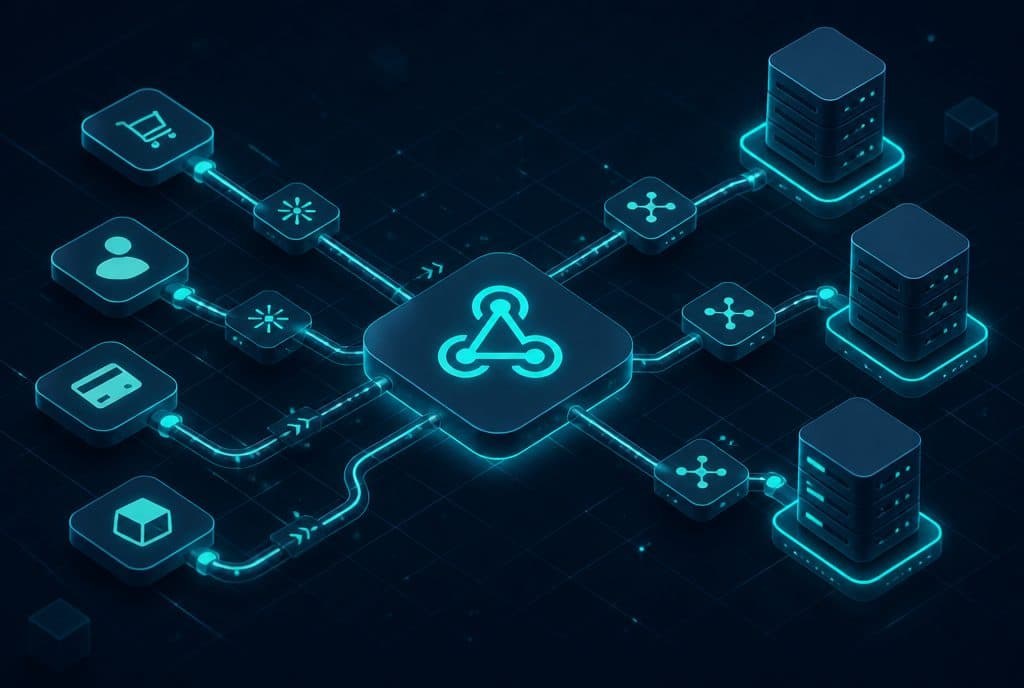
MCP (Model Context Protocol) is an open communication protocol that defines a uniform "language" between an AI agent and any external tool it needs to access. The agent sends a request in a structured format ("schedule a meeting", "update customer record", "send a message") — and the tool responds in a format the agent understands. Without MCP, every such connection requires unique integration code. With MCP, the agent speaks a single "language" and connects to any tool that supports it.
The protocol was developed in 2024 by Anthropic and released as open source, and has since been adopted by many companies and tools — including n8n, which we work with as our primary automation platform.
The Analogy That Explains It All: USB-C for the AI World
Before the USB-C standard, every laptop manufacturer came with their own unique connector — Thunderbolt, Mini DisplayPort, MagSafe. Every time you wanted to connect a new device, you had to buy a specific adapter. When USB-C arrived, a single port connected to everything.
MCP does exactly this for AI agents:
- Before MCP: Every connection between an agent and a CRM, calendar, or WhatsApp required unique code, separate maintenance, and manual updates whenever the API changed.
- With MCP: You write one "MCP server" for each tool (CRM, calendar, WhatsApp), and the agent connects to all of them through the same standard language.
The result for a business: Your agent can operate on all the systems you already use — without replacing them.
What Does MCP Allow an AI Agent to Do?
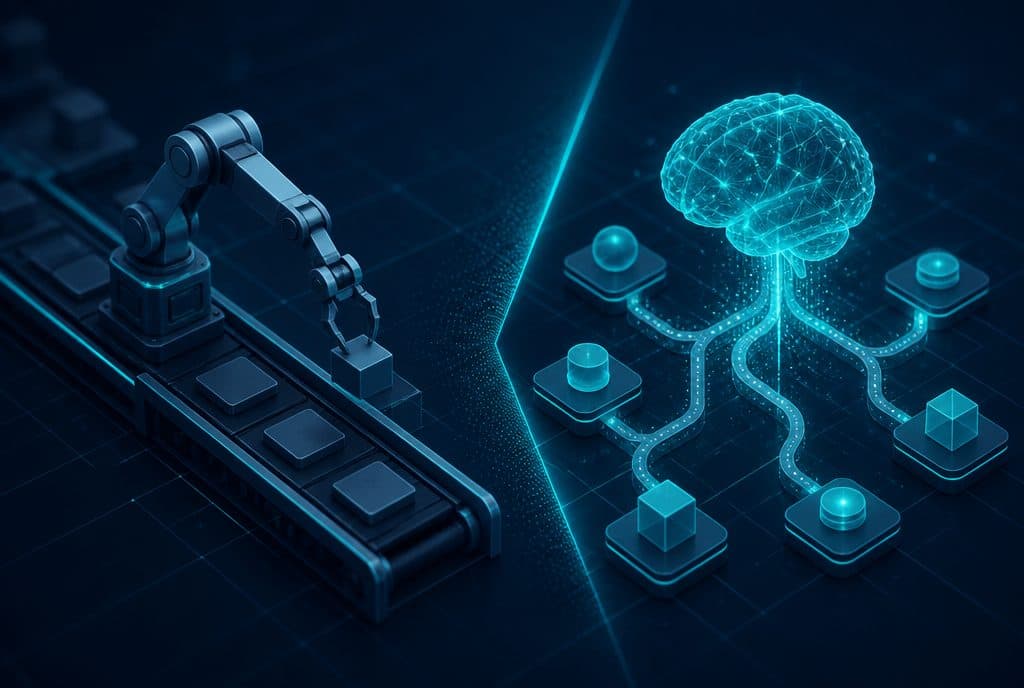
The practical difference is between an agent that only "knows" and an agent that also "does":
AI Agent without MCP (or with one-off integrations):
- Answers questions
- Provides information
- Manages a conversation
- To perform an action — requires unique development for each system
AI Agent with MCP:
- Opens a lead record in the CRM right during the conversation with the customer
- Checks availability in the calendar and schedules a meeting — without the customer leaving WhatsApp
- Sends an automatic confirmation with the meeting details
- Updates the next agent in the process with the entire history
- All of these through pre-defined MCP connections, which can be added and removed without changing the agent itself
Why is This Important for a Business AI Agent?
When a business implements an AI agent, the first question is always: "Will the agent work with the systems we already have?" — existing CRM, Google Calendar, email, WhatsApp Business.
Without MCP, the answer was: "Yes, but it will require separate integration development for each system." Meaning — more time, more money, and more points of failure.
With MCP, the approach changes:
1. Setup Speed: An MCP server for a common tool (Salesforce, HubSpot, Google Calendar) usually exists as open source — you install, configure, and connect it to the agent. The time is spent on characterization and defining business rules, not on technical development.
2. Flexibility: A business that started with one CRM and is moving to another? You replace the MCP server, you don't rewrite the agent.
3. Reliability: A standard protocol tested by the community — fewer bugs, fewer surprises in production.
4. Transparency: Every tool the agent is connected to is explicitly defined — the owner knows exactly what the agent can access and what it cannot. This is also important in terms of the Israeli Privacy Protection Law, which requires transparency regarding data access.
The Connection to Business Automation
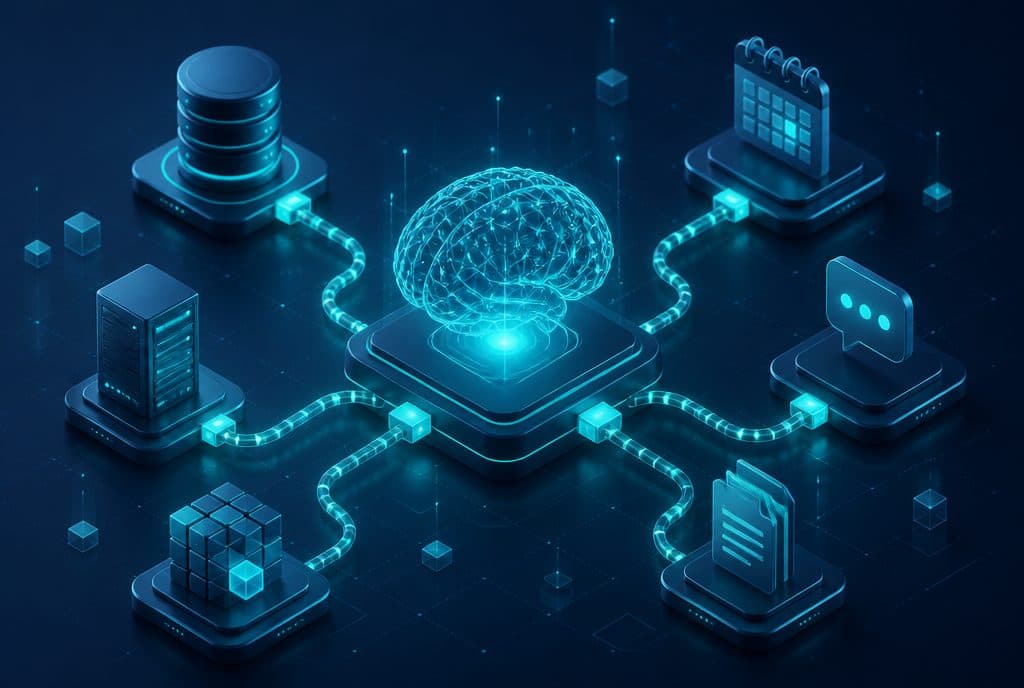
MCP does not stand alone — it operates alongside automation tools like n8n. This is what a typical architecture looks like:
Customer Inquiry (WhatsApp)
        ↓
    AI Agent (LLM)
        ↓
  [MCP — Available Tools]
  ├── CRM (Open Lead / Update)
  ├── Google Calendar (Check Availability / Schedule Meeting)
  ├── WhatsApp Business API (Send Confirmations)
  └── n8n (Trigger Complex Automation Workflows)
Business automation handles repetitive and pre-defined processes. The agent handles decisions that require natural language understanding and context. MCP is the bridge between the two.
In practice, n8n supports MCP natively from version 1.88 onwards — meaning, if you have implemented n8n-based automation, connecting the agent via MCP is usually relatively straightforward.
What Does This Mean in Practice for an Israeli Business?
Let's say you run a business that receives inquiries on WhatsApp. Your agent manages the initial conversation. With a correctly configured MCP:
- A customer writes "I want a consultation meeting" — the agent asks screening questions
- The agent checks availability in your calendar in real-time
- The agent schedules the meeting, sends a confirmation, and opens a lead record in the CRM with all the details
- Everything happens within the same WhatsApp conversation, without the customer having to switch to forms, and without anyone from the team intervening manually
This is not a futuristic scenario — this is actual automated lead management, based on MCP as a core component.
Want to understand how MCP can fit an AI agent on your systems? Talk to us and we will build a complete picture of the right architecture for your business together.
Summary
MCP is not a buzzword — it is the technical foundation that turns an AI agent from a "sophisticated chatbot" into a digital employee that actually operates on the business's systems. For an Israeli business investing in an AI agent, MCP means: less development time, more flexibility, and an agent that integrates with what already exists — without requiring system replacement.
If you are considering implementing an AI agent or business automation, it is worth making sure that the solution you are evaluating is based on MCP — so you can gradually expand the agent, one tool at a time, without rebuilding.
Read also: What is System Integration for Business?