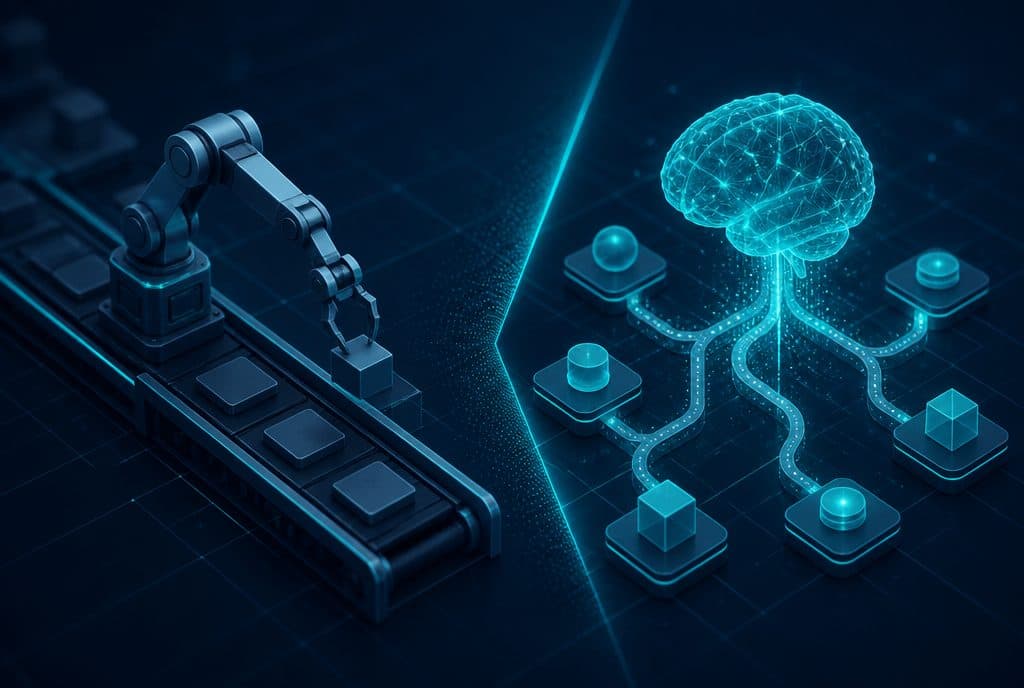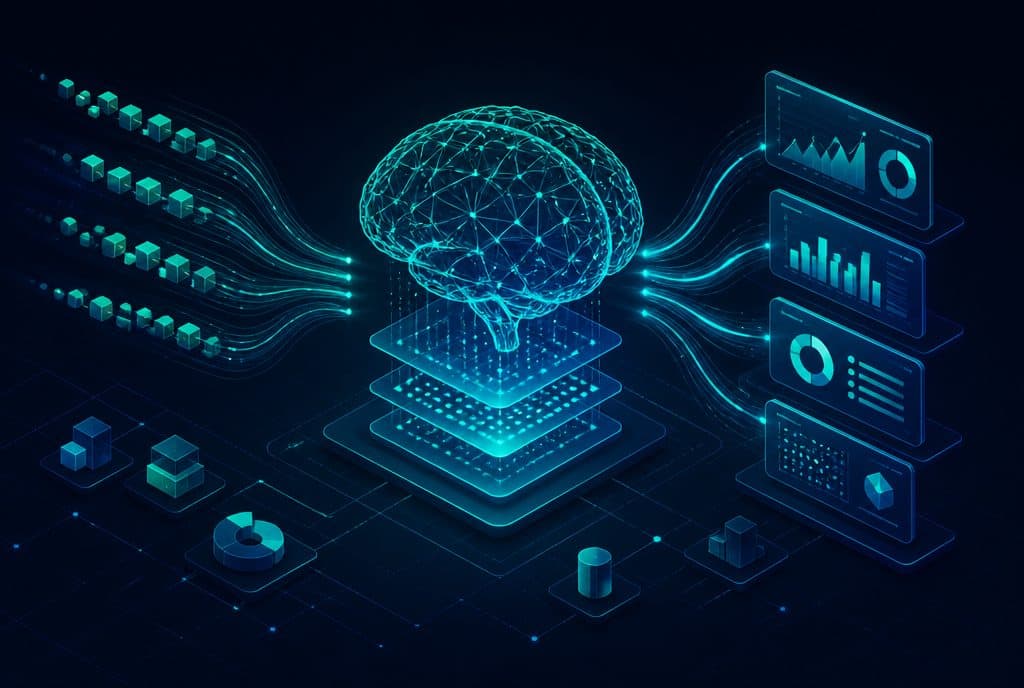

A Multi-Agent System is a group of independent AI agents working together—each specializing in a defined area—and communicating with one another to complete an entire business process. Instead of a single agent expected to handle everything, each "digital employee" is focused on what they do best: one manages sales conversations, one handles support, and another coordinates appointments—and they pass information between themselves in real time. At Automaziot AI, we build these systems for Israeli businesses ready for the next step after their first agent.
Anyone who has already set up an AI agent for their business notices at some point that a single agent starts to reach its limits: it can answer, document, and coordinate—but holding an active customer conversation, managing automated follow-ups, and checking calendar availability all at once is too much for a single agent doing everything. This is where a multi-agent system comes into play.
What is a Multi-Agent System?
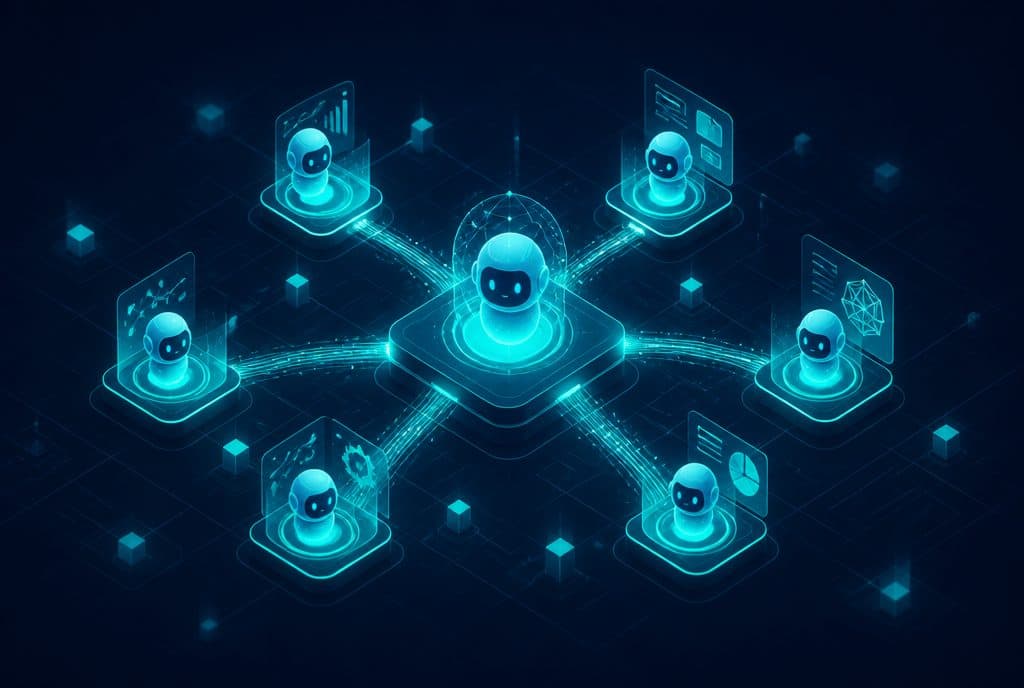
A Multi-Agent System is an architecture where several independent AI agents—each with a defined area of responsibility, specific knowledge, and access to appropriate tools—work together and communicate in real time. The agents exchange information, hand off tasks to one another, and coordinate actions to complete complex business processes that a single agent cannot perform efficiently on its own.
Single Agent vs. Multi-Agent System
To understand when a multi-agent system is suitable, we first need to understand what limits a single agent:
| Single Agent | Multi-Agent System | |
|---|---|---|
| Scope | One defined scenario | Several parallel scenarios |
| Specialization | General—knows a little about everything | Each agent is an expert in its field |
| Load | Gets choked up with many simultaneous conversations | Agents work in parallel |
| Flexibility | Limited to the tools defined for it | Each agent uses its own tools |
| When Stuck | Waits or transfers to a human | Transfers to the appropriate agent first |
A single agent is a digital employee. A multi-agent system is a digital team.
How Does It Work in Practice?
A typical structure of a multi-agent system in a business includes three layers:
1. Orchestrator Agent—receives the initial inquiry, analyzes what it is about, and decides which agent to route it to. It does not handle the content—it manages the flow.
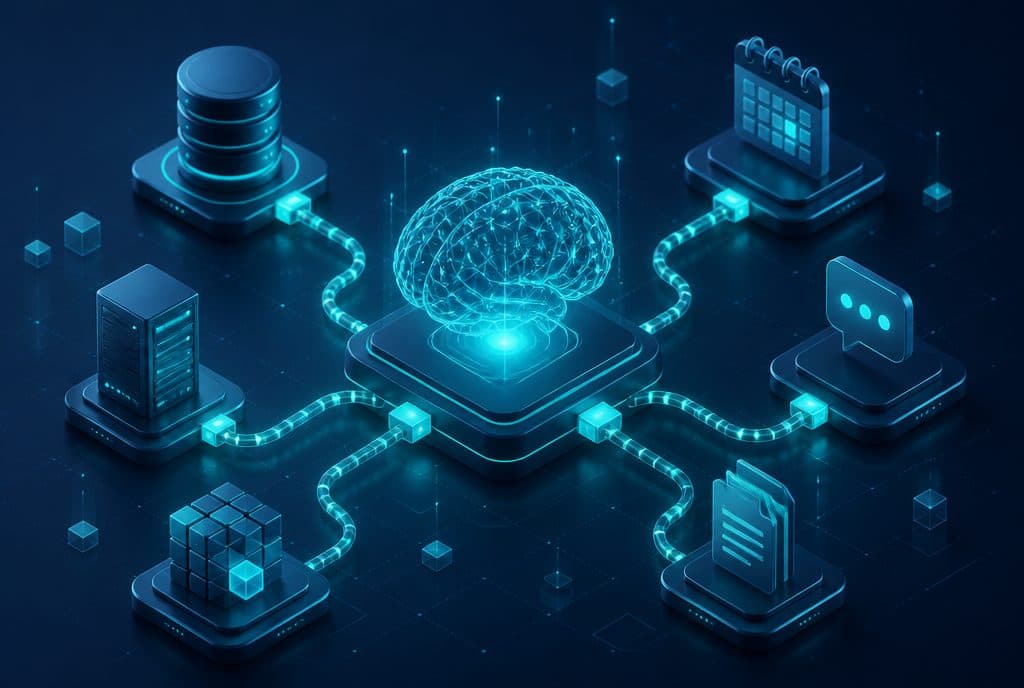
2. Specialized Agents—each handles a specific area: sales, support, appointment scheduling, document processing, follow-ups. Each agent is connected only to the tools relevant to it—the scheduling agent is connected to the calendar and CRM, the support agent is connected to the knowledge base and customer history.
3. Integration Layer—usually n8n which manages the interfaces with external APIs (CRM, WhatsApp, email, calendar). The agents "talk" through it with the business systems.
The actual flow: A customer sends a WhatsApp message → the Orchestrator agent analyzes it → hands it off to the sales agent → the agent asks qualifying questions → when the customer is ready, hands it off to the scheduling agent → who finds a time slot and confirms → everything is automatically entered into the CRM.
Examples of Businesses Where This Works
Service Business with a Small Team (Clinics, Consultants, Coaches)
- Sales Agent: Filters inquiries on WhatsApp, asks qualifying questions, and warms up the lead.
- Scheduling Agent: Offers time slots, confirms, and sends reminders.
- Service Agent: Answers ongoing questions from existing clients, without confusing new leads with veteran clients.
Training Center or School
- Registration Agent: Handles course inquiries, sends details, and guides them through registration.
- Support Agent: Answers content and logistics questions for active students.
- Renewal Agent: Identifies students who finished a course and offers them the next level.
Real Estate—Independent Broker or Small Agency
- Inquiry Agent: Answers initial questions about properties, filters by budget and area.
- Tour Agent: Coordinates property visits and sends details.
- Follow-up Agent: Sends follow-ups after visits, gathers feedback, and updates the CRM.
In all these examples, the added value is not that each agent is smarter—but that they work in parallel and transfer precise information between themselves, without the customer feeling like they were "passed around."
When Does a Business Need a Multi-Agent System—and When Not?
Not every business needs this. And if you start with a complex architecture before there is a need for it, you get a system that is difficult to maintain and test.
You should consider a multi-agent system when there are:
- Two completely separate processes running simultaneously (e.g., new purchase + support for existing clients).
- Different customer populations requiring different language and content (e.g., new customer vs. long-time customer).
- High conversation volume that causes a single agent to slow down or make more mistakes.
- A need for true specialization—when an all-in-one agent compromises on quality in every area.
It is better to stick with a single agent when there is:
- One central and clear scenario.
- A business just starting out with an AI agent and still building trust in the system.
- Limited budget or time for characterization and building.
The right approach is: start with one agent that proves itself, and add a second agent only when you are clear on what it is responsible for and where the handoff between them lies.
Questions We Hear from Israeli Businesses
"Isn't this just n8n with a few workflows?" Not exactly. n8n manages workflows—if X happens, do Y. Agents add judgment: they understand natural language, make contextual decisions, and summarize conversations. In practice, the best solutions combine both: n8n manages the flow and integrations, while the agents handle the conversation and decision-making.
"Who supervises what the agents do?" Each agent operates within pre-defined boundaries—what it can send, where it can write, and what it hands off to a human. Additionally, every action is documented in the CRM, which can be checked at any time. We build systems with full transparency: everything an agent does is visible.
"Privacy Protection Law—how does that work?" All information collected by the agents is stored in accordance with the Israeli Privacy Protection Law. We pre-define what data is saved, for how long, and what happens to it—just like any other CRM system you operate.
The Next Step: Characterize Before Deciding
Before any discussion about architecture, ask yourself one question: How many completely different "types of conversations" reach you per day? If the answer is "actually everything goes to the same place and there is one clear script"—start with one agent. If the answer is "there are at least two separate streams requiring different knowledge"—it is worth considering a multi-agent system.
Want to examine together if this architecture is right for your business? Talk to us and we will build an accurate picture of your scenarios, what is worth optimizing, and how to start correctly.
Summary
A multi-agent system is not an "automatic" upgrade for every business that already has an AI agent—it is an architecture suited for when there is a real need for division of labor and parallel work. When implemented correctly, it turns your digital team into something resembling a human team: everyone knows their role, who is responsible for what, and where the handoff is—the customer simply gets an answer, without knowing how many players worked behind the scenes. See also: What is an AI agent for business and Business Automation Services.