Workflow Automation with AI is the connection of sequential steps from different systems into a single, end-to-end process—where an AI model makes decisions along the way. Instead of a human manually transferring information from system to system, the workflow does it automatically: a lead comes in through a form, goes through smart filtering, is converted into the CRM, receives a WhatsApp response, and a meeting is scheduled—all without human touch. This is exactly the approach we at Automaziot AI implement with Israeli businesses.
In 2026, with AI tools more accessible than ever, the difference between a growing business and one worn down by operational management is not manpower—it is the automation behind the scenes.
What is Workflow Automation?
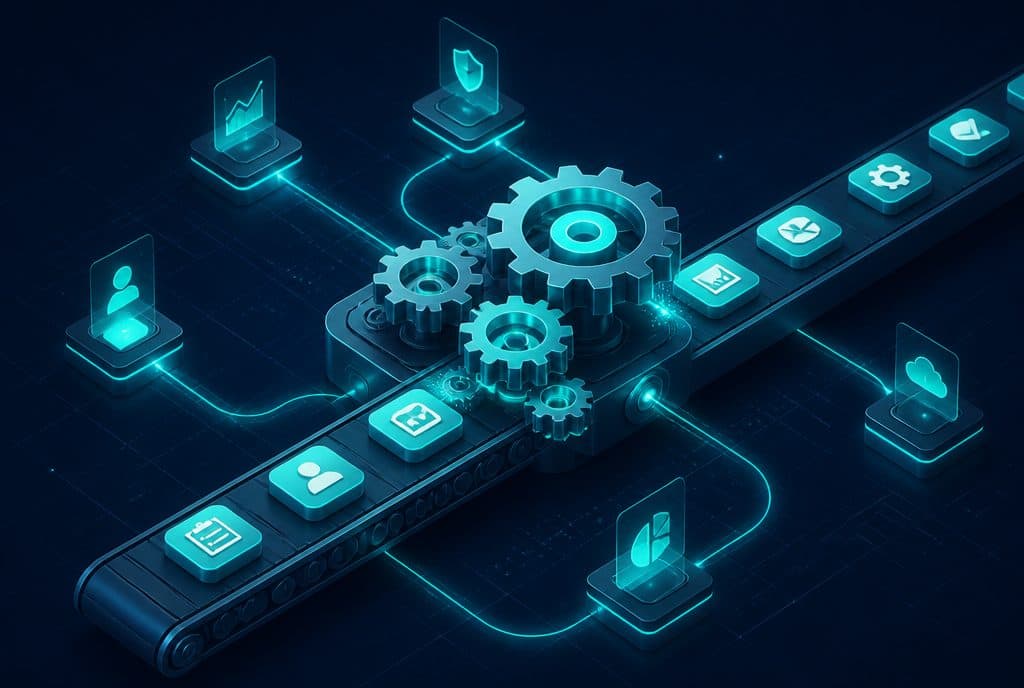
Workflow Automation is a chain of sequential actions performed automatically between different systems—without human touch at every stage. When you integrate AI into this chain, some of the steps become smart decisions: the model reads information, understands the context, and chooses which action to perform—rather than just moving data from A to B.
Regular Automation vs. AI Automation: What's the Difference?
| Regular Automation | AI Automation | |
|---|---|---|
| Logic | Fixed rule ("If X → Do Y") | Decision based on understanding |
| Exception Handling | Gets stuck or sends everyone the same response | Identifies what is different and responds accordingly |
| Language | Transfers data fields | Reads and writes natural text |
| Flexibility | Rigid—any change requires updating a rule | Adapts itself to the content |
| Example | "When a form arrives → send a thank you email" | "Read the form, understand the need, send a tailored response" |
Regular automation is excellent for repetitive and uniform processes. AI enters the picture when the process requires judgment—filtering, classification, phrasing, or prioritization.
How Does Workflow Automation Work?
The Three Components of Every Workflow
Trigger — The event that starts the process: a form is submitted, an incoming WhatsApp message, a new row in a spreadsheet, or a set time of day. This is the entry point.
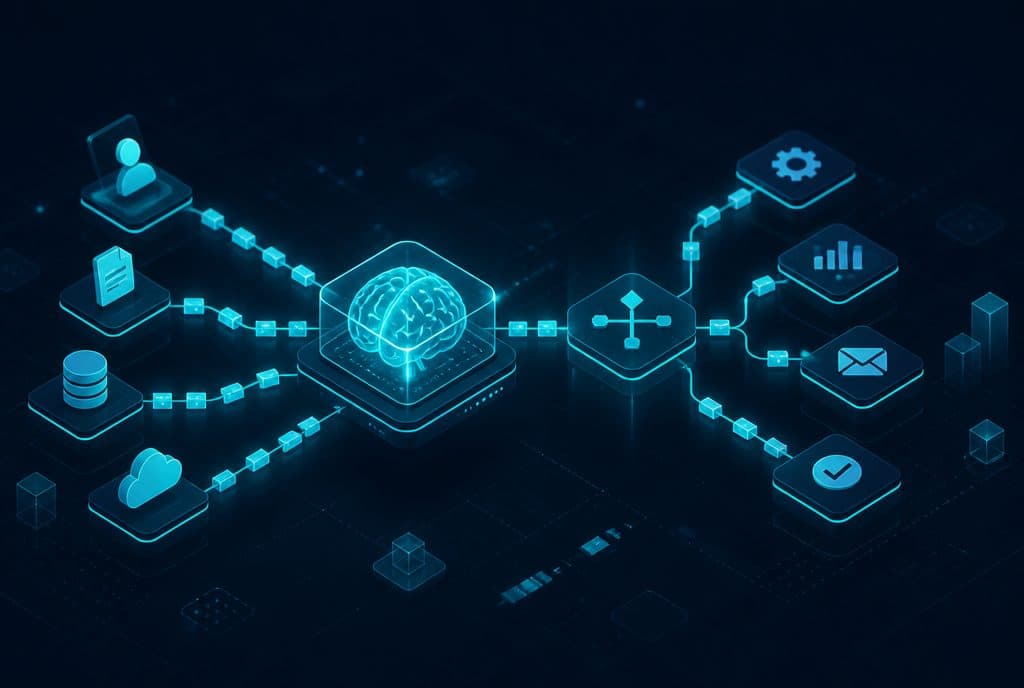
Steps and Actions — The steps performed in sequence: saving to CRM, sending a message, updating a record, scheduling a meeting, or sending a team alert. Some steps include an AI decision point—the model reads the information and decides which branch to take.
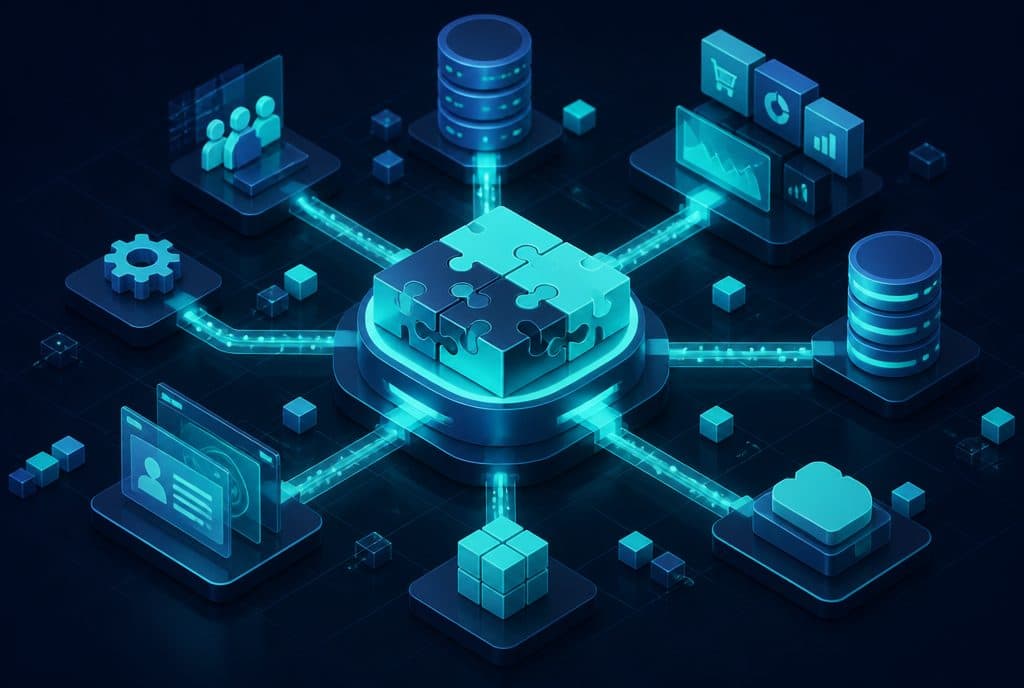
Integrations — The connections between systems. We work with n8n as our central automation platform, which connects WhatsApp Business API, CRM, Gmail, Google Calendar, and dozens of other systems via official APIs.
How Does AI Fit into the Workflow?
At points where a rigid rule is not enough:
- Inquiry Classification — "Is this a new lead, a service question, or a complaint?"
- Response Phrasing — Writing a WhatsApp message tailored to the content of the inquiry
- Prioritization — "Is this lead hot enough for manual outreach by a salesperson?"
- Data Extraction — Reading a document or image and filling out fields in the CRM
- Intent Recognition — Understanding what the customer wants even when they haven't phrased it clearly
Real-World Examples—Automated Workflows for an Israeli Business
1. End-to-End Lead Management Process
A lead is submitted via a website form ← AI classifies the inquiry and notes urgency ← a record is opened in the CRM ← an initial personalized WhatsApp message is sent ← in 24 hours (if there is no response) an automated follow-up is sent ← after 3 days without a response—the salesperson receives an alert.
What it saves: Manual transfer from form to CRM, manual message writing, and forgotten follow-ups.
2. Meeting Scheduling Process
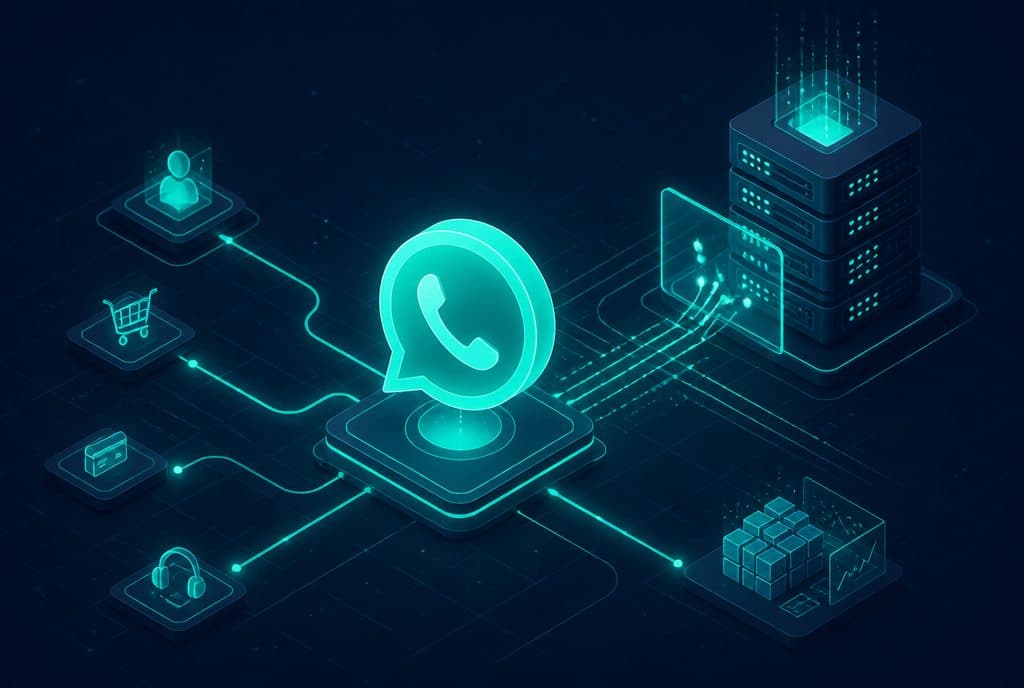
A customer sends "I want to schedule a meeting" on WhatsApp ← AI Agent finds three open slots in the calendar ← proposes them to the customer ← upon selection, a meeting is booked in the calendar for both parties ← 24 hours before—an automated reminder is sent.
What it saves: Back-and-forth on dates, calendar double-bookings, and forgotten reminders.
3. Invoice and Document Processing Process
An invoice arrives in the email ← AI reads it and extracts: vendor, amount, date, invoice number ← the data is automatically entered into the accounting system ← an approval alert is sent ← upon approval—a payment request is sent out.
What it saves: Manual typing, copy-paste errors, and delays in paying vendors.
4. Weekly Reporting Process
Every Sunday morning ← n8n pulls data from CRM, WhatsApp, and calendar ← AI aggregates and drafts a summary ← the report is automatically emailed to the manager.
What it saves: Hours of manually consolidating past data.
Key Capabilities of Workflow Automation with AI
| Capability | What It Does | For Which Business |
|---|---|---|
| Lead Filtering & Classification | Reads the inquiry and scores lead warmth | Sales, Real Estate, Services |
| Automated Initial Response | Writes a personalized response on WhatsApp/Email | Any business with incoming inquiries |
| Automated CRM Update | Enters data from forms, WhatsApp, and chats | Any business with a CRM |
| Meeting Coordination | Checks availability and schedules with the client | Consultants, Clinics, Service Providers |
| Document Processing | Reads invoices, forms, orders | Businesses with high document volume |
| Automated Follow-up | Sends reminders based on a defined schedule | Sales, post-meeting, contract renewals |
| Reporting & Documentation | Consolidates data from multiple sources and drafts a summary | Management and business owners |
How to Get Started? The Actual Implementation Steps
Step 1: Mapping—Not Technology
Before touching any tool, map out your current process:
- Where are you losing time each week on repetitive tasks?
- Where does information "fall between the cracks" between systems?
- What process, if run automatically, would free up the most time?
Step 2: Choosing the First Process
Start narrow and defined—not with "streamlining everything." A good process to start with: incoming lead management, appointment reminders, or weekly reporting. The more repetitive and uniform the process, the easier it is to implement and validate.
Step 3: Building and Integration
We build the workflow in n8n and connect it to your existing systems via API. Each step is tested individually before connecting the full chain. Important: we do not replace systems—we connect what you already have.
Step 4: Testing and Optimization
The workflow initially runs in parallel with the manual process to ensure the output matches expectations. Once validated—it becomes the primary process and is expanded to additional steps.
What AI Automation is Not
It is helpful to clear up a few common misconceptions:
- It is not a "magic button" implemented in one day—a good process requires mapping, building, and testing.
- It does not replace human judgment in every case—some decisions remain with a human; the AI filters, it does not decide everything.
- It does not "last forever" without maintenance—when systems change, the workflow needs an update.
- It does not work on messy databases—if your CRM is full of duplicate or empty records, the workflow won't fix that.
Why n8n?
n8n is the automation platform we choose for Israeli businesses—because it is flexible enough to connect any system with an API, supports complex logic and decision points, and allows the use of AI tools within the workflow. Unlike closed no-code solutions, n8n gives full control and does not include limits on the number of executions.
Want to understand which process in your business you should streamline first? Talk to us and let's build a practical map together—no slideshows, straight to your data.
Summary
Workflow automation with AI is not a tech feature—it is the way a small to medium business can operate at the standard of a large enterprise without growing the team. An incoming lead gets an immediate response; a meeting is scheduled on its own; a document is processed and enters itself; a weekly report arrives without anyone sitting down to write it. Our recommendation: choose one process that repeats at least once a day, and let it run on autopilot—the rest will follow.
Related Articles: