
An AI Agent is an autonomous, artificial intelligence-based software that understands a customer's inquiry, makes a decision, and performs an action within the business's systems — without human intervention at every step. Unlike a chatbot that only answers according to a script, an AI agent manages a natural dialogue that leads to a result: filtering a lead, scheduling a meeting, writing to the CRM, or sending a document. At Automaziot AI, we specialize in building AI agents for Israeli businesses.
The term "AI Agent" has become one of the most sought-after in the business world in 2026, but there is a lot of confusion around it: many label any simple bot as an "AI agent." In this guide, we will clarify exactly what the difference is, how an AI agent works behind the scenes, which businesses benefit from it the most, and how long it takes to set one up — all in the Israeli context and based on practical work with dozens of businesses.
What is an AI Agent? Definition
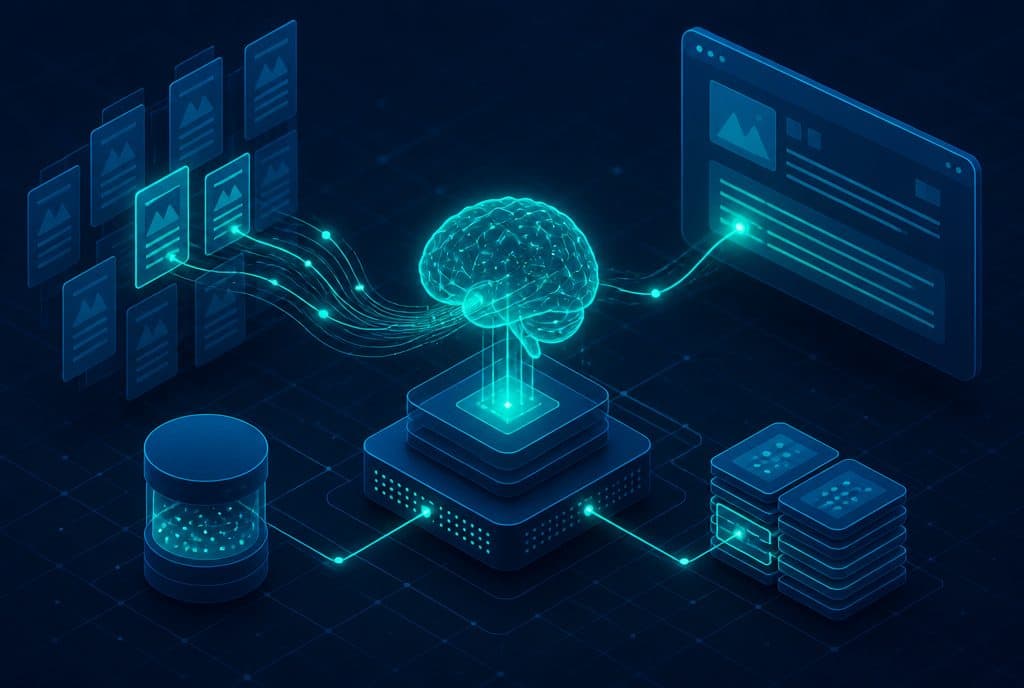
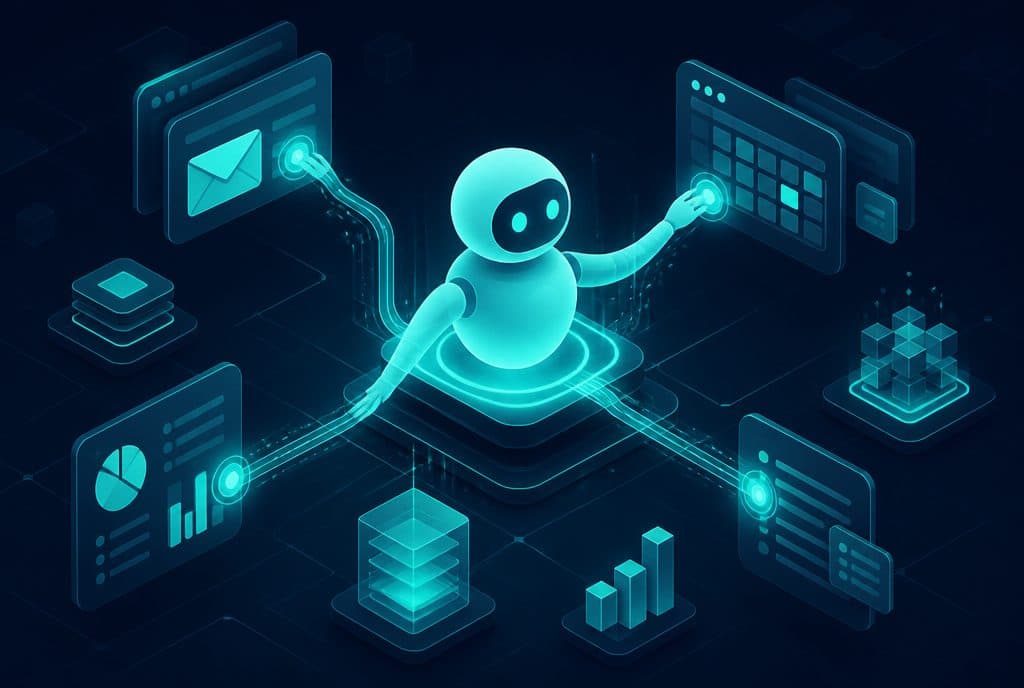
An AI agent is an autonomous software system that uses a Large Language Model (LLM) to understand natural language, remember context, decide what the next step is, and execute it in practice through integration with the business's systems (CRM, calendar, WhatsApp, booking system). The fundamental difference from a chatbot is that an AI agent doesn't just answer — it acts: schedules a meeting, updates a record, sends a document, and hands over to a human representative when necessary.
The Difference Between a Chatbot and an AI Agent
This is the most important distinction, and also the one most commonly confused:
| Traditional Chatbot | Smart AI Agent | |
|---|---|---|
| Logic | Rigid rules ("if X, answer Y") | Intent understanding and natural dialogue |
| Memory | None — each message stands on its own | Remembers the entire context of the conversation |
| Actions | Text response only | Executes: CRM, calendar, documents |
| Language | Fixed script | Natural Hebrew, adapted to the business's style |
| When Stuck | "I didn't understand, please try again" | Hands over to a representative with a full summary |
A chatbot is a menu. An AI agent is a digital employee who understands what the customer wants and moves them to the next step.
How Does an AI Agent Work? The Three Components
- Understanding — The language model analyzes the message: what the customer is asking, the intent behind it, and the context from the beginning of the conversation.
- Reasoning — The agent chooses the right step: to answer, ask a qualifying question, schedule a meeting, or hand over to a representative — within the boundaries you defined in advance.
- Action — Through integration with systems (usually using n8n and official APIs), the agent actually executes: writes to the CRM, opens a calendar event, sends a catalog.
The third component — the action — is what turns a "smart chatbot" into a real "AI agent."
Examples of AI Agents in an Israeli Business
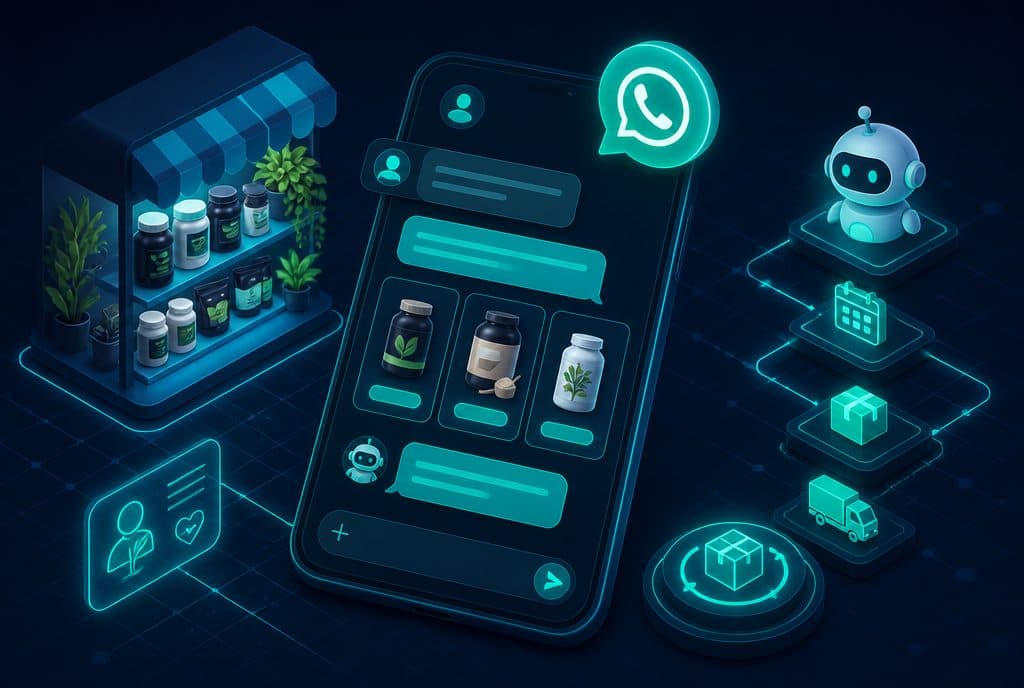
- WhatsApp Agent for Sales and Service — Answers inquiries 24/7, qualifies leads, schedules meetings, and writes everything to the CRM. The most common; full details at WhatsApp Bot for Business.
- Voice AI Agent — A phone representative that answers calls, qualifies, and documents before handing over to a human representative. See Voice AI Agent.
- Lead Management Agent — Captures inquiries from any channel, documents them, sends structured follow-ups, and doesn't let the lead "go cold." See Automated Lead Management.
- Document Processing Agent — Reads invoices or forms, extracts data, and inputs it automatically — saving hours of manual typing.
Who is an AI Agent Suitable For?
An AI agent is suitable for any business that receives repetitive inquiries on WhatsApp, phone, or forms — from a small business with a single owner to a chain with dozens of branches. The more inquiries that arrive during hours when it is impossible to answer manually (evenings, nights, weekends), the higher the value: a lead writing on Friday night gets an immediate response, is warmed up, and enters the CRM — instead of waiting until Sunday when they have already turned to a competitor.
In terms of industries, we see strong results in retail and e-commerce, service providers (plumbers, electricians, trainers), real estate, clinics, education and training, and professional services (CPAs, lawyers, consultants).
How Long Does It Take to Set Up, and Where to Start?
The right approach is modular: start with a narrow, controlled agent, and expand gradually. A basic agent that answers FAQs is usually ready within about a week; a full agent that qualifies, warms up, schedules meetings, and is connected to the CRM is typically built within 2-4 weeks. The right starting point is not the technology — but the specification (characterization): collecting the types of inquiries you receive, deciding what the agent answers and what is left for a meeting, and defining the hand-off rules to a representative.
Want to understand if an AI agent is right for your business? Talk to us and we will build a practical direction together — which scenario is best to start with and what the expected ROI is.
Summary
An AI agent is not an "improved chatbot" — it is a fundamental shift: from a system that answers to a system that acts. For an Israeli business receiving repetitive inquiries, an AI agent based on a language model, connected to the CRM and calendar, stops losing leads during hours when you cannot answer, and frees up the team for inquiries that truly require a human. Our recommendation: start by defining one clear scenario, and let the agent prove itself before expanding.