
A vector database (Vector Database) is a data storage method that allows an AI agent to search for answers based on meaning — not exact keywords. It is what enables an AI agent to know that when a customer asks "Is it possible to cancel?" they are probably looking for your cancellation policy — even if the customer didn't use the word "policy". Without a Vector Database, an AI agent relies on what it learned from the internet; with it, the agent responds from your business's actual internal knowledge. At Automaziot AI, we use this technology as a core component in building AI agents for Israeli businesses.
What is a Vector Database?
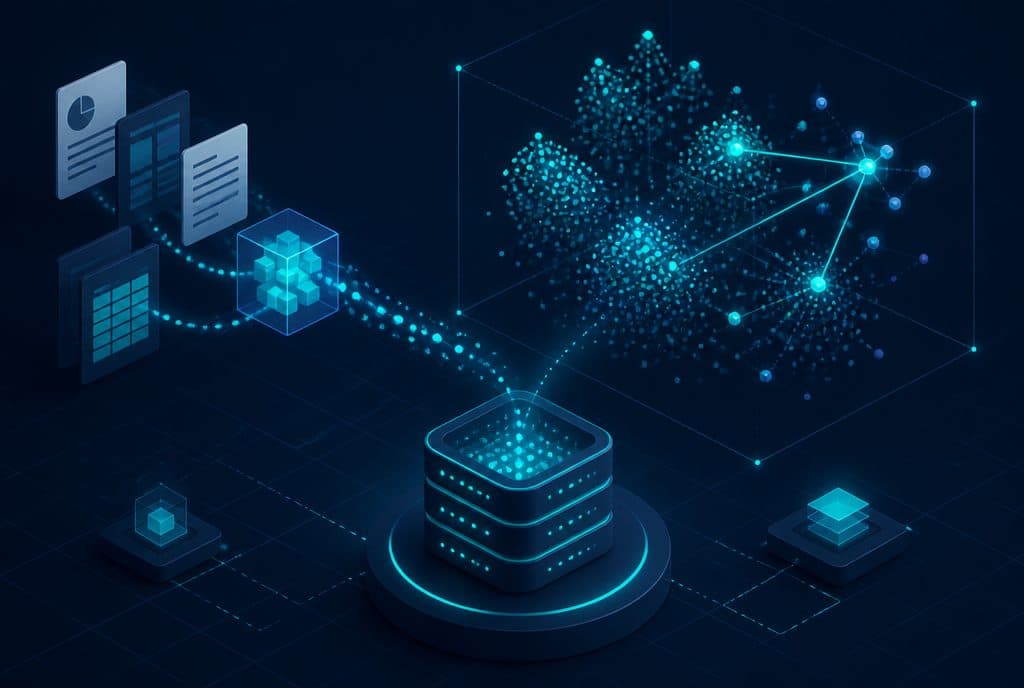
A vector database is a repository that stores information not as raw text, but as mathematical numbers ("vectors") that represent the meaning of the content. When an AI agent searches for an answer, it converts the customer's question into the same mathematical language and finds the "closest" pieces in terms of meaning — within the internal knowledge you provided in advance.
The Difference Between Regular Search and Vector Search — A Simple Analogy
Think of a library. In a regular database, books are organized by a precise index: title, catalog number, author. Searching for "order cancellation" will only return a result if the word "cancellation" appears as a keyword.
A Vector Database is like a librarian who has read all the books and understands the content. Ask them "What happens if a customer wants to return a product?" — and they will know to pull up the chapter on "Returns and Cancellations Policy", even if the question didn't include a single word that appears in the title.
The distance between a question and an answer is semantic proximity, not lexical identity.
What Does an AI Agent Do Without a Vector Database?
A language model like GPT-4 or Claude learned from texts on the internet — encyclopedias, forums, articles. It knows how to answer general questions fluently. But it does not know:
- What the price of your product is
- What the internal procedure for handling a complaint is
- What is written in your contract with a specific supplier
- What the status of customer X's order is
For such questions, a model without access to internal business knowledge will guess — and make mistakes.
The Connection to RAG and AI Agents
RAG (Retrieval-Augmented Generation) is the method that connects a Vector Database with a language model. The process is:
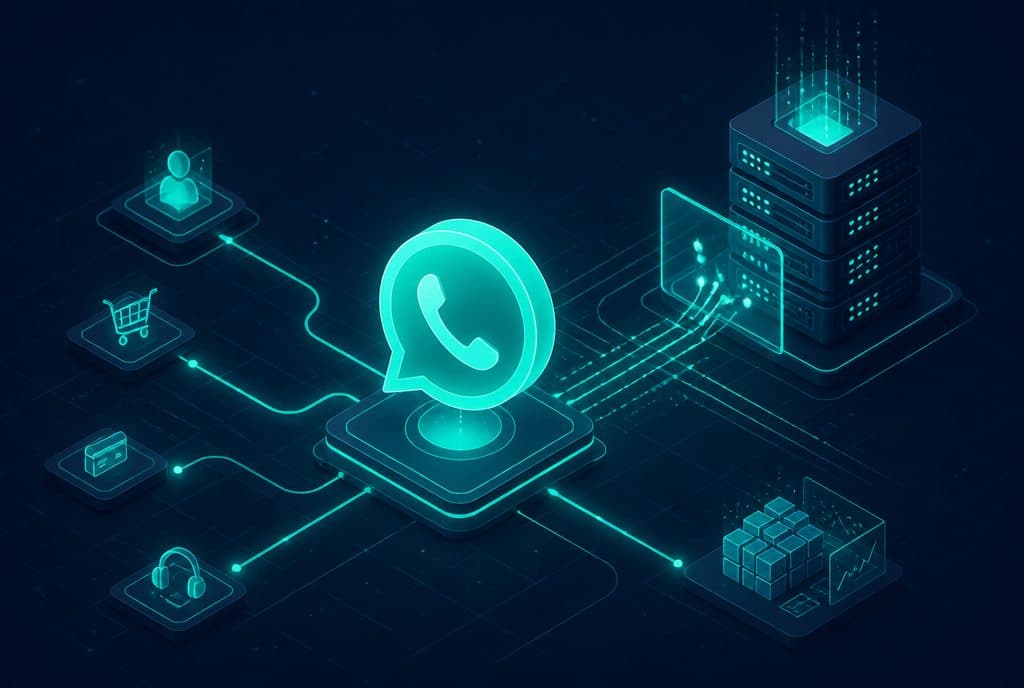
- A customer sends a question via WhatsApp, chat, or phone
- The Vectors: The question is converted into a mathematical vector
- The Search: The Vector Database returns the most relevant snippets from your knowledge base (catalog, procedures, FAQ, contracts)
- The Synthesis: The language model formulates a complete, human-like response based on the retrieved snippets
- The Answer is Sent to the Customer — accurate, based on your knowledge, in Hebrew
Without steps 2-3, the agent "hallucinates" answers. With RAG + Vector Database, it quotes from your documents.
Want to understand how an AI agent connected to your internal knowledge can help your business? Read more about AI agents for businesses and business automation.
What Can You "Feed" Into Your Business's Vector Database?
Any textual and structured information can be saved in a vector database:
| Type of Information | Example |
|---|---|
| Product and Service Catalog | Descriptions, prices, usage instructions |
| Procedure Documents | Customer onboarding procedure, complaint handling procedure |
| Frequently Asked Questions (FAQ) | Everything the service team answers daily |
| Terms of Service and Contracts | Warranty, return policy, limitations |
| Specific Professional Knowledge | Articles, training materials, operational guides |
| CRM Data | Call summaries, customer history |
When all this information is in a Vector Database, your agent can answer complex questions that no regular chatbot can handle.
Business Value: What Actually Changes?
More Accurate Customer Service — The agent answers based on real policies and procedures, not generic responses. A customer asking "What is the delivery time?" receives specific information for the type of product they ordered.
Fewer Errors — Without access to internal knowledge, an AI model might "invent" a plausible-sounding but incorrect answer. A Vector Database anchors the agent in facts that you have defined.
Easily Updated Knowledge — Added a new product, changed a policy, updated a price? Update the document in the Vector Database — the agent immediately knows the new information. Without retraining the model.
Scalability — A small business starts with dozens of documents. A chain with hundreds of products and thousands of inquiries — the same architecture scales as needed.
Saving Team Time — When the agent answers correctly the first time, fewer conversations "fall" to a human representative for checking and correction. Representatives are freed up for inquiries that truly require human judgment.
What It Is Not — Three Common Misconceptions
"It's only for large companies" — Incorrect. A medium-sized business with a catalog of 50 products and 20 pages of procedures can build a highly beneficial Vector Database. Quantity doesn't matter — relevance does.
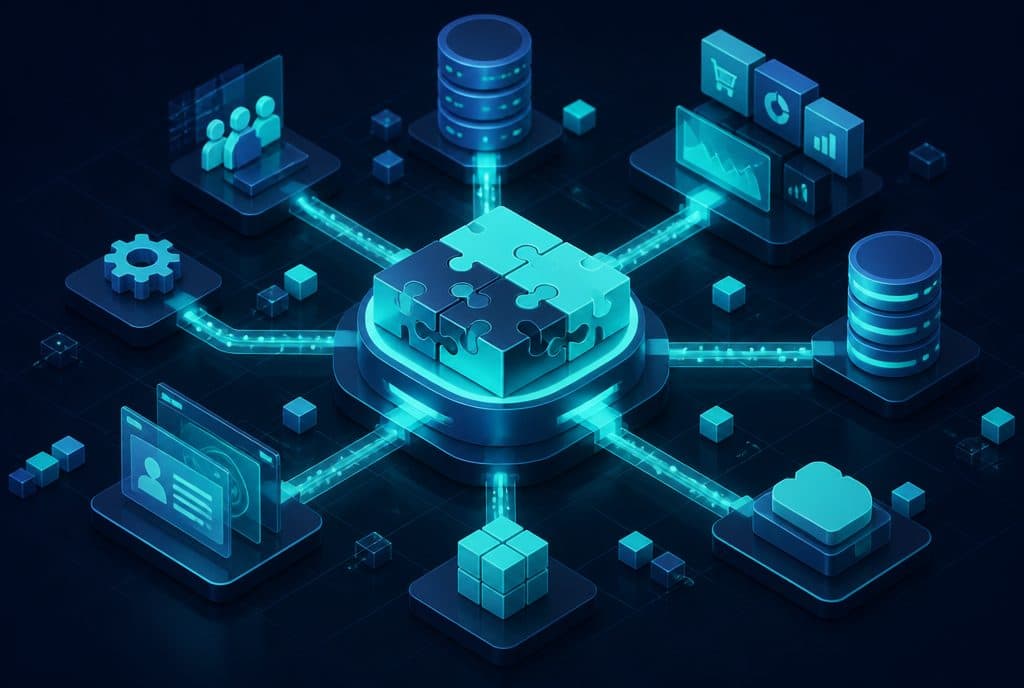
"It replaces my entire database" — Incorrect. A Vector Database complements your CRM, order database, and other systems. Each does what it is best at: CRM for customer management, Vector DB for understanding knowledge.
"Once we build it, we are done" — Incorrect. Business knowledge changes. A Vector Database requires ongoing maintenance: updating documents, adding new procedures, removing old information. Usually, this takes just a few hours a month, not a full-time job.
Summary
A Vector Database is the component that allows an AI agent to know who you are — not just what AI can infer from the internet. It is the solution to the gap between a "smart language model" and an "employee who knows my business". When you are considering implementing an AI agent to answer customer questions, manage sales conversations, or handle service requests — always ask: "Where will the agent get its internal knowledge from?" If there is no answer to "where", the agent likely won't provide reliable service.
At Automaziot AI, we build agents connected to your business's real knowledge — catalog, procedures, CRM — so that every answer is based on what you have defined, not on guesswork. Want to understand how it works in practice? Read also about business automation and what is RAG and how it works, and contact us for an initial consultation call.