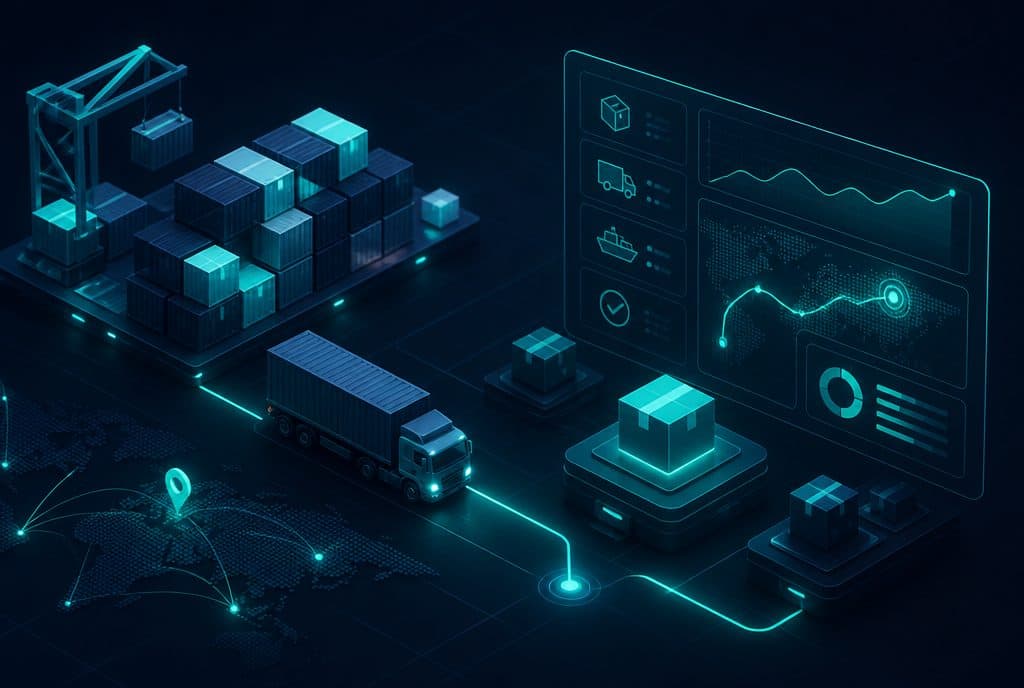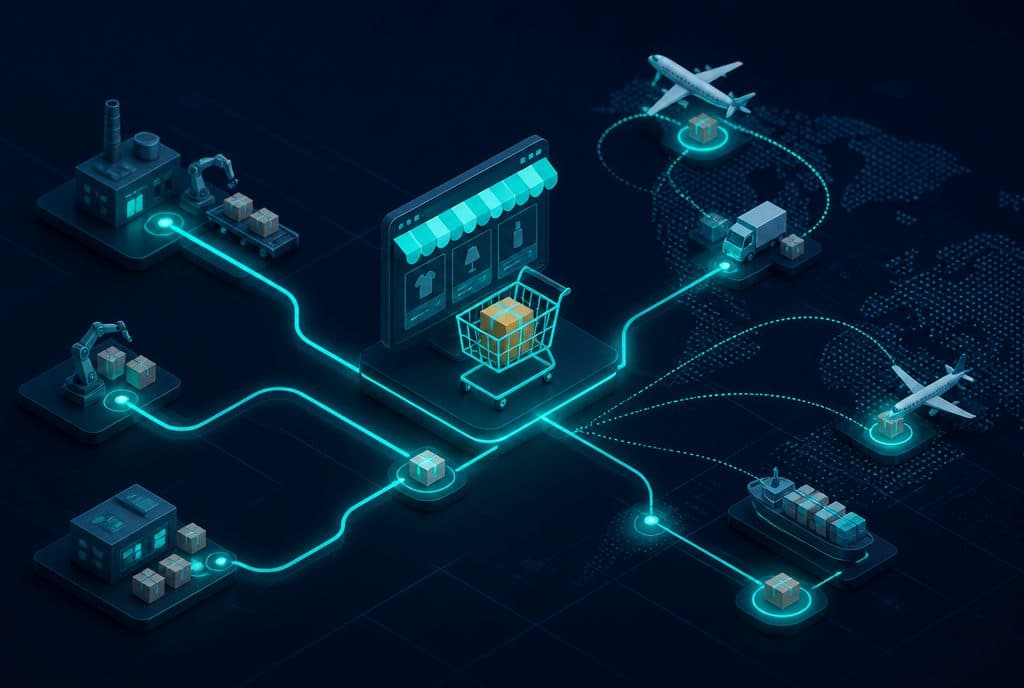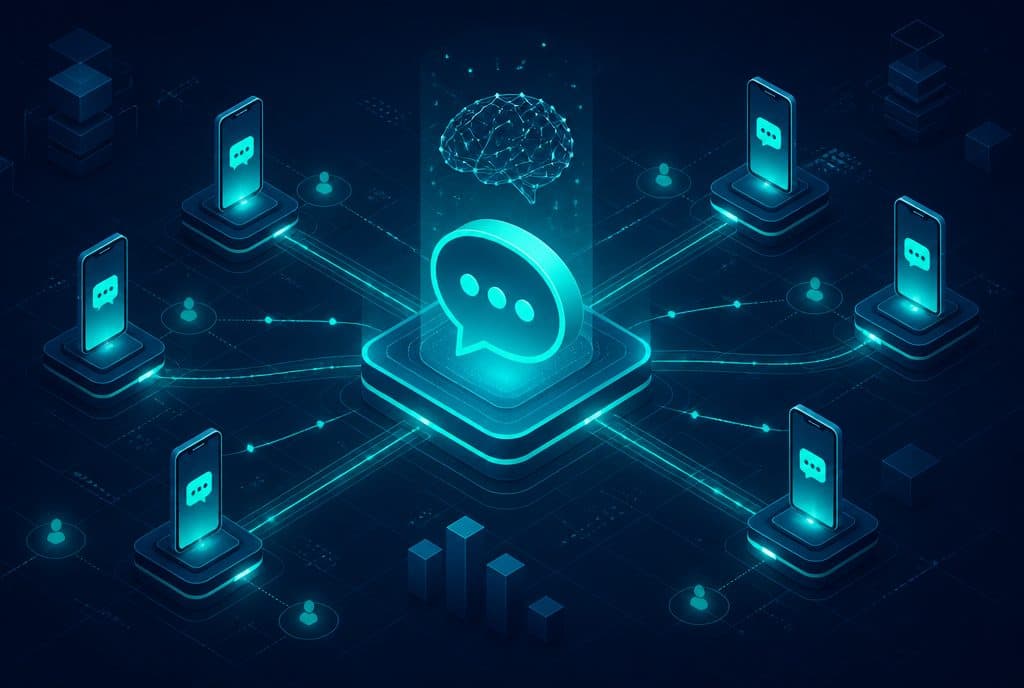

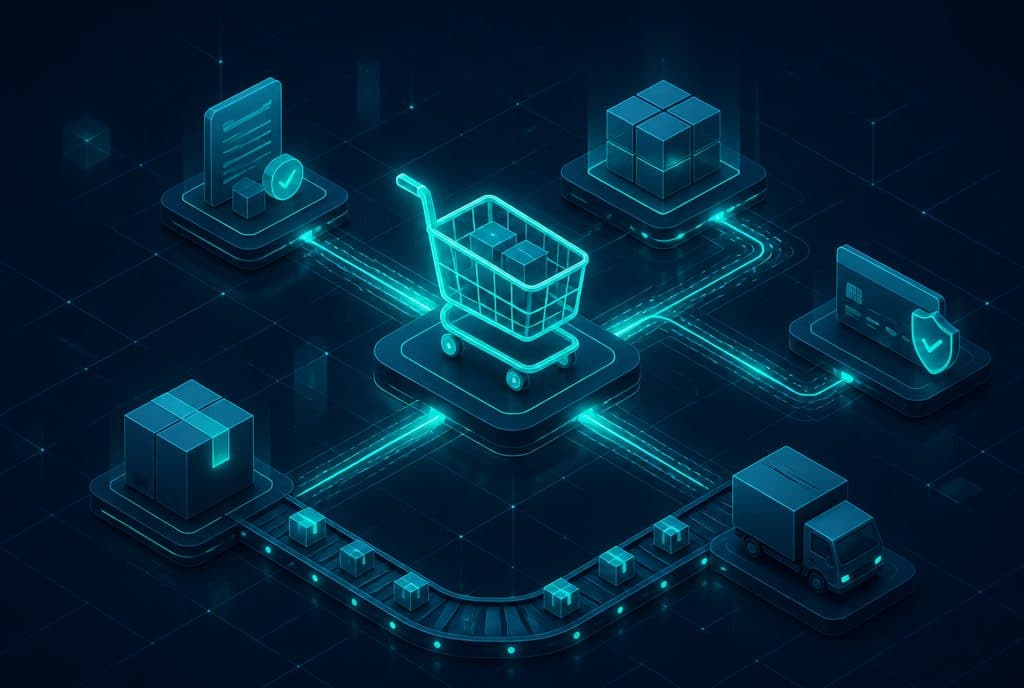
Online store automation connects Shopify or WooCommerce to WhatsApp, inventory, and customer service—so order updates go out automatically, "where is my order" questions are handled by a smart bot, abandoned carts receive targeted follow-ups, and stockout prevention becomes proactive. The team is freed from repetitive tasks and can focus on growth. At Automaziot AI, we build these solutions for Israeli stores—from small boutiques to retail chains.
What is Online Store Automation?
Online store automation is a software layer that connects your store platform (Shopify, WooCommerce) to your communication, inventory, and customer service systems—triggering repetitive processes without manual intervention in every case: updating a customer that their order has shipped, answering a common question on WhatsApp, sending an abandoned cart notification, and updating inventory levels. Instead of a human looking at every order and deciding what to send—the system does it based on rules you define in advance.
Why are Israeli Stores Adopting Automation in 2026?
Online store owners repeatedly report the same issues: most customer inquiries are "where is my package?", "when is it arriving?", "can I return this?". These are questions where the answer already exists in the system—it just needs to be retrieved and sent. With automation, the system does this on its own, 24/7, in fluent Hebrew.
The other side is the revenue left on the table: an abandoned cart that doesn't get a follow-up within the first hour—most of those customers never return. A product that runs out of stock without anyone in the store noticing—leads to lost sales. Automation doesn't solve everything, but it closes the gaps that form when a small team manages a high volume of orders.
Main Use Cases — Table
| Scenario | What Happens Manually Today | What Automation Does |
|---|---|---|
| Order Update | Representative manually sends a WhatsApp / SMS | Order shipped → Automatic message with tracking number |
| "Where is my order?" | Representative checks the courier portal and replies | WhatsApp bot pulls real-time status and replies within seconds |
| Abandoned Cart | No follow-up, the customer leaves | WhatsApp/email message with the items left behind, based on your timing |
| Low Stock | Someone notices too late | Automatic alert to the purchasing manager when reaching a defined threshold |
| Post-First Purchase | No contact with customer until next purchase | Thank you message + review request after the product arrives |
| Return Request | Form, call, manual coordination | Customer sends "I want to return" on WhatsApp → Bot guides them, opens a ticket in the CRM |
How Does It Work Behind the Scenes?
The foundation is the connection between the store platform and the automation tools. In our projects, we work with n8n as the logic engine—it captures events from the Shopify or WooCommerce API (new order, status change, abandoned cart) and triggers the appropriate action: sending a WhatsApp message via the WhatsApp Business API, updating the CRM, or sending an internal alert.
Above this layer sits an AI agent—a language model capable of understanding free-text questions in Hebrew and responding to them. When a customer writes "when is my order arriving?"—the agent doesn't just look for a keyword; it understands the intent, pulls the data from the tracking system, and replies in natural language. When the question is more complex—"I wanted to order a different size"—the agent knows when to hand it over to a human representative along with a summary of the conversation.
The technical steps:
- API Connection — The store sends events (webhooks) to the n8n environment
- Logic and Conditions — n8n decides what to do based on the event type and your defined conditions (e.g., send a message only if the order is above a certain amount)
- Natural Language — The AI agent translates the data into a Hebrew message, matching your brand's voice
- Documentation — Every inquiry and response is logged in the CRM, so a human representative entering the chat can see the entire history
The WhatsApp Bot for Stores — The Core of It All
In Israel, customers don't expect to open a dedicated app. They write on WhatsApp. Therefore, the vast majority of the service scenarios we build run through the WhatsApp Business API—the official version that allows business automation.
The bot doesn't work with rigid menus (press 1 for this, 2 for that). It conducts a free-flowing conversation, understands everyday Hebrew, and can:
- Retrieve order status by name, order number, or phone number
- Answer frequently asked questions about shipping policies, returns, and delivery times
- Guide a customer through the return process
- Suggest an alternative product when an item is out of stock
- Transfer to a human representative when the question goes beyond the bot's knowledge base
Recovering Abandoned Carts — What Works and What Doesn't
An abandoned cart is a customer who was ready to buy—and then stopped. The reasons can be many: a distraction, uncertainty about sizing, or wanting to think it over. A message sent too quickly can be annoying; a message sent too late is no longer relevant.
The automation we recommend typically works in two stages:
- First Stage (~60-90 minutes after abandonment): A short reminder message with the items left in the cart and a link to return. No sales pressure.
- Second Stage (48-72 hours later, if they haven't returned): A short message addressing common friction points ("Do you have a question about the product? You can contact us directly").
It is important to note: abandoned cart automation requires that the customer consented to receive marketing communications—in accordance with Israeli privacy protection laws. Building this consent flow correctly is part of the project, not an afterthought.
Inventory Synchronization — Preventing Frustration for Both Sides
Selling a product that is out of stock hurts the customer experience and creates unnecessary manual work: canceling the order, issuing a refund, and trying to appease a disappointed customer. Inventory management automation closes this gap:
- Low Stock Alerts — When a product drops below your defined threshold, an alert is sent to the purchasing manager—without manual checks
- Automatic Purchase Blocking — A product that reaches zero is immediately marked as "out of stock" in the store, not hours later
- Supplier Coordination — For stores working with regular suppliers, a reorder can be sent automatically when reaching a certain threshold
Who is Online Store Automation For?
Automation starts delivering clear value when there is volume. Businesses that benefit the most:
- Stores with 50+ orders per month — Below this, manual handling is not yet painful enough
- Stores receiving repetitive service inquiries — The same questions over and over about shipping, sizes, and policies
- Stores with a service team of 1-3 people every hour saved by automation is worth more
- Stores with high cart abandonment rates — A high industry average; recovering even a small portion is highly valuable
- Stores with dynamic inventory — Products that arrive and sell out frequently
Very early-stage stores—with a few dozen orders a month and a team that can comfortably handle every case manually—can wait. The investment is justified when the volume already creates a clear pain point.
How to Get Started?
The right approach is not "automate everything in one day." It starts with the single scenario that hurts the most:
- Mapping — Which repetitive inquiries drain the most time from your team? Usually, order updates and "where is my package" questions are the first point of focus.
- Setting Up the First Module — We build the automation for this scenario, connect it to the store and WhatsApp, and run it.
- Measurement — After 2-4 weeks, we check: How many inquiries did the bot handle? How many were transferred to a representative? What is the escalation rate?
- Expansion — Add the next scenario: carts, inventory, reviews—in the order that best suits your business.
Want to understand which scenario you should start with? Talk to us and we will build a practical, measurable roadmap together.
Read More
- What is an AI Agent for Business? The Complete Guide — The foundation for understanding the technology behind automation
- WhatsApp Bot for Stores — Details on our bot service for stores and businesses
- Online Store Automation — The full service page
Summary
Online store automation is not an "extra for those who have time." It is an infrastructure that saves resources, prevents customer loss, and allows a small team to manage high volumes—without burning hours on questions where the answer already exists in the system. The key takeaways: start with one clear scenario, measure, and only then expand. A WhatsApp bot is usually the right starting point—because that is where the Israeli customer already is.