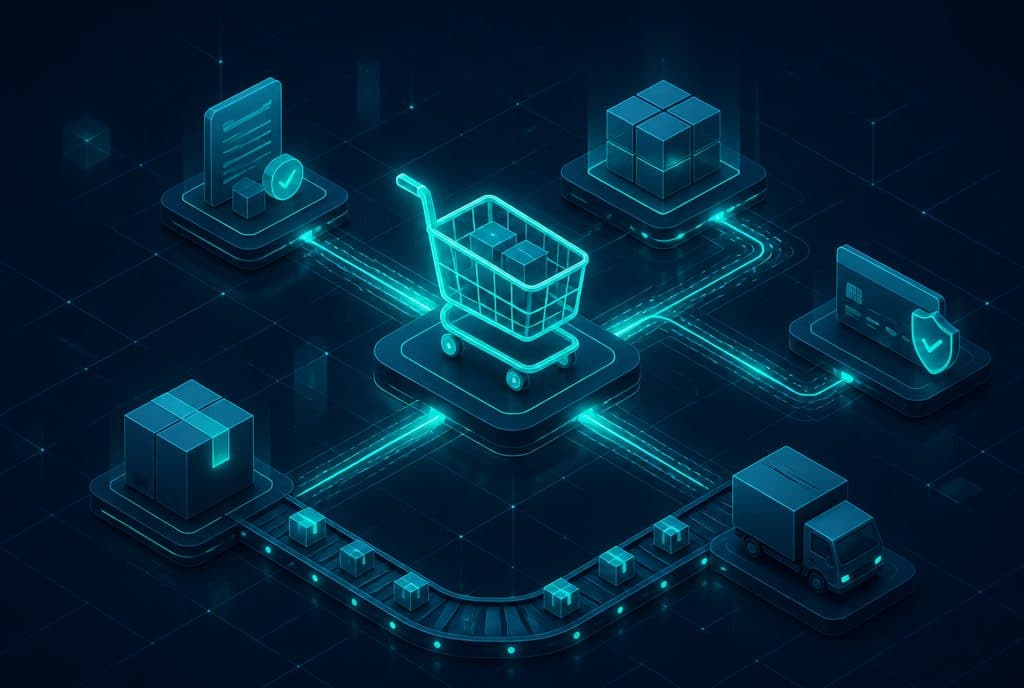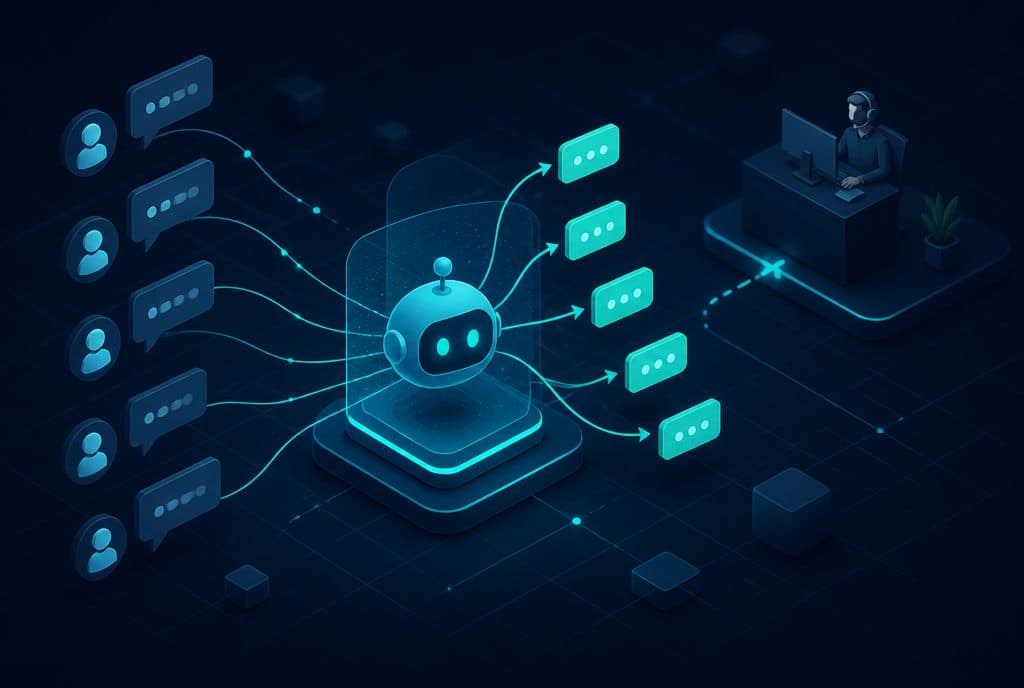

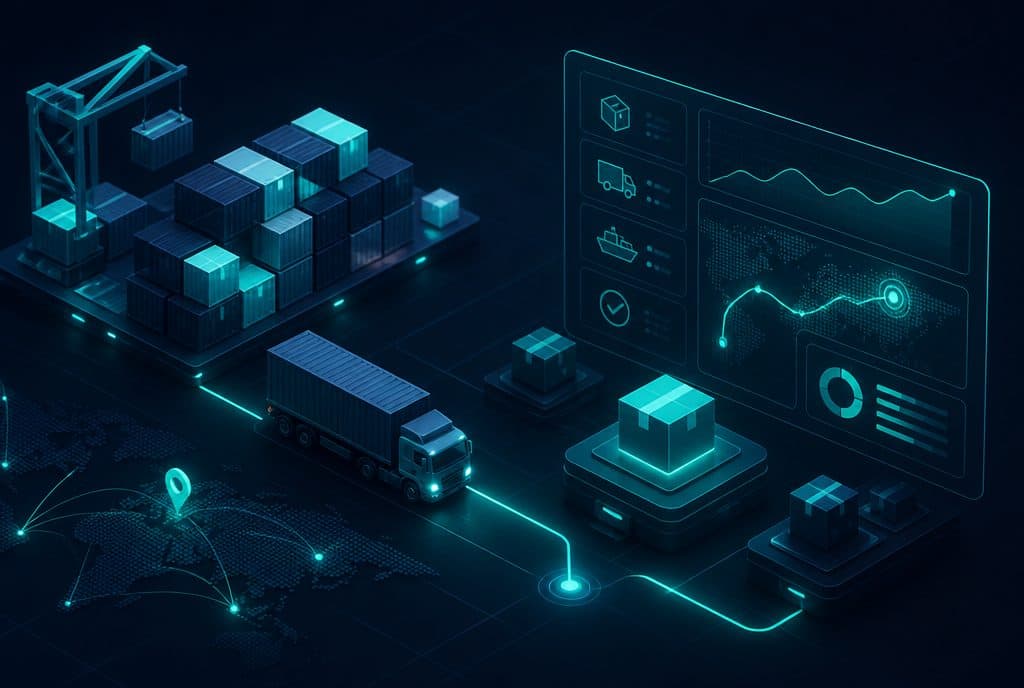
A moving, shipping, or logistics company manages dozens to hundreds of inquiries a day: a customer requests a quote, a driver reports a delay, a customer asks where their shipment is, a coordinator tries to book a pickup window. Most of these actions are repetitive, time-sensitive, and consume hours of representatives' work. Automation for moving and logistics companies connects existing management systems, customer communication channels, and internal processes — so that information flows automatically and no one has to transfer it manually.
How Does Automation Help a Moving Company?
Automation for a moving company connects inquiry channels (WhatsApp, email, form) to the internal management system, allowing you to send quotes, update shipment status, coordinate pickups, and send alerts to the customer — automatically, without human touch at any routine stage. The human team is freed up to handle exceptions, complexities, and business clients that require human judgment.
What Exactly Can Be Streamlined — Capability Table
| Process | What Happens Manually Today | What Automation Does |
|---|---|---|
| Quote Request | Representative receives, fills out, sends back | Customer fills out a form / WhatsApp, the system automatically generates and sends a quote |
| Shipment Status Update | Customer calls, representative checks and answers | Customer sends a message, the system returns the updated status from the internal system |
| Pickup Coordination | Coordinator calls the driver and the sender | Order confirmed → Driver automatically receives a task with pickup details |
| Recipient Reminder | Representative calls the day before delivery | Automatic WhatsApp message hours before arrival |
| Proof of Delivery | Driver reports by phone, representative updates | Driver sends a confirmation photo → Record is automatically updated in the CRM |
| Customer Follow-up | Representative adds manually | Automatic message 24 hours after delivery to collect feedback |
Practical Scenarios in the Israeli Market
Scenario 1: Moving Quote on WhatsApp — Closing a Lead at an Inconvenient Hour
A customer writes on WhatsApp on Friday afternoon: "I need to move furniture from Tel Aviv to Haifa, three rooms, when is it possible?" Without automation — the request sits until Sunday. With automation: The AI agent asks qualifying questions (floor, elevator, date), generates an initial quote, and sends it immediately. The customer gets an answer within minutes, not days later — with an automatic follow-up on Sunday morning.
Scenario 2: Automatic Status Updates — Fewer "Where is my..." Calls
A shipping company handling many packages receives dozens of "Where is my package?" calls a day. With automation: The customer sends an order number on WhatsApp, the agent pulls the status from the management system, and replies in seconds. In addition, an automatic message sequence is set up: receipt confirmation, message when the package is on its way, and a message an hour before arrival.
Scenario 3: Pickup and Delivery Coordination — Less Manual Coordination
A logistics company managing independent drivers: when an order is confirmed, a coordinator needs to call the right driver and send them the details. With n8n connected to the management system — a confirmed order triggers an automation that checks which driver is available, sends them all the task details on WhatsApp, and waits for confirmation. Only if the driver hasn't confirmed within X minutes — the inquiry is escalated to the coordinator's attention.
Scenario 4: Managing Recurring Business Clients
A business client who orders weekly shipments: every new order coming in via form or WhatsApp is automatically recorded in the CRM with full history, agreed rates are preserved, and an invoice is automatically generated at the end of the month based on the activity log. The representative focuses on proactive calls with the client, not on typing.
How to Get Started
Logistics automation does not require replacing all systems. The right approach is modular:
- Define one clear process — What takes up the most time? Quote requests? Status updates? Driver coordination? Start there.
- Map the required information — What goes in (customer request, shipment data), what goes out (quote, update, task for the driver), and where this information lives today.
- Build one channel first — Usually WhatsApp, because most Israeli customers are already there. See WhatsApp Agent for Business.
- Connect to the existing system — Via API, webhook, or Google Sheets if there is no open API.
- Gradual expansion — Once the first workflow is running and proving itself, add another process.
All of these steps are performed with Business Automation tailored to the industry.
Questions to Consider Before You Start
Before approaching automation, it is worth answering a few questions:
- What is the primary customer entry channel? WhatsApp, website, email, phone — the solution is built around the existing channel, requiring no behavioral change.
- Where does shipment information live? A dedicated system, Excel, Google Sheets — the solution connects to any of them.
- Who decides on pricing? If pricing is simple and based on fixed parameters — it can be automated. If every quote is different — the agent collects the information and the human representative sends it.
- What is the team size? Even a company with 3-4 people benefits from automation — especially during hours when manual replies are impossible.
Regarding the Privacy Protection Law
When automation handles customer details — names, phones, delivery addresses — it must operate according to the Israeli Privacy Protection Law. In practice: information is collected only for the declared purpose, is not kept longer than necessary, and is not transferred to third parties without consent. We build our automations with this principle built-in.
Want to understand what can be streamlined in your company? Talk to us and we will build a practical list of processes and a starting point together.
For details on WhatsApp Agent for Business — the tool placed at the forefront of most of our logistics solutions.
What's Next
If you've read this far and you run a moving, shipping, or logistics company — chances are high that you have at least two or three processes that repeat dozens of times a week. The ROI of logistics automation doesn't come from impressive technology — it comes from the fact that the representative who used to answer twenty "Where is my package?" calls a day is now free to close new clients.
The first step is not choosing a platform — it's characterization. What takes up the most time, what repeats itself, and what do customers ask again and again. Start there.
For more information on what an AI agent can do for businesses in general, see: What is an AI Agent for Business — The Complete Guide.
How much does it cost?
| Component | Price (one-time setup, ex-VAT) |
|---|---|
| AI customer-service agent | ILS 9,400 |
| Business knowledge base | ILS 3,000 |
| Connection to an existing system (CRM / Sheets / Monday) | ILS 2,500 |
| Alert to the team / owner | ILS 800 (per alert) |
| WhatsApp Business API setup | ILS 700 |
A complete starting point — a WhatsApp AI agent including the business number, server and agent control room — is from ILS 10,200; an agent with a management system (CRM) from ILS 18,200, a multi-agent system from ILS 25,350. There is no monthly fee; third-party costs (server, messages, AI) of about ILS 100–500 a month are paid directly to the providers. The full component price list: pricing page.
Summary
Automation for moving and logistics companies is not a massive technological project — it is the streamlining of existing processes, connecting information sitting in different places into one organized communication channel. Quotes, status updates, driver coordination, and recipient alerts — all of these can be streamlined in stages, without replacing existing management systems and without retraining the team. The result: less workload on representatives, faster response times for customers, and fewer data entry errors.