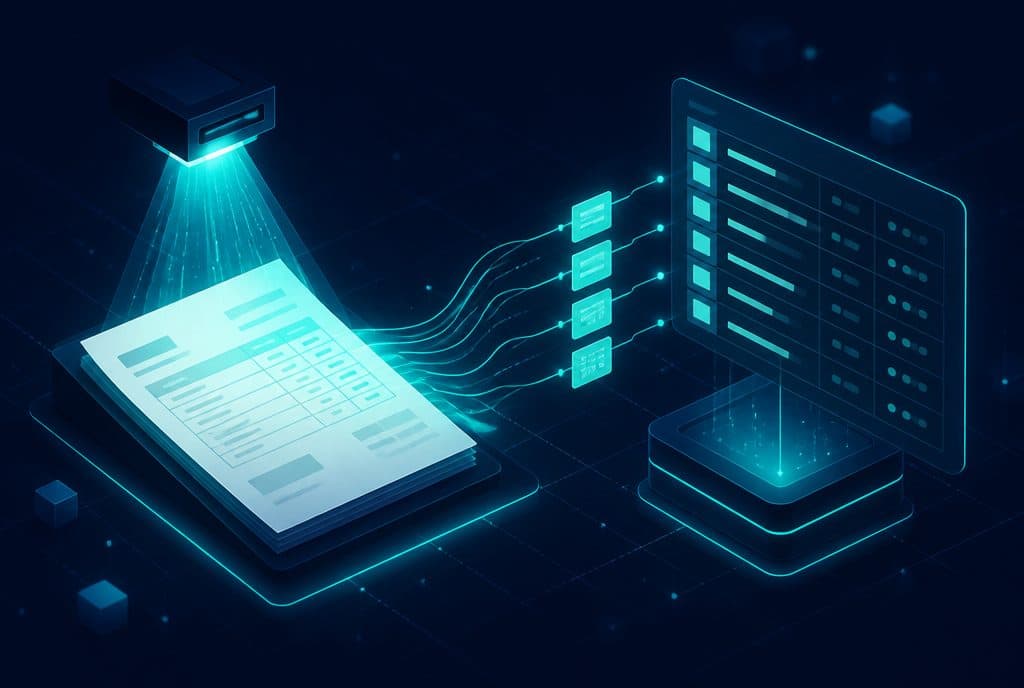

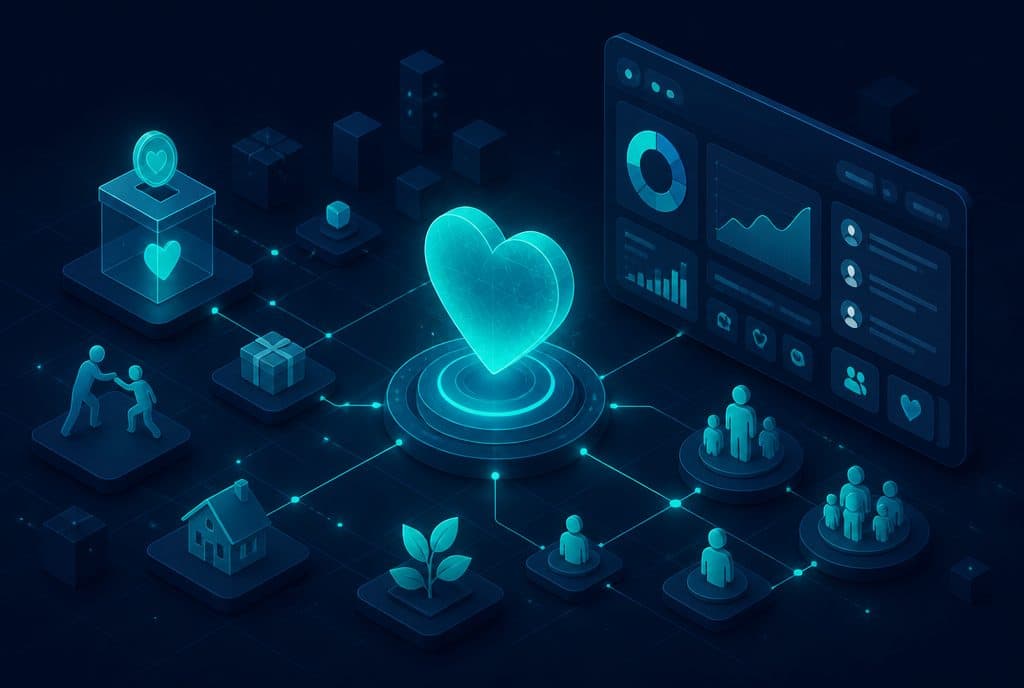
A non-profit organization receives an inquiry from a potential donor on Friday at 8:00 PM. No one answers. By Sunday — the donor has already forgotten, or worse, donated elsewhere. Automation for non-profits solves exactly this problem: immediate response to donor inquiries, volunteer recruitment, and event registration at any hour — without hiring additional staff. The bot answers, routes, documents, and sends follow-ups — and the human team receives only what truly requires a human touch.
Non-profits and non-governmental organizations (NGOs) in Israel operate with limited resources: a small team, a tight budget, and a surge of inquiries that comes in waves — around campaigns, events, and holidays. Business automation allows the organization to manage this entire volume without growing its workforce, ensuring that no inquiry falls between the cracks.
How Automation Helps a Non-Profit
Automation for non-profits connects all communication channels — WhatsApp, website forms, email — into a single managed stream: an AI bot answers immediately, filters, routes, and documents. A donor who reaches out receives confirmation and a follow-up within minutes; a volunteer candidate receives a questionnaire and a scheduled call; an event registrant receives an automatic reminder the day before. The team handles only the inquiries that require human judgment — everything else happens on its own.
What Non-Profits in Israel Lose Without Automation
The main problem with manual management of a non-profit is the missed opportunities: an inquiry that arrived at an inconvenient hour, an email swallowed in a crowded inbox, a volunteer who registered but received no confirmation and ultimately did not show up. Each of these is a lost opportunity — and a small non-profit cannot afford such waste.
In addition, regarding Israeli privacy protection laws, manual management of donor and volunteer lists in Excel spreadsheets — without explicit consent and an opt-out option — creates regulatory exposure that most organizations are unaware of. An organized automation system solves this from day one.
Automation Scenarios for Non-Profits: What You Can Implement
Scenario 1: First Inquiry from a Donor
A potential donor fills out a form on the website or sends a WhatsApp message. Without automation: the inquiry waits for an available representative. With automation:
- The bot responds within seconds: explains the organization's activities, sends a link to donation options, and requests details.
- The inquiry is recorded in the CRM with all details.
- An automatic email is sent with confirmation and information about the donation's impact.
- If the donor did not complete the donation — a follow-up is sent the next day.
Scenario 2: Volunteer Recruitment
A volunteer candidate sends a message: "I want to volunteer":
- The bot asks screening questions: availability, areas of interest, relevant experience.
- Based on the answers — the bot presents suitable roles and offers to schedule an introductory call.
- The meeting is added to the coordinator's calendar; the candidate is sent an automatic confirmation and a reminder the day before.
- After the call — an automatic follow-up with the next steps for joining.
Scenario 3: Event Registration
A fundraising campaign, a donor evening, community activity — all generate a wave of inquiries around the same date:
- A registration form is connected to the bot — immediate confirmation for every registrant.
- 48 hours before the event: an automatic reminder with details and address.
- On the day of the event: a morning message with a navigation link.
- After the event: a thank you + automatic feedback request.
Scenario 4: Ongoing Support for Existing Donors
Recurring donors are a non-profit's most valuable asset — and most organizations don't have the time to nurture them properly:
- Automatic monthly update: "This is how your donation made an impact this month."
- Renewal reminder for donors who stopped contributing.
- Annual milestones: birthday message, answers to frequently asked questions about tax receipts.
Capabilities Table: What Automation Can and Cannot Do for a Non-Profit
| Capability | Automation | Human Team |
|---|---|---|
| 24/7 inquiry response | ✓ | ✗ |
| Event registration & instant confirmation | ✓ | Takes a lot of time |
| Screening questionnaire for volunteers | ✓ | Partially |
| Follow-up for incomplete donations | ✓ | ✗ |
| Reminders before an event | ✓ | ✗ |
| Deep introductory conversation with a volunteer | ✗ | ✓ |
| Decision-making on hiring a volunteer | ✗ | ✓ |
| Donor relations management & strategy | ✗ | ✓ |
| Organized CRM updates | ✓ | Often forgotten |
The simple rule: anything that repeats itself and has a clear pattern — automation does better than a human. Any conversation that requires empathy, judgment, or authority — leave to a human.
Tools and Platforms: What Non-Profits Build
The common solution we build for Israeli organizations:
- n8n — The central automation platform. It connects all systems: website forms, WhatsApp, CRM, calendar, and email. It can be hosted on the organization's server or in the cloud, and can be maintained with complete independence.
- WhatsApp Bot — The most common channel for inquiries in Israel. Details on setup can be found in WhatsApp bot for business (the same principle applies to non-profit organizations).
- CRM — The database that manages donors, volunteers, and records. Automation writes to it without human intervention.
- Automatic Lead Management — Every inquiry enters a managed stream: filtering, routing, follow-up. No need to remember who was waiting for a response.
Three Things to Check Before You Start
Before building any automation, it is worth pausing to ask:
- What is the most common inquiry the organization receives? (New donors? Volunteers? Questions about activities?) — This is the first stream you should streamline.
- What happens right now when someone reaches out at an inconvenient hour? — If the answer is "nothing happens until morning," this is the urgent problem to solve.
- Where is our data located right now? — An Excel sheet, a WhatsApp group, an email inbox? The more scattered the data, the more a CRM is the necessary first step before automation.
How to Start: One Step at a Time
The approach we recommend for non-profits is modular: choose one stream, build it right, and see results — before expanding.
Weeks 1-2: Characterization Document all types of inquiries, decide what the bot answers and what goes to a human, and define privacy rules in accordance with Israeli privacy protection laws.
Weeks 2-4: Building and Connecting Set up the bot, connect it to the CRM and communication channels, and write the scripts in Hebrew/English with the organization's voice.
Weeks 4-6: Testing and Controlled Launch Run at a low volume, check for any failures, and fine-tune based on real inquiries that come in.
After Week 6: Expansion Add additional streams: volunteer recruitment, event management, donor updates. Each stream stands on its own, so a glitch in one part does not affect the rest.
Managing a non-profit and wondering what you can streamline? Talk to us and we will map out together the streams that will yield the most value — free of charge and with no obligation. Even if you decide to build it yourself, you will leave with a clearer picture of what you need.
How much does it cost?
| Component | Price (one-time setup, ex-VAT) |
|---|---|
| AI customer-service agent | ILS 9,400 |
| Business knowledge base | ILS 3,000 |
| Connection to an existing system (CRM / Sheets / Monday) | ILS 2,500 |
| Alert to the team / owner | ILS 800 (per alert) |
| WhatsApp Business API setup | ILS 700 |
A complete starting point — a WhatsApp AI agent including the business number, server and agent control room — is from ILS 10,200; an agent with a management system (CRM) from ILS 18,200, a multi-agent system from ILS 25,350. There is no monthly fee; third-party costs (server, messages, AI) of about ILS 100–500 a month are paid directly to the providers. The full component price list: pricing page.
Summary
Non-profits and NGOs in Israel face the same challenge that small businesses know all too well: inquiries coming in waves, limited staff, and the expectation of an immediate response. Automation does not replace humans — it ensures that no inquiry falls between the cracks, that every potential volunteer receives a response on the day they reach out, and that the team frees up energy for what truly requires people.
The first step is not the technology — it is the characterization: writing down the inquiries that repeat themselves over and over and deciding what waits for automation. Everything else comes later.
For further reading: What is an AI agent for business? — the same principles that apply to businesses apply to non-profits, and it is explained there in detail.