
NLP (Natural Language Processing) is the technology that enables computers to understand and respond to human language — including unvocalized Hebrew, slang, and informal phrasing. Without NLP, a bot cannot understand "I'm looking for something around a thousand shekels" — it would search for that exact phrase and find nothing. Thanks to NLP, it understands what the customer wants and guides them to the next step. At Automaziot AI, we use NLP in every agent we build — from WhatsApp bots to automated lead filtering.
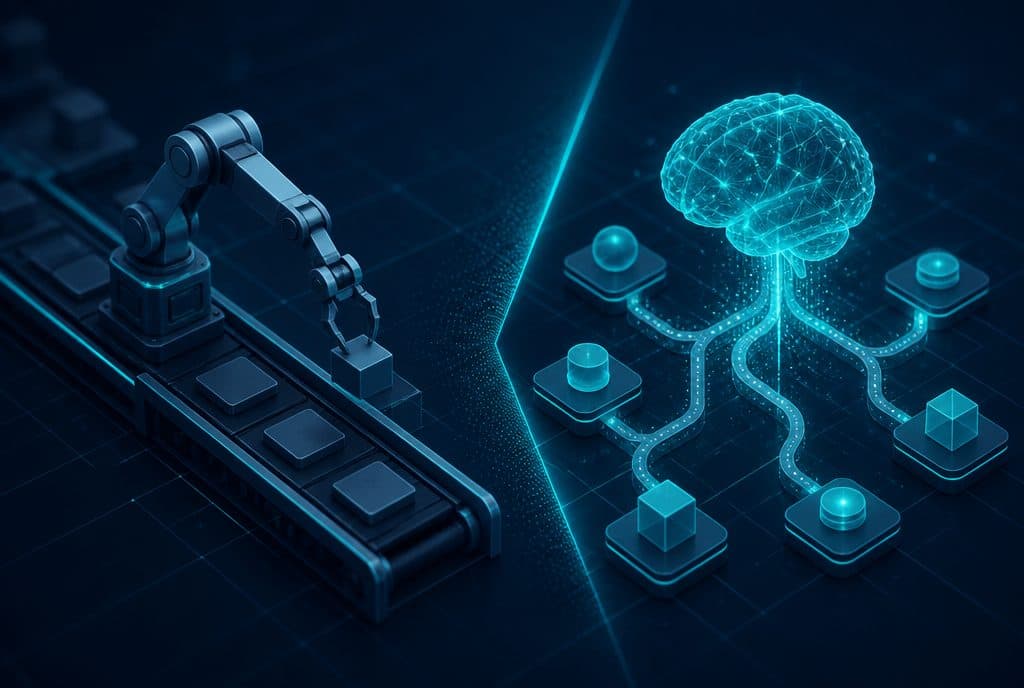
NLP has been around for decades, but the real revolution occurred with the emergence of Large Language Models (LLMs). A few years ago, an NLP system could identify that the sentence "I didn't make it to the meeting" expresses a negative sentiment — but it couldn't decide what to do with it. Today, an LLM understands the context, knows it's a meeting cancellation, and can initiate a conversation to schedule an alternative meeting. This difference is what turned NLP into a practical business tool.
What is NLP?
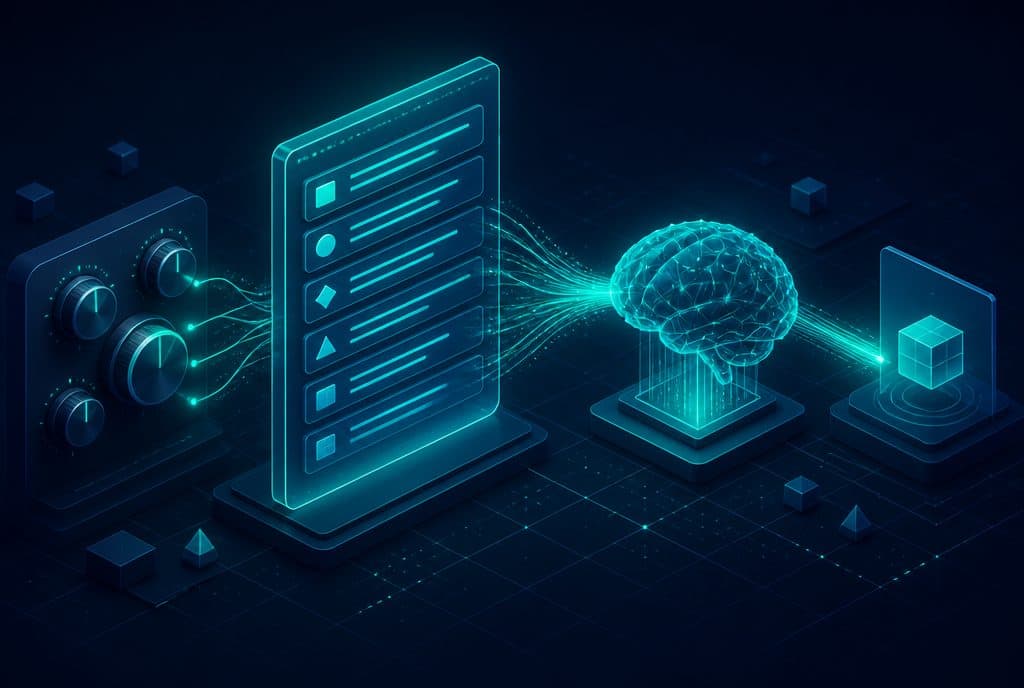
NLP (Natural Language Processing) is a branch of artificial intelligence that enables computers to read, understand, and respond to free human language — not just fixed keywords. Instead of the customer clicking on a menu, they write what they want, and the system understands the intent behind the words and responds accordingly.
What Does NLP Actually Do?
| Capability | What It Means for the Business | Example |
|---|---|---|
| Intent Understanding | What the customer actually wants, even if not phrased precisely | "I feel like knowing how much it costs" → Price query |
| Entity Recognition | Extracting specific details from the text | "Wednesday at 16:00" → Meeting time |
| Sentiment Analysis | Whether the customer is satisfied, frustrated, or interested | "Not happy with the service" → Immediate transfer to a representative |
| Context Understanding | Remembering the entire conversation, not just the last message | "Change that to 17:00" — Knows what "that" refers to |
| Natural Language Response | Generating a response that sounds human | Not "Choose option 1 or 2" but a complete answer |
Why It Matters to Your Business
The old way: A customer writes "Hello" to a bot, gets a menu with 6 options, clicks 3, gets a sub-menu, and after three rounds throws the phone away and calls directly. Satisfaction score: Low. Closing a lead on the first interaction: Doesn't happen.
The way with NLP: A customer writes "Do you have anything for document storage?" — the bot understands this is a product question, asks one clarifying question ("Roughly how many documents?"), and offers a relevant solution. If the customer is interested, the bot books a meeting directly in the calendar. All of this without anyone from the team having to be awake.
Three practical changes businesses report:
- Less conversation abandonment — Customers don't get "I didn't understand, please try again" for every phrasing that isn't exactly in the script.
- More qualified leads — The agent filters, asks, and warms up the lead before the inquiry reaches the team.
- After-hours coverage — A customer writing at 23:00 gets a real response, not "Our representatives will get back to you during business hours."
NLP and Hebrew
Hebrew is one of the most challenging languages for NLP systems, for several reasons:
Vocalization and Non-Vocalization: The sentence "ספר לי" can be "tell me a story" (ספֵּר לי) or "tell me" (סַפֵּר לי) — without vocalization (Nikud), the computer must infer from context. Older systems would get confused; advanced models infer correctly in most cases.
Words that look different but have similar meanings: "מחיר" (price), "כמה עולה" (how much does it cost), "מה העלות" (what is the cost) — three ways to ask the same question, all in everyday Hebrew. A good NLP system identifies the intent in each of them.
Acronyms and Slang: "ת.ח." (under-the-counter/please find attached), "בעז"ה" (with God's help), "אחמ"ש" (shift manager) — Israelis write like this on WhatsApp. Models trained on real Israeli text recognize them; models trained only on formal text — less so.
RTL and Word Order: Hebrew allows flexibility in word order that has no parallel in English. "הלכתי לשוק" (I went to the market) and "לשוק הלכתי" (To the market I went) have subtle differences in emphasis, and a good system distinguishes between them.
In practice, the models we use succeed with everyday Hebrew at a high level. The adaptation to a specific business — your professional terminology, style, and the phrases your customers use — is done during the characterization phase and through focused training.
The Connection to AI Agents
NLP is the foundation upon which AI agents stand. Without NLP, an agent can perform actions, but it doesn't understand what the customer is asking for. With NLP, the agent:
- Understands free-form inquiries — "I'm looking for a solution to manage my customers" → Identifies that this is a CRM question
- Asks clarifying questions — "Roughly how many customers? Are you working with a system today?" — Just like a sales representative
- Decides what to do — Depending on the answers, offers a consultation call, sends material, or transfers to a representative
- Documents in the CRM — Everything is written automatically, not entered manually
In our WhatsApp bot, NLP is what makes the customer feel like they are talking to a human. They don't get "Press 1 for a meeting" — they have a conversation and book a meeting at the end of it.
For a deeper review of the engine that powers advanced NLP systems, read: What is LLM for Business.
What NLP Cannot Do (Yet)
It is important to be direct:
- Does not replace human judgment — A dispute with a customer, deciding on an exceptional discount, managing a sensitive situation — these are still for humans.
- No knowledge it wasn't trained on — If you didn't feed your refund policy into the agent, it won't know how to answer it.
- Not for high-intensity complexity — 100 messages simultaneously — yes. Managing a complex negotiation — still requires a human at some point.
- No guessing — If the context is unclear, a good system will ask, not guess.
These boundaries are known, and the characterization we perform at the start of every project determines exactly what the agent answers and what it transfers to a human.
Want to see how NLP works in practice in a business WhatsApp conversation? Contact us and we will demonstrate a live conversation for you — from what the customer writes to scheduling a meeting in the CRM.
Summary
NLP is the component that turns a bot from a "digital menu" into a "representative who understands what the customer wants." For an Israeli business, the critical detail is that the system works in real Hebrew — including informal phrasing, acronyms, and your customers' specific speaking style. NLP alone does nothing; it is an engine that needs to be connected to action — to the CRM, the calendar, the meeting scheduler. When everything is connected correctly, the customer gets a response at 23:00, the meeting is booked at 00:15, and your team arrives in the morning to a warmed-up lead — without anyone having to stay awake.