LLM — which stands for Large Language Model — is an artificial intelligence system trained on massive amounts of text that has learned to read, understand, and generate human language. It is the engine behind ChatGPT, Claude, and Gemini, and it is what allows an AI agent to understand a customer inquiry and conduct a natural conversation — without a pre-determined script. For business owners: an LLM is not a tool you install — it is an infrastructure provided by companies like OpenAI, Anthropic, and Google, upon which products and services that your business can use are built.
In recent years, LLMs have become one of the most discussed technologies, but a technical explanation of "neural networks" and "transformer architecture" does not help a business owner looking to understand if it is relevant to them. This guide is designed to clear things up: what an LLM actually is, what it can and cannot do for a business, and how it connects to AI agents and business automation.
What is an LLM?
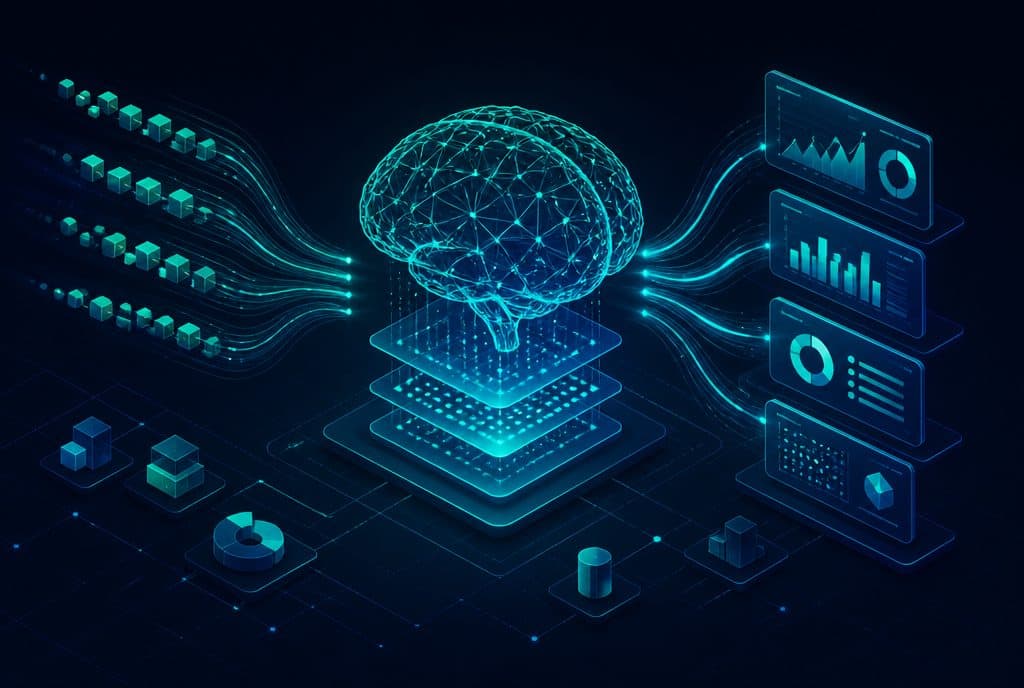
An LLM (Large Language Model) is an artificial intelligence system trained on massive amounts of text — books, websites, articles — that has learned to understand and generate human language. It can read a message, understand the intent behind it, and draft a response in natural language. This is exactly what enables tools like ChatGPT (OpenAI), Claude (Anthropic), and Gemini (Google) to conduct conversations that sound human.
It is important to understand: an LLM is not a "knowledge base" that returns pre-prepared answers. It calculates the most appropriate response based on context — for each conversation individually. This is why you can ask it a question it has never seen before, and it will draft a logical answer.
Who develops LLMs and why does it matter to your business?
The three major players in the LLM market are:
- OpenAI (USA) — developers of GPT-4 and ChatGPT
- Anthropic (USA) — developers of Claude
- Google — developers of Gemini
Each of them offers an API (programming interface) through which companies like Automaziot AI build products — WhatsApp agents, customer service bots, automation tools. A business owner does not need to know how to use the API directly; they only see the final product. The differences between the providers — model size, cost, accuracy in Hebrew — are technical considerations that we handle.
What can and can't an LLM do for a business?
This is perhaps the most important part to understand before you start investing in the technology:
| Capability | What an LLM can do | What an LLM cannot do (on its own) |
|---|---|---|
| Language Understanding | Read inquiries in Hebrew, Arabic, Russian, English | Know what is happening in your business right now |
| Drafting Responses | Write natural, correct, and tailored answers | Access databases without an explicit connection |
| Conversational Memory | Remember the entire context within a single conversation | Remember a customer from a previous interaction (without a database) |
| Content Flexibility | Handle a variety of topics without a rigid script | Perform actions in systems (CRM, calendar) — this requires integration |
| Natural Language | Conduct a conversation that sounds human | Make independent business judgment calls |
| Document Processing | Read, summarize, and extract data from text | Verify external data without connected sources |
The key point: an LLM is an understanding and language engine — not a complete automation system. For it to perform real business actions, it must be part of a broader system.
How does a business actually use this?
Businesses do not "run an LLM" — they use products built on top of it. Here are some practical examples:
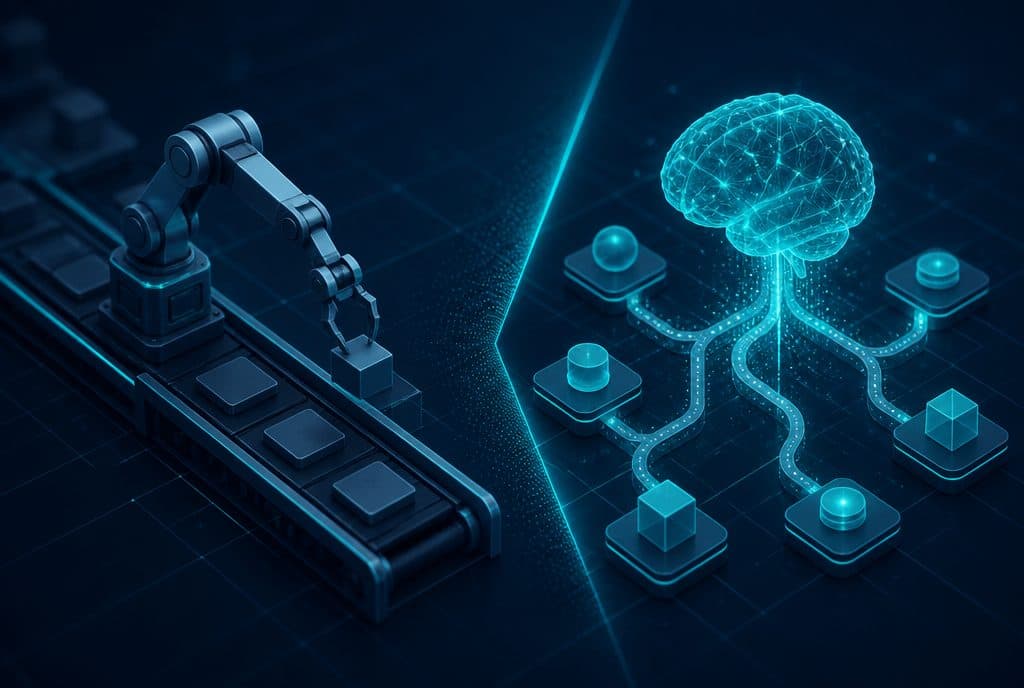
1. Automated WhatsApp Response A customer sends "How much does a bedroom renovation cost?" at night. Without an LLM: a fixed message "We will get back to you". With an LLM: a response that understands the question, asks a clarifying question ("How many square meters? Is there existing parquet?"), and explains the factors that affect the price — all in your brand's tone of voice.
2. Lead Filtering and Follow-up An incoming inquiry arrives from Google. The LLM understands the context (what the customer wanted), logs it to the CRM, and sends a personalized follow-up — not a generic template.
3. 24/7 FAQ Answering Questions about operating hours, pricing, cancellation policies — the LLM answers using the knowledge you provided, without bothering a staff member.
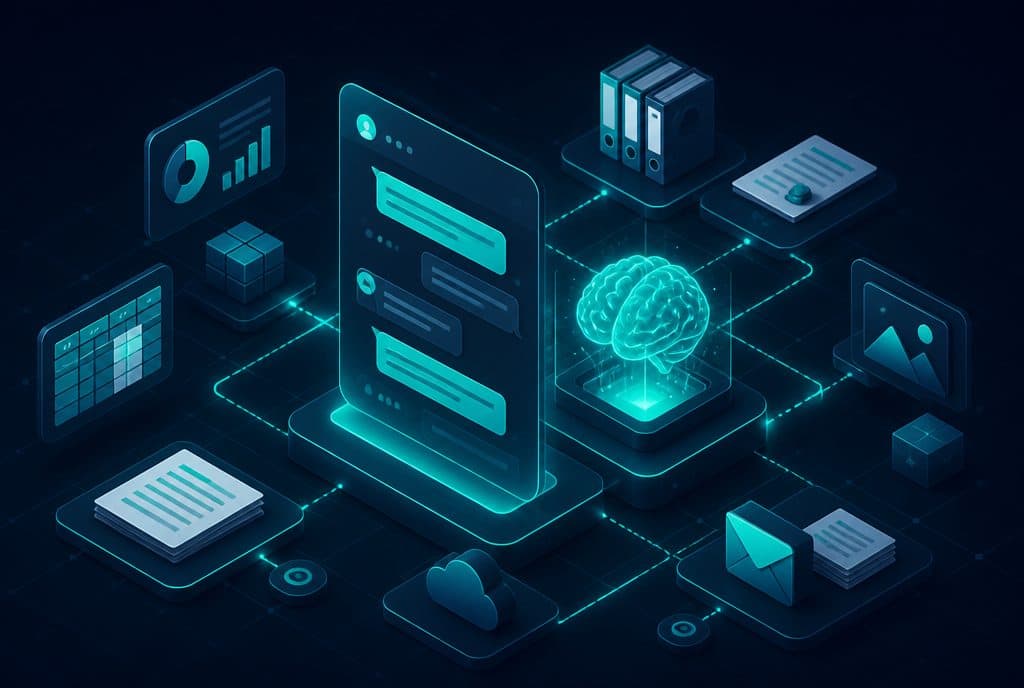
4. Document and Email Processing Inquiries also arrive as documents, images, and emails. The LLM reads them, extracts the relevant information, and inputs it where needed.
From LLM to AI Agent: What's the difference?
Here is the distinction that is most important to understand:
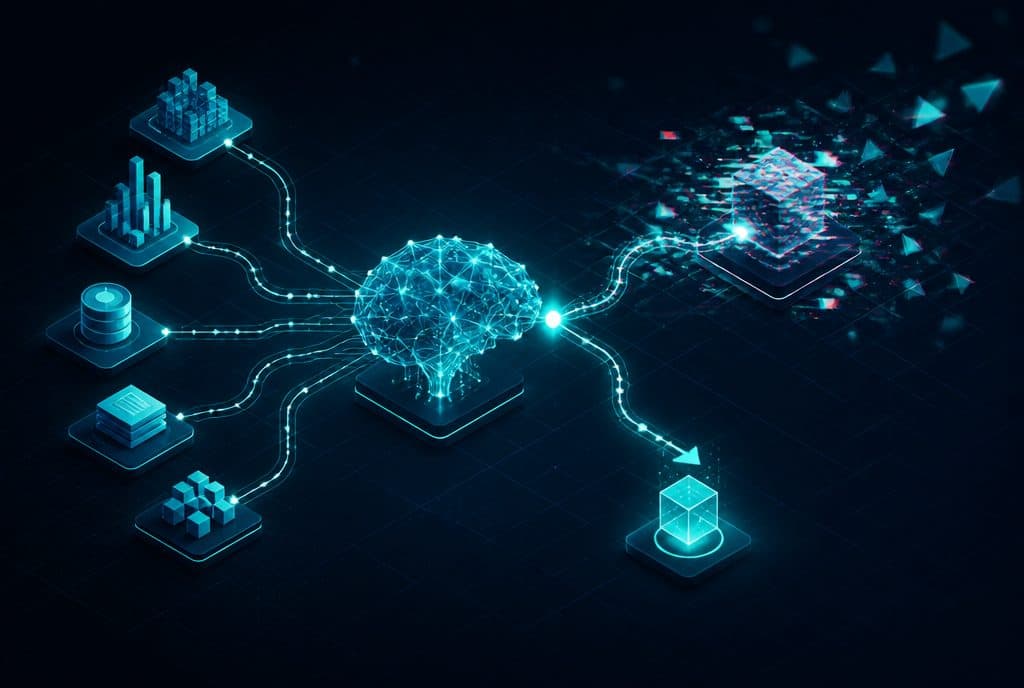
LLM = The Brain. It understands language and generates responses.
AI Agent = The Brain + Hands. It connects the LLM to the business systems — CRM, calendar, WhatsApp, databases — so that it doesn't just answer, but also takes action.
Without the connection to systems, an LLM can conduct an excellent conversation but cannot open a record in the CRM, schedule a meeting, or send a price quote. An AI agent does both.
The agent works in three stages:
- Understanding — The LLM analyzes the customer's inquiry and identifies the intent.
- Decision — The agent chooses the next step (Answer? Ask? Transfer to a human representative?).
- Action — Using automation (usually with n8n), the agent actually executes the task.
This creates a complete loop: customer asks → agent understands (LLM) → agent acts (automation) → customer receives a response that leads to a business result.
What is important to know before integrating an LLM into your business?
An LLM does not know what is happening in your business right now. It only knows what you have told it to know — guidelines, policies, products. The clearer and more precise the instructions, the better the agent performs.
An LLM is not always 100% accurate. It may draft a logical-sounding answer that is factually incorrect. Therefore, in sensitive scenarios — precise pricing, contract details, medical information — we always define clear boundaries: what the agent answers, and what it immediately transfers to a human representative.
It is not a "magic solution." An LLM is a powerful tool, but the value comes from how it is integrated into the business process — proper characterization, defining scenarios, and connecting to systems. Investing in characterization upfront saves costly mistakes later.
Privacy protection laws apply. In Israel, using an LLM that processes customer information is subject to the Israeli Privacy Protection Law. You must ensure that data is handled accordingly.
Is an LLM relevant to your business?
If you receive repetitive questions from customers — on WhatsApp, by phone, or via forms — and you want the response to be fast, consistent, and human-like, an LLM is the heart of the solution. You don't need to be a big tech company: the technology is accessible today to small and medium-sized businesses as well, and is implemented by AI automation companies that specialize in exactly this.
The right question is not "Will an LLM help me" — but rather "What is the first scenario we should start with?". At Automaziot AI, we start exactly there.
Want to understand how an LLM can actually fit into your business? Talk to us — we will map out one clear scenario together and see what realistic expectations look like.
Summary
An LLM is the language understanding engine behind ChatGPT, Claude, and Gemini — it is what allows a machine to read a human inquiry and draft a natural-sounding response. For an Israeli business, an LLM is the component that turns a traditional bot into a true AI agent: instead of a rigid script, there is a system that understands what the customer wants and acts accordingly. When you connect an LLM to business automation — CRM, calendar, documents — you get an agent that doesn't just answer, but executes. That is the difference between a response tool and a digital employee working 24/7.
Read also: What is an AI Agent for Business? The Complete Guide