
Agentic AI is a type of artificial intelligence that receives a high-level goal and then plans the necessary steps itself, chooses which tools to run, and executes actions in sequence — without a human needing to approve every step. Unlike AI that answers a single question and finishes, Agentic AI continues to operate until the task is completed: ingest lead, update CRM, send quote, schedule meeting — all in sequence, end-to-end. At Automaziot AI, we build such systems for Israeli businesses.
The term "Agentic AI" has become one of the most talked-about in the industry for 2026 — and one of the most misunderstood. Some businesses think it's just rebranded marketing for ChatGPT; others think it's a technology ready only for enterprises. Both are wrong. This guide will explain exactly what it is, how it differs from the AI most businesses know, how it works behind the scenes, and what it practically means for an Israeli business in 2026.
What is Agentic AI?
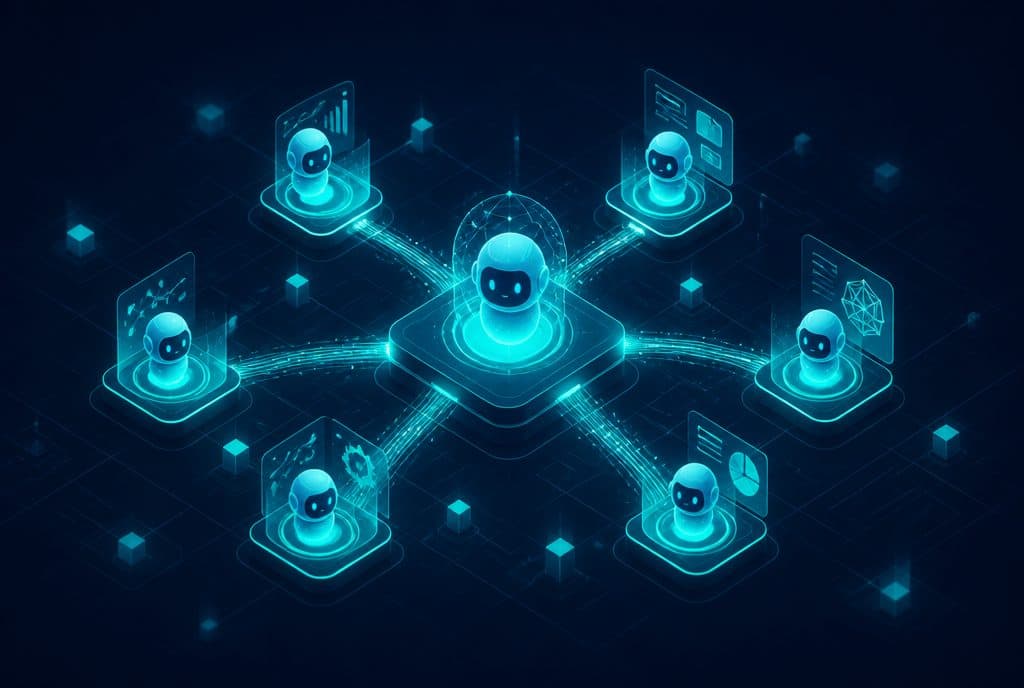
Agentic AI is an artificial intelligence system that receives a high-level goal, breaks it down into intermediate steps on its own, chooses which tools and resources to recruit for each stage, executes the actions in sequence, and adapts the plan in real-time based on the results obtained — all without a human approving each action individually. This "agentiveness" is the agent's ability to act independently over time, compared to AI that answers one question and waits for the next instruction.
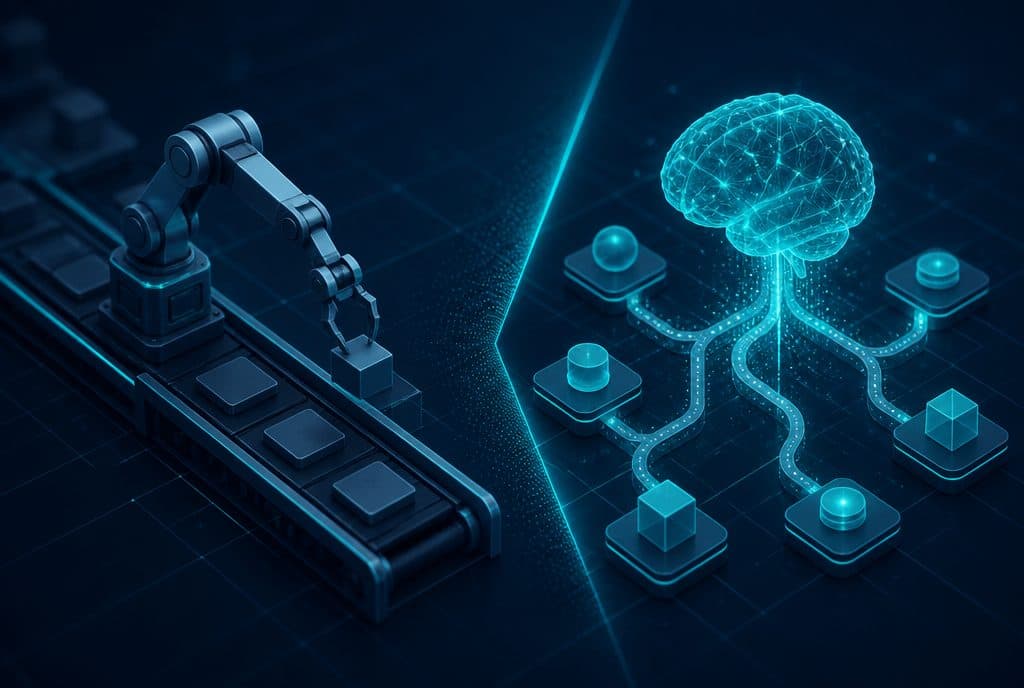
Agentic AI vs. Regular AI — What's the Real Difference?
To understand Agentic AI, it's helpful to first understand what is not considered agentic:
| "Regular" AI (Reactive AI) | Agentic AI | |
|---|---|---|
| Input | Single question / prompt | High-level goal |
| Planning | None — responds to what is asked | Yes — breaks down into tasks on its own |
| Tools | Does not use external tools | Selects and runs tools: CRM, calendar, email, APIs |
| Memory | Usually none, or only within a conversation | Remembers state throughout an entire process |
| Execution | Returns a textual response | Executes actions in real-world systems |
| Control | Human at every step | Acts independently within defined boundaries |
A concrete example: A business receives a new lead on WhatsApp.
Regular AI: "Hello, thank you for contacting us. A representative will get back to you shortly." — That's it. The information is not saved, nothing was executed.
Agentic AI: Captures the inquiry, asks a qualifying question ("What is your business size?"), updates a record in the CRM with all the details, sends a tailored quote, schedules a meeting in the calendar, and sends a reminder 24 hours prior — all without a human triggering a thing.
How Agentic AI Works — The Three Stages
1. Planning
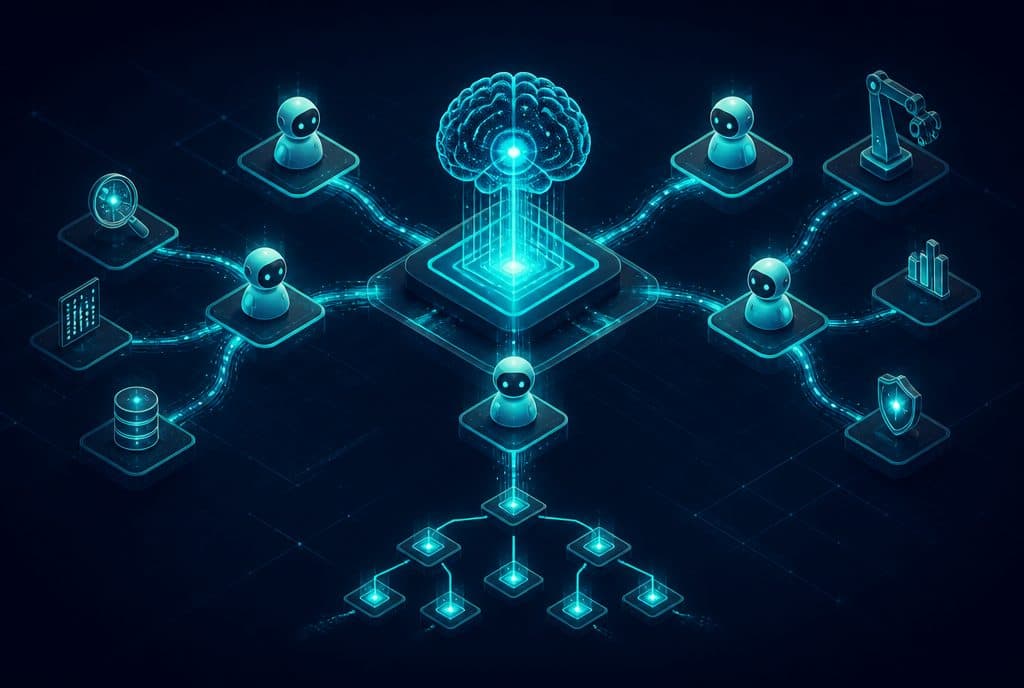
The agent receives a goal — "Handle this inquiry" — and breaks it down into sub-steps: first qualify, then update CRM, then send materials. It doesn't execute everything at once; it builds a conditional logical sequence ("If the client is qualified → schedule a meeting; if not → send informational material").
2. Tool Use
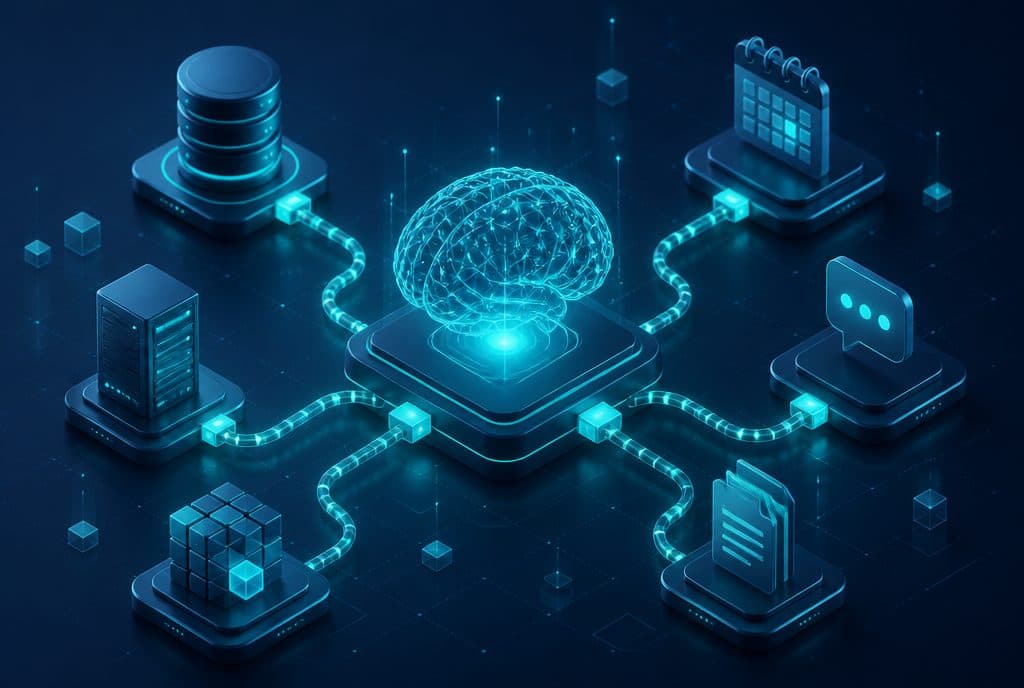
To perform actions in the real world, the agent uses "tools" — interfaces to external services. Every connection to a CRM, every email sent, every calendar update — everything is executed via official APIs connected to the agent. At Automaziot AI, we build these integrations primarily with n8n as the automation engine.
3. Act & Adapt
The agent executes, receives a response (Was the meeting scheduled? Did the client not reply?) and updates the plan accordingly. If the client didn't confirm the meeting, the agent sends a reminder. If the client canceled, the agent updates the CRM and flags it for human handling. This flexibility — acting according to actual results rather than a rigid script — is what differentiates Agentic AI from traditional automation.
Why is Agentic AI Different from Regular Automation?
Traditional automation (workflow automation) works on a rigid rule: "When X happens, do Y." This is powerful, but fragile — any deviation from the script requires manual handling.
Agentic AI adds a layer of judgment: the agent understands natural language, identifies intent, and decides what to do even when the situation doesn't exactly match what was planned. A lead who wrote "I have a question about the price, but it's not urgent" receives a different response than "I want to close a deal today" — the agent distinguishes between them and adapts its response.
This doesn't mean regular automations are redundant — on the contrary. A proper combination of both is the most practical approach for most businesses: structured automations for unambiguous processes, and an agentic agent for anything requiring discretion.
Business Use Cases for Agentic AI — What's Suitable for 2026?
End-to-End Lead Management
The greatest potential for most Israeli businesses: a lead arriving from advertising — on Facebook, Google, WhatsApp — goes to an agent that qualifies them, asks questions, updates the CRM, and schedules a meeting. Without delay, 24/7, even on Friday night. See automated lead management for full details.
Customer Service that Hands Over to a Human at the Right Time
An agentic agent doesn't try to solve everything alone — it knows when to hand over. It defines in advance: "If the customer is angry, transfer immediately; if it's a pricing question above X, transfer to a senior representative with all the context." The human representative receives a complete file, not "the customer called an hour ago."
Document and Data Processing
An agent that receives an invoice, reads it, extracts the data, and automatically enters it into the accounting software — saving hours of manual typing and reducing errors. Especially relevant for businesses processing large volumes of recurring documents.
Proactive Sales
An agent that identifies a customer who hasn't purchased in a long time — based on CRM data — and proactively contacts them with a tailored offer, at the right time, through the right channel.
What to Ask Before Getting Started
Before deciding on Agentic AI, three practical questions:
1. Which process do you want to improve? — Agentic AI excels in recurring processes that involve both clear rules and unexpected cases. If the entire process is completely deterministic, regular automation is sufficient.
2. Which systems need to be connected? — Every integration (CRM, calendar, WhatsApp, ordering system) adds time and complexity. Start with what is in highest demand for you.
3. What is left for the human? — Decisions requiring sensitive business judgment, exceptional cases, and moments where human connection is the decisive advantage — these should remain human. Define the boundary in advance.
Want to check if Agentic AI is suitable for a specific process in your business? Talk to us — we'll do a brief assessment and see together what makes sense to start with.
Agentic AI and Data Security in Israel
A point that is important not to skip: any agentic system connected to customer data operates under the scope of the Israeli Privacy Protection Law. This means you need to define in advance: what data the agent is allowed to process, how long it is kept, and who can access it. With the right approach, an agentic system can be built in a way that complies with the Privacy Protection Law requirements and adds a layer of transparency: a full log of every action the agent performed, with a timestamp.
Summary
Agentic AI is neither a hype word nor a technology for enterprises only. It is the approach where AI transitions from an "answering tool" to a "digital employee managing a process." For an Israeli business, the practical meaning is simple: leads handled immediately regardless of team availability, sales processes that keep moving automatically, and data arriving organized in the CRM — end-to-end.
The way to start is not to build the full system immediately. Start with one process, test, and expand. At Automaziot AI, we guide businesses through exactly this process — from assessment to deployment. To deeply understand how AI agents operate in the field, read also The Complete Guide to Autonomous AI Agents.