
Payment collection automation is a system that identifies unpaid invoices, sends the customer a polite reminder with a payment link on a predefined schedule, tracks the status, and gradually escalates the tone—transferring to manual handling only when a human conversation is required. Small and medium-sized businesses in Israel that implement it significantly shorten their collection cycle, reduce friction with good customers, and free up management time for core activities. This article explains how it works, the right approach to reminders that doesn't damage relationships, and how to get started.
What is Payment Collection Automation?
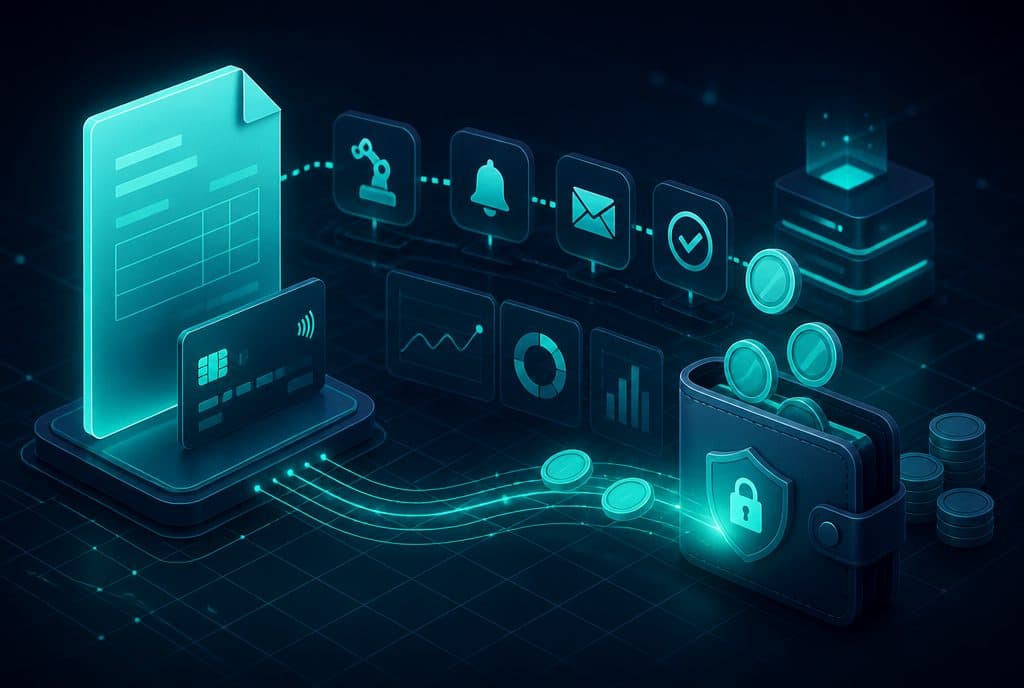
Payment collection automation is a system that identifies open debt, sends the customer a polite reminder with a payment link, tracks the status, and gradually escalates—up to transferring to a human representative if all digital follow-up stages have passed. The system operates in the background without manual intervention: it is connected to the invoicing system, identifies open invoices by due date, and triggers a structured collection process with messages balanced between a friendly reminder and business assertiveness.
Why Manual Collection Hurts Your Business
Every small business owner knows the feeling: an invoice was sent, weeks pass, and the customer hasn't paid. Reaching out again feels awkward. Not reaching out means the money doesn't arrive. The common solution is an embarrassed, one-time reach-out after a month, which often ends with "I completely forgot, I'll pay now." The problem: this is a process that should run on its own.
Manual collection creates several structural failures:
- Unnecessary friction – The business owner avoids reminding, the customer forgets, and the money is stuck.
- Inconsistency – Some debt is collected, some is forgotten, and there is no unified picture.
- Overload – In the growth phase, managing manual collection for dozens of customers is wasted effort.
- Damage to relationships – When you reach out manually late and with an unmeasured tone, the customer feels annoyed.
Automation solves all these points without adding to the workload.
How It Works – The Four Stages
Stage 1: Identification and Signaling
The system (usually built on n8n connected to your invoicing system—Priority, Cheqfull, Green Invoice, Sapir, etc.) scans once a day and identifies invoices that have reached their due date and remain unpaid. It generates the first touchpoint—friendly, short, with a direct payment link. No mention of "debt," no pressure.
Stage 2: Graduated Reminders
If payment is not made within X days (you define the intervals), a second reminder is sent—still polite, but slightly more direct. After another interval, a third. Each stage is tailored to your communication style and can include different channels: WhatsApp, email, SMS—depending on the customer's preference.
Stage 3: Automatic Update on Payment Receipt
The moment the customer pays, the system detects it (via the payment gateway's API), marks the invoice as paid, stops the workflow, and sends a payment confirmation—if you have configured it to do so. Zero manual work.
Stage 4: Escalation to a Human Representative
A customer who hasn't responded after all the automated steps? The representative receives an alert with the full history: when we sent it, what we sent, and whether the customer opened the messages. They enter the conversation prepared—not blind.
| Stage | Action | Tone |
|---|---|---|
| Due Date | First reminder + payment link | Friendly, service-oriented |
| X days after | Second reminder | Polite, direct |
| X additional days | Third reminder | Business-like, assertive |
| Unanswered | Escalation to representative + full summary | Human, measured |
| Payment received | Close workflow + confirmation (optional) | Positive |
The Right Tone – Collecting Debt Without Damaging Relationships
The most common mistake in automated collection: messages that sound like a warning letter from a lawyer. A customer who simply forgot to pay receives a message that feels like a threat—and remembers it forever.
The right approach for a small and medium-sized Israeli business:
First touchpoint (Due Date):
"Hi [Name], this is a friendly reminder for invoice number X for the amount of Y ₪, which is now due. For easy payment: [Link]. Thank you!"
Second touchpoint (A week later):
"Hi [Name], we noticed that invoice X has not been paid yet. If you have any questions or issues—we'd be happy to help. To pay: [Link]."
Third touchpoint (Two weeks later):
"Hi [Name], invoice X for the amount of Y ₪ is still open. For immediate handling: [Link]. To coordinate—please reply to this message."
The rule: as long as the tone is respectful and understands that people are busy, most customers will pay during the first or second stage. Escalation to a representative is reserved for the true exceptions.
Compliance with the Israeli Privacy Protection Law
Collection automation involves processing customer data and must therefore comply with the Israeli Privacy Protection Law. The key points we adhere to in every system we build:
- Contacting only customers with an active business relationship – Do not send reminders to old contacts with whom you have no active business relationship.
- Right to opt-out – Every message includes an option to stop automated communications.
- Data retention according to legally defined periods – Do not keep information on closed debts longer than necessary.
- No third-party transfer – Collection data is not transferred to an external party without explicit consent.
We build the workflows so that compliance with these requirements is built into the process itself—not an afterthought.
What Collection Automation Does Not Do
It is important to be clear about what is out of scope:
- Legal collection – Once you have exhausted the automated stages and a human representative, turning to a lawyer is a separate, human process.
- Dispute management – A customer who disputes the debt or challenges the service—this is a conversation that requires a flesh-and-blood representative.
- Business decisions – Whether to close an account, offer an installment plan, or waive interest—the system does not decide, it passes it to you.
How to Get Started – Three Steps
1. Map your existing collection process Before building, understand: how many reminders are currently sent? What are the intervals? From which channel? What happens after three touchpoints? Knowing your current process—even if it is chaotic—saves a lot of rebuilding.
2. Choose the integration point Your invoicing system—Priority, Cheqfull, Green Invoice, Sapir, or any other system with an API—is the entry point. We connect it to a payment service (Cardcom, Payplus, Tranzila, etc.) and the communication channel (WhatsApp, email, SMS).
3. Define the segmentation logic Not all debt is equal—a long-time customer with a small debt gets a different approach than a new customer with a large debt. Define clear rules: by debt amount, by customer tenure, by preferred channel—and the system applies all of this automatically.
Need help mapping your collection process and understanding where automation will make the biggest difference? Talk to us and we will build a practical plan together.
Collection Automation Within a Complete System
Automated collection works much better when it is part of a broader business automation system: a single interface that also manages sales follow-ups, meeting reminders, and customer status updates. When systems are connected—CRM, invoicing, payments, communication—nothing falls between the cracks. See also our article on follow-up and lead tracking automation.
Automated sales and customer service—including collection—are part of what we build for Israeli businesses that want to stop leaking details and focus on growth.
Summary
Payment collection automation is one of the areas where a small business can get a high return quickly: a shorter collection cycle, fewer awkward calls, and fewer forgotten debts. The key is a graduated and respectful approach—reminders that feel like service rather than pressure, with smart escalation to a human representative only when necessary. If you already have an invoicing system with an API, most of the way is already paved.