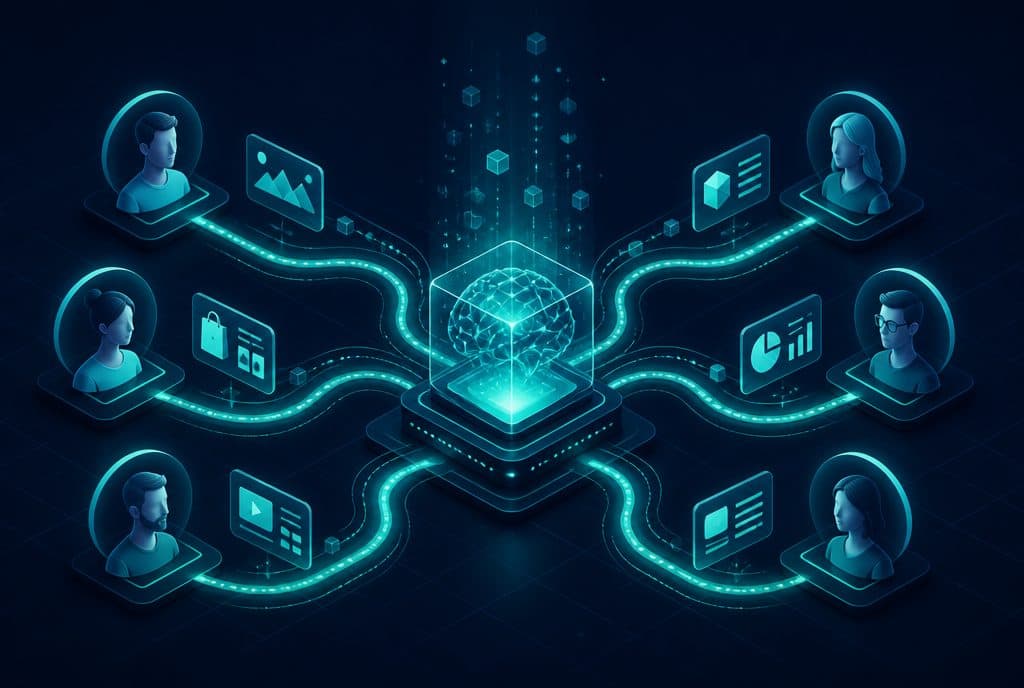

Automated Lead Scoring is a process in which an AI system evaluates every incoming lead—what they wrote, from which channel, what they asked, what their profile is—and assigns them a score that reflects how ready they are to buy. In a small sales team, this is the difference between chasing 50 cold leads and focusing on the 8 hot ones. High-scoring leads are routed for immediate handling; low-scoring leads enter an automated nurturing sequence—and never get lost.
In automated lead management, there is a lot of talk about "not losing leads," but the real problem for many businesses is actually the opposite: they have leads, but no way to understand who among them is worth their time right now. Lead scoring solves exactly that.
What is Automated Lead Scoring?
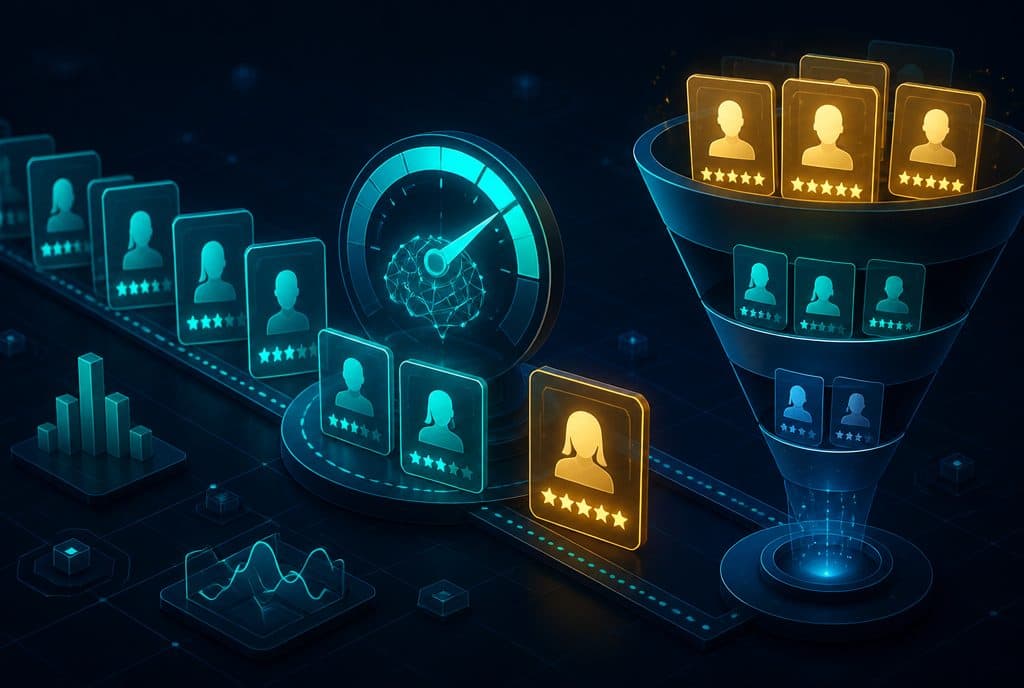
Automated Lead Scoring is a mechanism where an AI system evaluates every new lead based on pre-defined criteria—and assigns them a numerical score reflecting their purchase intent and how well they fit the business's ideal customer profile. A high score = a hot lead that a salesperson needs to call today. A low score = a lead that enters an automated nurturing sequence until they mature.
Why Manual Scoring No Longer Works
When 20 leads arrive a day from 4 different channels, no human can read, evaluate, and immediately decide who comes first. In practice, one of two things happens: either they call in order of arrival (completely wrong—the lead who arrived first isn't necessarily hotter), or they deal with the leads that look "easy" and skip others. Both lead to missed opportunities.
An AI that scores leads works according to consistent rules, 24 hours a day, without fatigue or bias.
Which Parameters Does AI Evaluate for Scoring?
| Category | What is Checked | Example |
|---|---|---|
| Intent | What the lead wrote, which keywords they used | "How much does it cost" = high intent; "Just asking" = low |
| Source Channel | Where the lead came from | Google Search > Facebook > Banner |
| Business Profile | Business type, size, industry | Does it match the ideal customer profile? |
| Response Speed | How quickly they replied to follow-up | Replied within a minute = engaged; a week later = less so |
| Conversation Depth | How many questions they asked, what info they requested | Asked about pricing and timelines = hot |
| History | Have they contacted us before, visited the site | Repeat visit = higher score |
How It Works in Practice—Step by Step
Step 1: Lead Capture
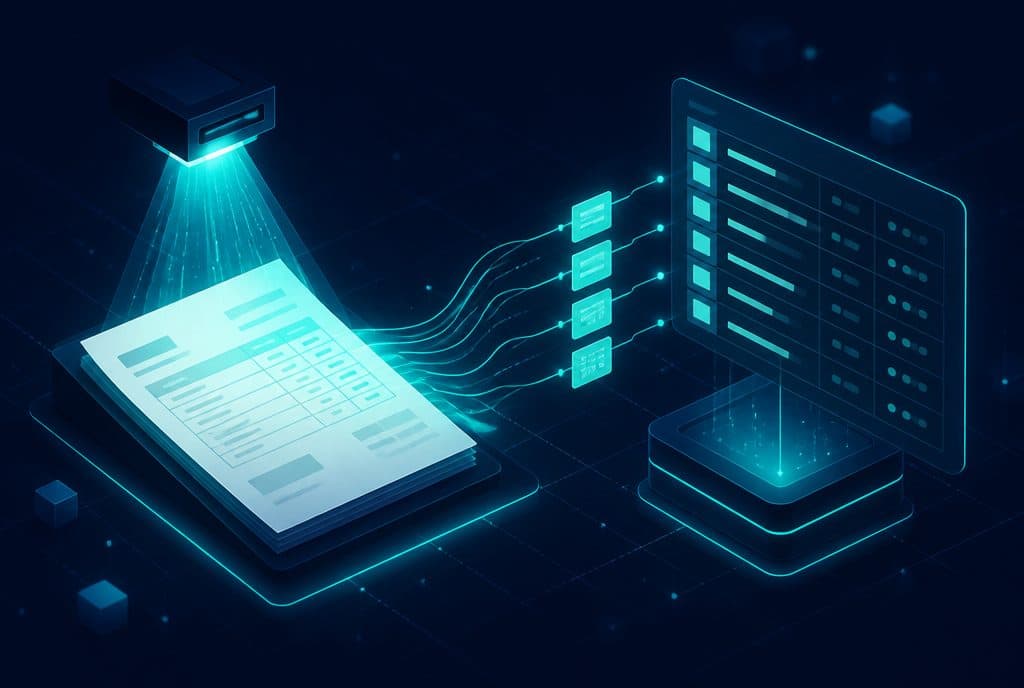
Every lead that arrives—from a website form, WhatsApp, Meta Leads, or Google—is automatically captured within seconds. No waiting for an employee to log it into the CRM; it happens in the background.
Step 2: Data Enrichment
Before the score is calculated, the system "fills in the blanks": it checks the phone number, identifies the business type if it's a B2B client, and cross-references with previous visits if they exist. The more data available, the more accurate the score.
Step 3: Score Calculation
The AI model calculates a score (usually on a scale of 0-100) based on all parameters. You can pre-define thresholds: above 70—hot lead for immediate handling; 40-70—medium lead for a nurturing sequence; below 40—cold lead that goes to a newsletter list.
Step 4: Automated Routing
Hot lead? An immediate notification goes to the salesperson (via WhatsApp, email, or CRM) with all the details and a few lines of background. Medium lead? Enters an automation that warms them up—targeted messages, relevant content, interest checks. Cold lead? Still not deleted—receives periodic content until their status changes.
Step 5: Learning and Optimization
The system tracks results: leads that closed a deal after receiving score X strengthen the weights of the parameters that led to that score. Leads that canceled despite a high score signal that the model needs fine-tuning.
What Change Do Businesses Experience?
When you implement proper lead scoring, the first thing you feel is a reduction in workload—not because there are fewer leads, but because time is spent differently. Instead of going through 40 leads and trying to guess who is hot, you have a short, organized list of who needs a call today, while the rest are in the automated process.
Another change: fewer missed opportunities. Leads that used to fall "between the cracks" because no one got back to them in time are immediately entered into automation and never lost.
How Is It Connected to Sales Management?
Lead scoring doesn't work in isolation. It is part of a complete automated sales and service process:
- Capture—Lead arrives → automatically registered in the CRM
- Scoring—AI assigns a score within seconds
- Routing—Hot lead → Sales; Medium lead → Nurturing
- Follow-up—Every interaction is logged and updates the score
- Closing → Deal is recorded and strengthens the model
The integration between these stages, usually using n8n as the automation platform, is what makes the entire system work as a single cohesive unit—not a collection of disconnected tools.
Privacy Protection Law Considerations
A lead scoring system works on personal data, which is why Israeli privacy protection laws are relevant. The simple rule: only work with data that the customer provided voluntarily—what they wrote in a form, what they asked on WhatsApp, what they requested. Do not collect information from external sources without consent, do not store unnecessary data, and allow for deletion upon request. Building it correctly from the start saves compliance issues down the road.
When Should You Start?
There are three signs indicating that lead scoring is already worth it:
- Lead volume exceeds capacity—More than 15-20 weekly leads that cannot all be handled in a reasonable timeframe
- Clear gaps between leads—Some ask "how much" and "by when," while others are "just curious"—and you can't distinguish them quickly
- Salespeople complaining about irrelevant leads—A sign that there is no filtering mechanism
If at least two of these three apply, lead scoring will likely deliver real value.
How to Get Started?
Step 1—Mapping: Gather 20-30 recent leads that closed a deal and 20-30 that didn't. Ask: What was different? What characteristics recurred among the successful leads?
Step 2—Defining Parameters: Translate the answers into rules: "A lead who mentioned 'business' and asked about pricing = high; a lead who only asked for 'general information' = medium."
Step 3—Implementation: Connect your lead sources (forms, WhatsApp, advertising), define the scoring logic, and connect it to your CRM and routing automation.
Step 4—Tuning: Run it for a month, check if the leads that received high scores actually closed more deals, and fine-tune based on your findings.
Want to build a lead scoring system for your business? Talk to us—we'll figure out together where it makes sense to start and what your first scoring criteria should be.
Summary
Automated lead scoring is not a luxury tool for large companies—it is a practical solution for any business that receives more leads than it can handle manually. The AI does not replace the salesperson's judgment—it decides who comes first, so that human time is invested in the leads with the highest probability of becoming customers. Combined with full lead management and sales automation, it is one of the most tangible things you can do to improve your closing rates without growing your team.