
Automated lead management is a system that captures every incoming inquiry from any channel, filters and rates it by relevance, routes it to the right salesperson, and sends an immediate follow-up — without human touch. Israeli businesses that implement this type of automation stop losing leads that come in after business hours, and significantly improve their conversion rate — because the first response arrives within seconds, not hours. Automaziot AI specializes in building lead management systems for Israeli businesses.
What is Automated Lead Management?
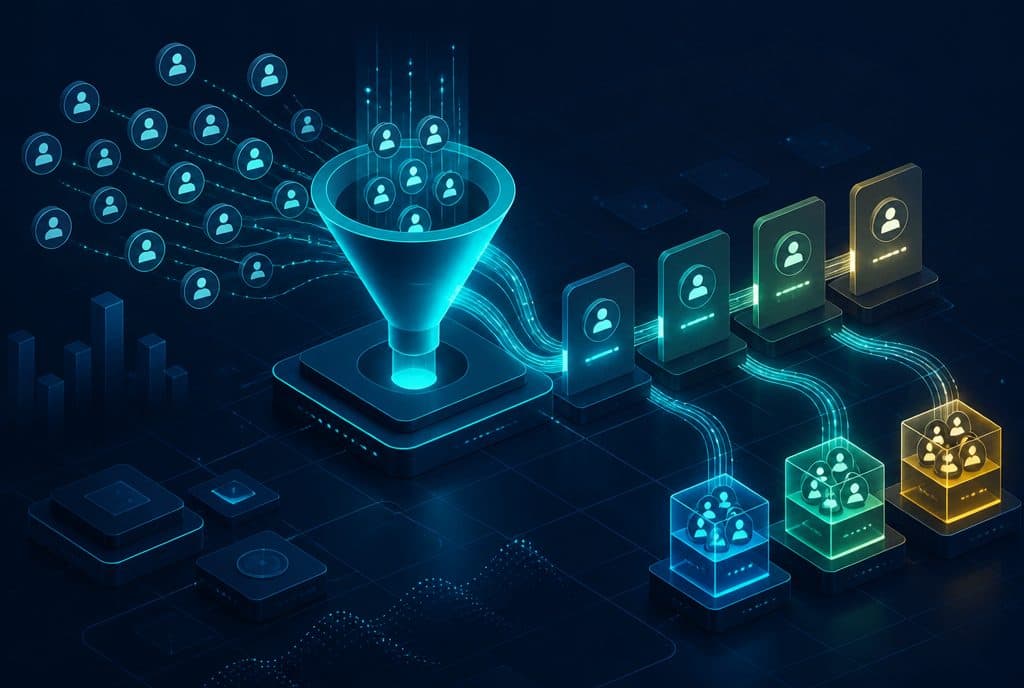
Automated lead management is a software system that takes all incoming inquiries to the business — from WhatsApp, website forms, Facebook ads, phone calls — and handles them from the moment they arrive until they become actual customers: automatic capture and sorting, sending an initial response, entering into the CRM, routing to the relevant salesperson, and sending follow-ups at pre-scheduled times — all without anyone on the team performing a manual action.
The Problem that 90% of Israeli Businesses Know
A lead writes on WhatsApp on Friday at 22:00. You don't answer until Sunday morning. By then, they have already spoken with three competitors.
This is not an unusual story — it is the reality for most small and medium-sized businesses in Israel. Inquiries arrive at unexpected hours, from multiple channels, and a single salesperson cannot sit in front of the screen 24 hours a day. The result: leads you invested money to acquire — are simply lost.
The three most common failures in manual lead management:
- Slow response — A lead that comes in after work hours waits for long hours. The longer the time to the initial response, the lower the chance they will reply back.
- Forgotten follow-up — "I'll get back to him tomorrow" becomes "I'll get back to him next week" becomes "I completely forgot." Based on our experience with Israeli businesses, a significant portion of leads never receive a third follow-up at all.
- Scattered information — Some leads are in the CRM, some on WhatsApp, some in Gmail, and someone else saved a number on a sticky note. You cannot manage what you cannot see.
Before and After: The Key Difference
| Situation | Without Automation | With Automated Lead Management |
|---|---|---|
| Initial Response | Hours to a business day | Seconds, at any hour |
| Operating Hours | Office hours only | 24/7, including Friday night |
| CRM Entry | Manual, doesn't always happen | Automatic, with all details |
| Follow-up | Depends on human memory | Automatic reminders and updates |
| Routing to Representative | Manual guessing | According to pre-defined criteria |
| Reporting and Tracking | None — or an Excel sheet | Live dashboard at any moment |
How It Works in Practice: Four Steps
1. Capture — No Lead Falls Between the Cracks
The system is connected to all points where an inquiry can arrive: website forms, lead ads on Facebook and Instagram, WhatsApp messages, phone calls, emails, and even direct messages on social networks.
When a lead comes in from any of these points, it is automatically registered in the CRM with all the details received: name, phone, source of the inquiry, message content, time, and date. Everything — without manual action.
At Automaziot AI, we build this layer primarily on top of n8n, which connects dozens of different sources without needing custom code for each one.
2. Filtering and Classification — Understanding Who the Lead Is Before Talking to Them
Not every inquiry is worth the same. Someone who wrote "how much does it cost?" is different from someone who wrote "I am looking for a solution for a team of 20 employees and want to start this month."
The filtering stage automatically rates the lead according to criteria you define in advance: field of business, business size, urgency, budget, and whatever is important to you. An AI agent can conduct a brief initial conversation on WhatsApp, ask a question or two, and return a much clearer picture to the salesperson — before the human conversation even begins.
3. Routing — The Right Lead to the Right Person
A business with multiple salespeople, multiple departments, or multiple geographical areas needs smart routing. A lead from the northern region goes to the northern representative; a lead interested in a specific field goes to the specialist in that area; a lead with a high budget goes directly to the sales manager.
The routing is done within seconds of the inquiry's arrival, including a WhatsApp or Slack message to the representative with a summary of the lead.
4. Automatic Follow-up — Not Forgotten, Not Giving Up
The vast majority of leads will not close on the first contact. The system sends a pre-defined sequence of messages: an immediate response upon entry, a short reminder after 24 hours if there was no reply, and an additional follow-up after a few days — in the style and content that suit your business.
Every follow-up is documented in the CRM, so the sales representative knows exactly what was sent and when, and can continue the conversation at the right point.
What the System Does Not Do (And It's Important to Know)
Automated lead management does not replace the sales call. Its goal is to ensure that every lead reaches that call — warm, documented, and with minimum time wasted on irrelevant leads.
The automated agent does not "close deals"; it prepares the ground so that the human salesperson can conduct the most important conversation — with the most suitable lead — at the most right time.
Legal Aspect: The Privacy Protection Law
In Israel, any collection and processing of personal data of leads is subject to the Privacy Protection Law. When building a lead management system, it is important to ensure that the collected and processed information (name, phone, inquiry content) is stored securely, that there is clear consent from the inquirer, and that information can be deleted upon request. In all the solutions we build, compliance with the law is part of the initial characterization.
Tools We Work With
n8n — The Automation Logic
n8n is the central automation platform we work with. It allows us to connect any data sources, define complex logic (if lead is from field X and region Y — send to Z), and manage all workflows from one place. It can be run in the cloud or on the client's server — which gives full control over the data.
AI Agent for Initial Conversation
In businesses with high lead volume, we integrate an AI Agent that conducts an initial conversation on WhatsApp: asks brief filtering questions, identifies needs, and returns a structured summary to the representative. The agent works in natural Hebrew, 24/7.
CRM
All the solutions we build are connected to a CRM — whether the client already uses one or we set up a new one from scratch. The CRM is the single source of truth: every lead, every stage in the process, every message sent.
How to Get Started?
Step 1: Map Current Inquiries
Before any tool — understand what exists: from which channels do inquiries arrive? What happens to them now? Where do they fall through? The characterization stage usually takes one call and returns a clear picture of the gaps.
Step 2: Define Filtering and Routing Rules
What makes an inquiry a "warm" lead? Who is supposed to receive it? What is the initial message we want to send? All of these are business decisions you make — not technological ones.
Step 3: Build, Test, Deploy
After characterization, we build the solution, run it on real leads in a testing environment, fix what is needed, and go live. Usually within 2-4 weeks from the characterization stage.
Step 4: Monitor and Improve
After the launch, track the data: how many leads came in? How many received a response within a minute? What is the conversion rate? Based on the data, fine-tune the rules and the follow-ups.
In Conclusion: No Lead is Forgotten
A business that invests in generating leads — whether through Google, Facebook, WhatsApp, or referrals — cannot afford to lose some of them due to slow response, forgotten follow-up, or lack of organization. Automated lead management solves exactly that: a lead that comes in at any hour, from any channel, receives an immediate response, enters the CRM, and finds its way to the right salesperson — without anyone on the team touching it.
Automation does not replace the human conversation. It ensures that this conversation takes place — with every lead, at the right time.
Want to stop losing leads? Talk to us and we will build the right solution for your business together — which channel to start with, how to filter and route, and what is needed to get it running within a few weeks.
Related Articles: