
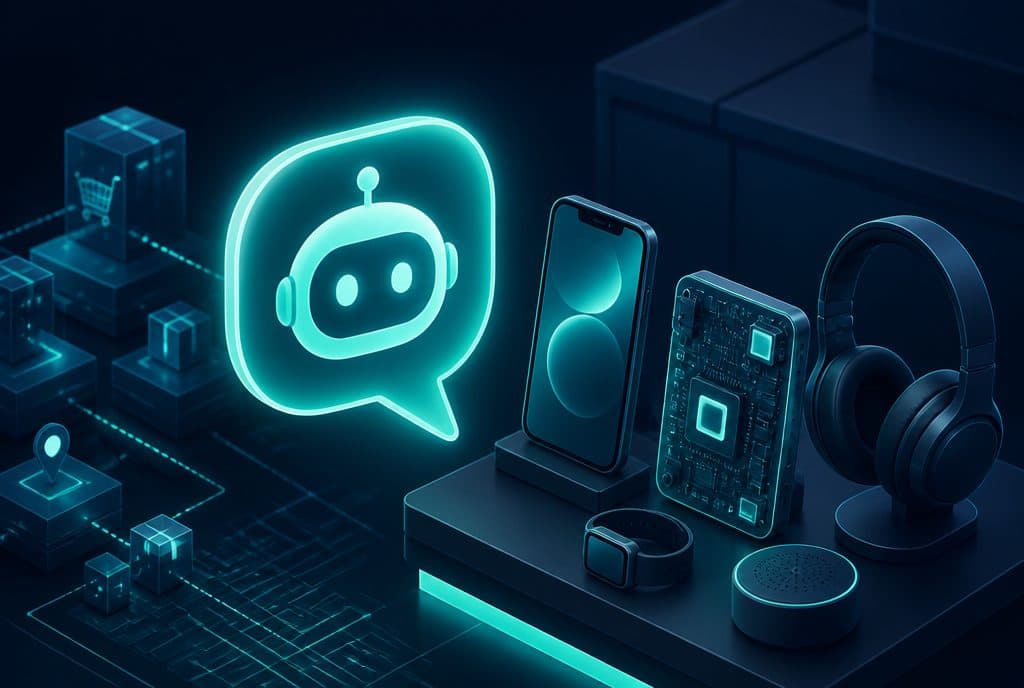
An electronics store WhatsApp bot is a conversational agent connected to the store's systems that answers questions about specifications, pricing, and real-time stock availability, compares models, updates on shipping status, and explains warranty and after-sales service terms—24/7, in natural language, without waiting for a representative. For electronics and home appliance stores that receive dozens of daily inquiries on the same recurring questions, this means less workload on the team and an immediate response to the customer exactly at the moment they decide to buy.
Electronics stores—from large chains to independent shops—face a unique challenge: the customer is ready to buy but has a technical question. What is the FPS of this TV? Does the refrigerator fit in a 60 cm space? Is it in stock? How many years of warranty are included? When this question arrives on Friday afternoon and no representative is available—the lead goes to the competitor. A WhatsApp agent for an electronics store closes this gap.
How Automation Helps an Electronics Store
Automation for an electronics store connects customer questions directly to the right information in the store's systems—in real time. A WhatsApp bot answers spec and price questions, checks stock availability, manages model comparisons, sends links to product pages, updates order status, and explains warranty terms—all 24/7 and in natural language. The team receives the inquiries that actually require a human: large deals, complex issues, VIP customers.
What Characterizes Inquiries in an Electronics Store
Unlike a clothing store where a customer asks "Does this look nice?", in an electronics store, most inquiries are factual information questions with a definitive answer:
- Technical specifications — "Does this TV support HDMI 2.1?", "How many watts is the air conditioner?"
- Model comparison — "What is the difference between this model and the one above it?"
- Stock availability — "Is this refrigerator available in white? At which branch?"
- Price and promotions — "Is there a discount for buying two?", "What is the price in installments?"
- Shipping and installation — "How long does shipping to Ashdod take?", "Is installation included?"
- Warranty and service — "How many years of warranty on the washing machine?", "What happens if there is a malfunction?"
- Post-sale questions — "Has my order been shipped?", "How do I open a service ticket?"
Each of these questions is easily answered when the bot is connected to the product database and the order management system. Without a bot—a human representative spends hours a week on identical answers that can be generated in seconds.
Bot Capabilities: Overview Table
| Scenario | What the Bot Does | Result for the Store |
|---|---|---|
| Spec Question | Pulls data from the product database and answers in detail | Saves representative time |
| Model Comparison | Displays a table with key differences and prices | Helps the customer decide |
| Stock Check | Connected to ERP, returns real-time availability | Prevents disappointment upon arriving at the store |
| Price & Installments | Pulls updated price and payment terms | Reduces follow-up inquiries |
| Order Tracking | Checks status against the order system | Reduces customer service calls |
| Warranty Explanation | Explains terms based on manufacturer and product | Reduces misunderstandings |
| Opening Service Ticket | Collects details and opens a ticket in the system | Accelerates issue resolution |
| Transfer to Agent | Identifies complex inquiries, summarizes, and transfers | Keeps representatives for real deals |
Practical Scenarios
Scenario 1: Customer Checks Specs Before Purchasing
A customer writes on WhatsApp on Friday at 2:00 PM: "Does the SONY XR-65X90L TV support 144Hz?"—a question a representative would answer in 30 seconds if they were available. The bot pulls the specifications from the catalog, answers "Yes, it supports 144Hz with HDMI 2.1", and adds a link to the product page with a "Buy Now" button. Two minutes later—the purchase is completed. Without a bot—the customer closes the tab and searches at a competitor.
Scenario 2: Model Comparison
"What is the difference between LG refrigerator A and B?"—a question that belongs to 80% of electronics customers. The bot generates a short table with the relevant differences (capacity, power consumption, shelves, price), and adds "If you'd like, I can check the availability of each." The customer chooses—and the bot continues the process.
Scenario 3: Order Tracking and Shipping Update
"Did you ship the dishwasher I ordered?"—The bot identifies the customer by phone number, pulls the order details from the order management system, and answers "Your order shipped yesterday at 14:30, expected to arrive between 8:00-12:00 tomorrow. Here is a tracking link." No representative needed, no digging through documents.
Scenario 4: Handling a Post-Sale Complaint
"I bought a washing machine a week ago and it's making an unusual noise."—This is a scenario that requires a human. The bot collects the details (model, purchase date, description of the issue), opens a service ticket, informs the customer that a representative will contact them within X hours, and sends a full summary to the service manager. The representative starts from the end—not from "Wait, what is your name?"
Privacy Protection Law and WhatsApp Business API
When working with customer information via WhatsApp—phone numbers, orders, warranty details—you must comply with the provisions of the Israeli Privacy Protection Law. In practice, this means: obtaining consent before saving information, storing information securely, and clarifying to the customer what is saved and why. The WhatsApp Business API—where the bot operates—requires a verified business phone number and compliance with Meta's terms of service. We guide you through this entire setup process.
How to Get Started
The right approach for an electronics store is modular—you don't deploy all scenarios on day one:
- Inquiry Mapping — We gather the 20-30 most common questions from customers (usually merchandise, stock, warranty, order status).
- Connecting Data Sources — We set up integration to the ERP, product catalog, and order system via API (usually in n8n).
- Building and Testing — We build the bot, train it on your brand voice, and run tests with real scenarios.
- Controlled Launch — Start with a subset of scenarios, measure, and add gradually.
- Measurement and Improvement — Track the bot's success rate, identify questions it doesn't handle, and optimize.
If your store has a website with a product database and an order system—the preparation for integration is already there. Most stores start seeing results by the end of the first week after launch.
Relevant Links
- WhatsApp Agent for Business — Full Service
- Automation for E-commerce and Online Stores
- WhatsApp Bot for Retail Stores — General Guide
CTA
Want to see what a WhatsApp bot actually looks like for your electronics store? Send us a message—we will map out the relevant scenarios together and present a clear proposal. Free of charge, no obligation.
How much does it cost?
| Component | Price (one-time setup, ex-VAT) |
|---|---|
| AI order-taking agent | ILS 7,500 |
| Payment link and checkout inside the chat | ILS 2,800 |
| Business knowledge base | ILS 3,000 |
| Automatic follow-up sequence | ILS 2,500 |
| WhatsApp Business API setup | ILS 700 |
A complete starting point — a WhatsApp AI agent including the business number, server and agent control room — is from ILS 10,200; an agent with a management system (CRM) from ILS 18,200, a multi-agent system from ILS 25,350. There is no monthly fee; third-party costs (server, messages, AI) of about ILS 100–500 a month are paid directly to the providers. The full component price list: pricing page.
Summary
An electronics store with a daily volume of inquiries about specifications, stock, and warranties is a natural candidate for automation. The inquiries are factual, the data already exists in the systems—and every hour a representative spends on questions a bot can answer is an hour that could be invested in a large deal, a complex customer, or inventory improvement. A WhatsApp bot for an electronics store doesn't replace the team—it frees them up to do what only humans can do.