A property management company managing dozens of buildings receives hundreds of inquiries a month: "The boiler is leaking", "When is the plumber arriving?", "I forgot to pay — what's the amount?", "Who is responsible for the shared parking?". Most of these inquiries are completely routine — but they still require a response, documentation, coordination, and handling. Property management automation and AI bots handle these requests automatically — from the moment the tenant writes until the ticket is closed with the vendor — without the property manager needing to be in the loop at every routine stage. The inquiry arrives (WhatsApp, form, SMS), is classified by type and urgency, forwarded to the right vendor, and the tenant receives confirmation and updates — all automatically.
How Does Automation Help a Property Management Company?
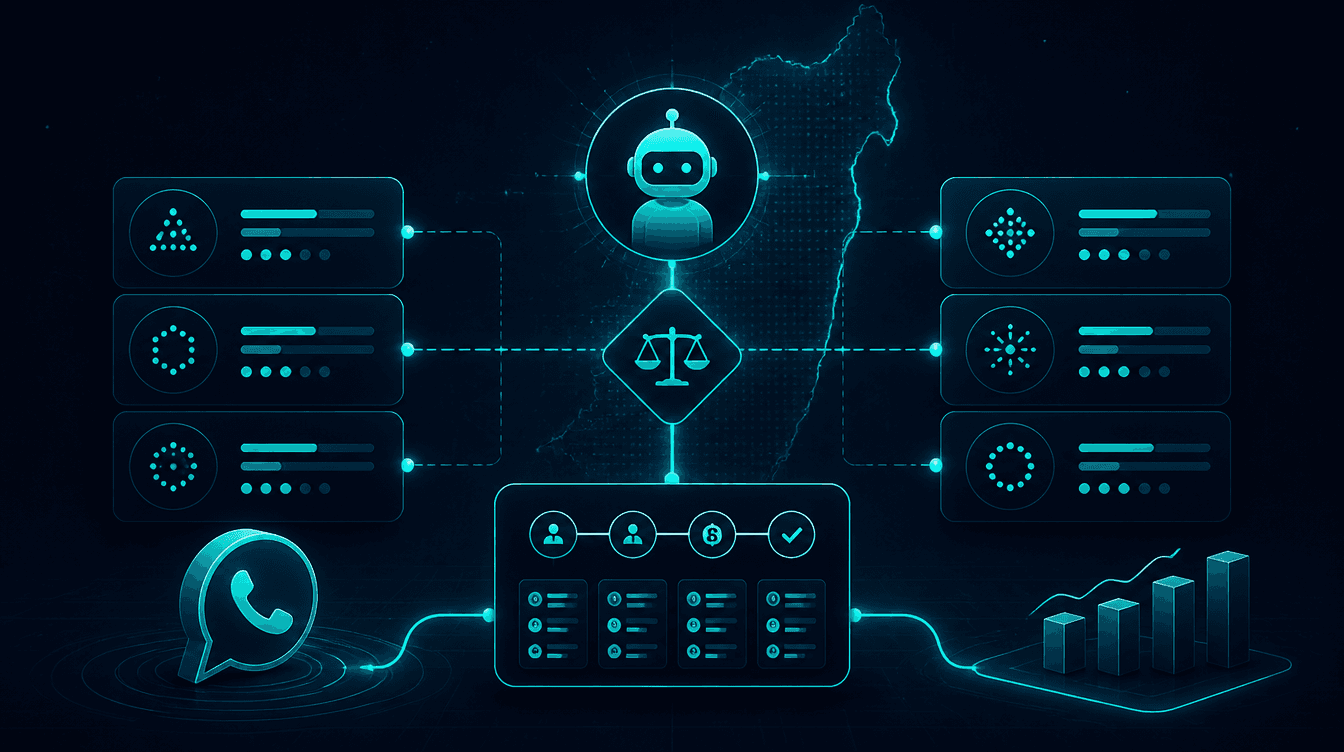
Property management automation connects four processes: receiving tenant requests and classifying them by type and urgency; sending rent reminders before, on, and after the due date — completely hands-free; providing automated answers to common FAQ questions (vendors, building regulations, HOA/building committee, parking); and coordinating with maintenance vendors, including creating a work ticket and updating the tenant on progress. The result: the property manager focuses on decisions — not on forwarding messages.
What Does Automation Handle? Capabilities Table
| Area | What Automation Does | What is Left for Humans |
|---|---|---|
| Maintenance Requests | Receiving, classifying, opening a ticket, forwarding to vendor | Supervising execution, approving large price quotes |
| Rent Reminders | Automatic sending before and after the due date | Handling disputes and exceptional payment arrangements |
| Tenant FAQs | Answering common questions 24/7 | Complex questions requiring legal interpretation |
| Vendor Coordination | Sending referrals, confirming dates, updating tenants | Selecting new vendors, managing contracts |
| Building Committee (HOA) — Announcements | Sending building-wide announcements to all tenants | Committee decisions, meetings, signatures |
| Onboarding New Tenants | Sending documents, contracts, building guidelines | Reviewing documents, final signature |
Four Practical Scenarios
Scenario 1: Maintenance Request — From Tenant to Vendor and Back
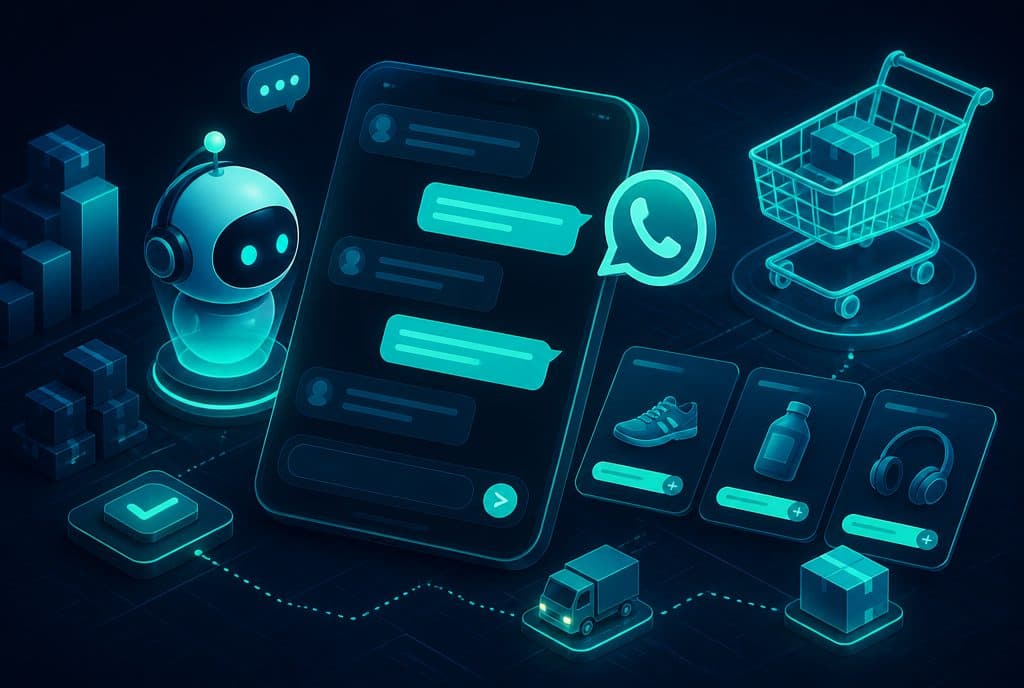
A tenant sends a WhatsApp message: "The bathroom faucet has been dripping since yesterday." The bot identifies the tenant and the property, classifies the request (maintenance — plumbing — non-urgent), opens a work ticket, sends a confirmation to the tenant ("Received, a plumber will contact you within 24 hours"), and sends a referral to the plumber. When the plumber confirms a visit date, the tenant receives an automatic update. The ticket is closed once confirmation is received that the issue has been resolved.
The property manager didn't touch this inquiry — unless the tenant canceled the visit twice, in which case the ticket is automatically escalated to their attention.
Scenario 2: Rent Reminders — No Awkwardness, No Effort
Three days before the due date: An automatic reminder — "Hello [Name], rent payment for July (₪X) is scheduled for [Date]. We would appreciate your confirmation." On the due date, if payment has not been received: A second update. A week later, if it is still unpaid: The inquiry is automatically escalated to the property manager's to-do list — along with the entire communication history.
This way, no phone call is required for every tenant every month, and the manager only steps in when there is a real exception.
Scenario 3: HOA FAQs — Repetitive Questions
"Who cleans the lobby?", "What are the permitted noise hours?", "How do I submit an update to the building committee account?", "Who is the internet provider for the building?". An AI bot fed with the building regulations and management policies answers these questions 24/7, without the property manager having to pick up the phone. Questions that go beyond the defined knowledge base are transferred to a human along with a summary of the interaction.
Scenario 4: Maintenance Vendor — Double Coordination
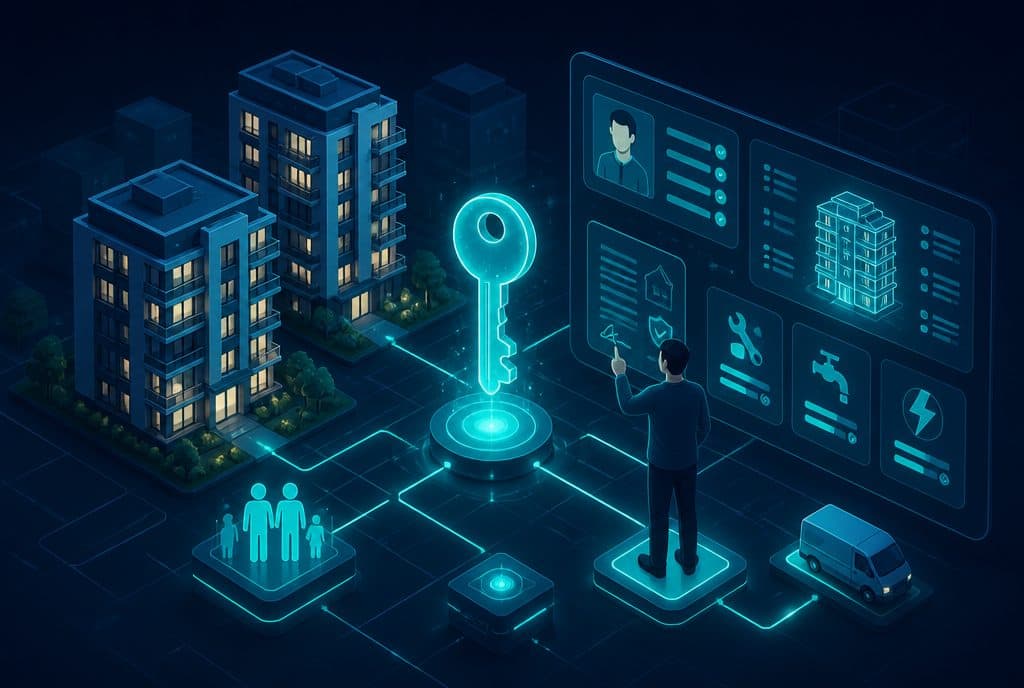
In a building maintained by an electrician, a plumber, a cleaning company, and an elevator technician: each vendor has a defined inquiry interface. Automation routes the right issue to the right vendor, coordinates with the annual schedule (water tank cleaning, annual elevator maintenance), and sends reminders when the time comes — without the property manager needing to maintain a separate calendar for each vendor.
Lead Management and Inquiry Tracking — The Connection to Property Management
The exact same infrastructure that manages leads in Automated Lead Management — receiving inquiries, documentation, tracking, closing the loop — works exactly the same way for tenant requests: every request is a "lead" that needs a fast response, must be documented, and cannot get lost. At AI Automations we adapt the same logic to a property portfolio — with customized fields for the property, building, and inquiry type.
How to Get Started — Three Steps
Step 1: Characterization — What Recurs the Most?
Gather the list of inquiry types from the property managers: Which questions come up the most? Which processes take the most time? Where do "drops" occur — inquiries that didn't receive a timely response? From this data, we build the automation map: what the AI agent answers on its own, and what gets escalated to a human.
Step 2: Focused Building — One Process at a Time
Start with a single process that has an immediate impact — usually: receiving maintenance requests + rent reminders. Define the inquiry flow, connect it to a channel tenants already use (WhatsApp is the most common), and ensure the tickets reach the right vendor. Once that works — add another layer.
Step 3: System Integration — CRM + Vendors + Calendar
Once the basic process is working, connect the flow to the management company's CRM (or build one if none exists): every work ticket, every payment, and every inquiry is documented. This allows you to manage vendor performance, track properties with a long history of issues, and build a complete picture that aids in ongoing decision-making.
What the AI Agent Does Not Do
It is important to be precise: an AI agent for property management does not decide on new vendors, does not manage neighbor disputes, does not sign lease agreements, and does not interpret legal documents. It handles the routine — so that the manager is freed up for consultation and decision-making that truly require human judgment. The boundaries are predefined and transparent to the tenants.
What Do Tenants Experience?
A tenant submitting a request via WhatsApp receives confirmation within minutes, an update when the vendor confirms, and another update when the issue is closed — without waiting for a callback from the manager. A simple question about building regulations gets an immediate answer, even at 10:00 PM. This kind of experience improves the perception of service without increasing the team's workload.
Privacy Protection Under Israeli Law
Any system that stores tenant data — name, phone number, inquiry history — must operate in accordance with the Israeli Privacy Protection Law. In practice: clear consent at the registration point, defining the purpose of storage, restricted access, and the option to delete upon request. In every project we build, we ensure that the flows comply with legal requirements — this is not an "afterthought," it is part of the characterization.
CTA — Is Automation Right for Your Property Portfolio?
Want to understand which processes in your property management are suitable for automation — and what to expect in terms of timelines and costs? Talk to us and let's build a practical roadmap together — with no obligation, just clear answers.
How much does it cost?
| Component | Price (one-time setup, ex-VAT) |
|---|---|
| AI customer-service agent | ILS 9,400 |
| Business knowledge base | ILS 3,000 |
| Connection to an existing system (CRM / Sheets / Monday) | ILS 2,500 |
| Alert to the team / owner | ILS 800 (per alert) |
| WhatsApp Business API setup | ILS 700 |
A complete starting point — a WhatsApp AI agent including the business number, server and agent control room — is from ILS 10,200; an agent with a management system (CRM) from ILS 18,200, a multi-agent system from ILS 25,350. There is no monthly fee; third-party costs (server, messages, AI) of about ILS 100–500 a month are paid directly to the providers. The full component price list: pricing page.
Summary
A property management company that adopts automation and AI bots shifts the time balance for its property managers: less manual response to routine inquiries, more supervision of execution, and resolution of complex cases. Tenants receive fast, consistent responses; vendors receive organized referrals; the manager gets a dashboard showing what is open, what is in progress, and what is closed — without managing a separate WhatsApp chain for every inquiry. The starting point is not purchasing a system — but rather mapping out the processes that consume the most time and building a focused solution that actually works.
Read also: Customer Service Automation — The Complete Guide | Automated Lead Management | Business Automation