
An AI voice agent is an automated phone representative based on artificial intelligence—answering incoming calls, managing natural conversations in Hebrew, filtering and documenting inquiries, and transferring to a human representative only when real intervention is required. Unlike old voice response systems that work based on a keypad menu, the voice agent understands what the caller is saying, responds logically, and continues the conversation until a resolution is reached. At Automaziot AI, we implement voice agents for Israeli businesses that lose calls because the line is busy, the hour is late, or the team is simply busy.
What is an AI Voice Agent?
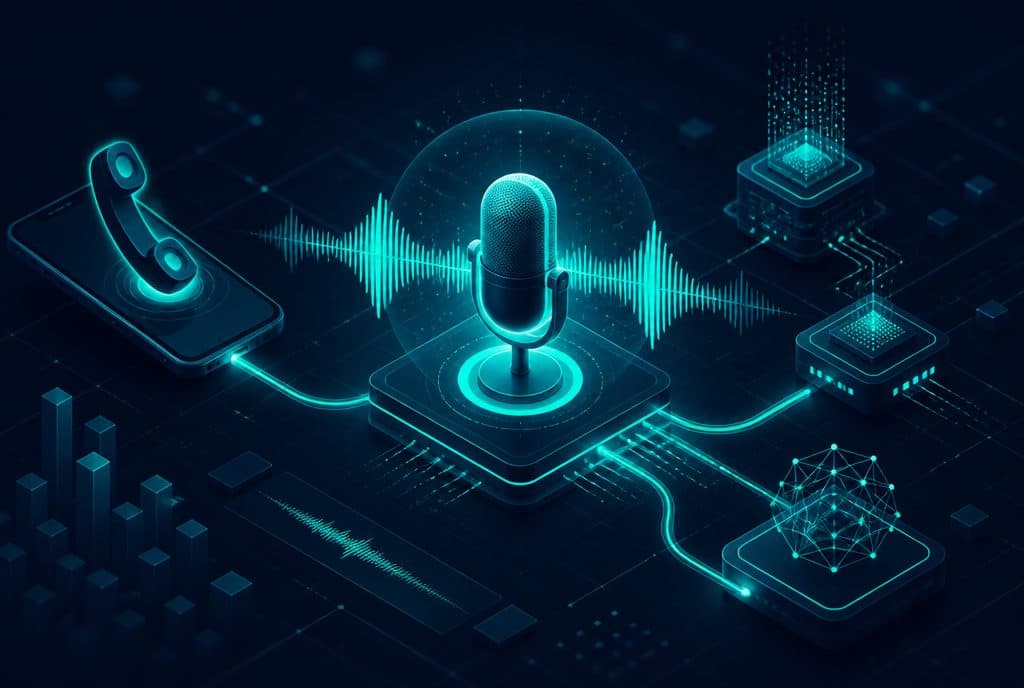
An AI Voice Agent is an automated system that combines speech recognition (Speech-to-Text), a Large Language Model (LLM), and a synthetic speech engine (Text-to-Speech) to manage a complete phone call in natural language. The agent listens, understands the caller's intent, decides what to answer or ask, and performs an action—writing to the CRM, scheduling an appointment, sending an SMS with details—before transferring to a human representative with a full summary.
AI Voice Agent vs. Old Voice Response (IVR)
The most common confusion is between an AI voice agent and what we all know: "Welcome, for customer service press 1, for the nearest branch press 2". This is the classic IVR—a system that works according to a rigid menu that we as consumers already fight against.
| Old Voice Response (IVR) | AI Voice Agent | |
|---|---|---|
| Operation Mode | Fixed keypad menu | Natural two-way conversation |
| Language Understanding | No—waiting for a keypress | Yes—understands free Hebrew |
| Handling Free Inquiry | "I didn't understand, press again" | Answers according to the real intent |
| Documentation | None | Writes to CRM automatically |
| Transfer to Agent | After the menu | With a full summary of the call |
| Flexibility | Fixed script—complicated to update | Changes according to context |
IVR can still serve for basic routing in massive volumes. But for any business that wants a caller to receive a human-like response—a voice agent is the choice.
How Does an AI Voice Agent Work? Three Steps
Step 1: Listening and Understanding (Speech → Text → Intent)
When a caller dials, the agent listens and converts the speech to text in real-time (Speech-to-Text). The artificial intelligence engine analyzes not only what was said but also the intent: "I want to schedule a car inspection" and "I have a problem with the BMW"—two different wordings, same intent.
Step 2: Decision and Response (LLM → Action)
The language model decides the right next step: answering a question, asking a screening question ("What is your name? What is your phone number?"), scheduling an appointment in the calendar, sending an SMS—or transferring to a representative when the inquiry requires human judgment. The boundaries are predefined: the agent answers what it is authorized to, and transfers everything else.
Step 3: Action and Documentation (Text → Speech + CRM)
The response is converted to speech (Text-to-Speech) and the agent continues the conversation. In parallel, everything said is documented: the caller's name, phone number, purpose of the call, what was agreed upon. When the inquiry reaches a human representative—it arrives with full documentation, not from scratch.
The documentation step is what sets the voice agent apart: the human representative does not need to ask "What is your name?" again—they simply continue from the right point.
Who is an AI Voice Agent Suitable For?
Clinics and Medical Practices
Scheduling appointments is a task that repeats dozens of times a day and wipes out hours of administrative work. A voice agent can manage the entire booking process—asking for the reason, suggesting an available time from the calendar, sending an SMS confirmation—leaving the administrative staff to handle records and complex cases. An automated scheduling service is one of our most common services.
Repair and Maintenance Services (Electricians, Plumbers, AC Technicians)
In emergency services, a customer who dials and gets no answer—immediately dials the next in line. A voice agent that answers 24/7, takes the details ("What is the problem? Address? Availability?") and transfers them to a dispatch aggregator—ensures no call is missed. Even at two in the morning.
Real Estate Agencies
A "I saw an ad" call arrives when the realtor is on the way to another deal. A voice agent takes the interested party's details, clarifies what they are looking for (area, budget, rent/buy), and enters it into the CRM with priority. The realtor returns to a warm lead—not to a "Who are you and what do you want?" call from scratch.
Service and Sales Centers
Businesses with high call volumes that staff human representatives can use the voice agent for initial screening: collecting details, separating basic service (which can be resolved automatically) from inquiries that require a representative. This way, representatives deal with inquiries that truly justify their time.
Hebrew Quality: What to Check Before Choosing
The question of Hebrew speech quality is the right question to ask—because not all TTS engines that claim to support Hebrew sound natural.
What to check:
- Intonation and Accents—words like "בָּנִים" (boys) vs. "בַּנַּאי" (builder) differ in intonation; a good engine plays them correctly
- Pace and Naturalness—speech that sounds like old TTS will make the caller hang up
- Regional Differences—Israelis speak Israeli Hebrew, not traditional Hebrew
- Names and Places—"Herzliya", "Bnei Brak", "Dizengoff"—an engine that doesn't play names correctly sounds foreign
In testing with real callers, it is important to let them finish one full call and ask: "Would you have interrupted the call because of the voice?"
Privacy Protection Law and Call Documentation
In Israel, recording and documenting phone calls are subject to the Privacy Protection Law and the Wiretapping Law. In practice, Israeli businesses implementing a voice agent are required to notify the caller at the beginning of the call that it is being recorded and documented. A simple phrasing: "This call is recorded for service improvement purposes"—is sufficient in most cases. It is recommended to consult with a lawyer before deployment.
How to Get Started?
Step 1: Scenario Mapping
Before anything technological—gather the types of calls that come to you. Most businesses have 3-7 recurring scenarios (scheduling an appointment, asking for a price, complaint, requesting to speak to a representative). What does the agent answer? What does it transfer? What does it collect?
Step 2: Defining Boundaries
What remains for a human—and what can the agent finish on its own? A good rule of thumb: if the inquiry requires judgment, empathy for a complex situation, or access to sensitive data—it goes to a representative. Everything else can stay with the agent.
Step 3: Integrations
What does the agent need to access? A calendar for scheduling appointments? A CRM for documenting the lead? An ordering system? The simpler the integrations—the faster the setup.
Step 4: Phased Testing
Do not deploy to all customers immediately. Start with a pilot—a limited number of calls, listen to the recordings, identify what the agent handles well and what confuses it, and improve. Only after there is confidence—expand.
Want to understand if an AI voice agent is right for your business? Contact us for a discovery call—we will look together at your call volume, types of inquiries, and define what the agent can do from day one.
The Voice Agent as Part of a Broader Automation System
An AI voice agent works best when it is part of a complete system—not a standalone tool. A call that comes in by phone, is documented in the CRM, continues on WhatsApp, and is transferred to a representative with all the history—this is a customer experience that today only large businesses manage to provide. With the right tools, even a small business can reach this level.
If you are already familiar with AI agents in general, the voice agent is simply an agent operating on the phone channel. The same logic of understanding → decision → action—just at the most common touchpoint in Israel still: the phone call.
For businesses where inquiries also arrive on WhatsApp, it is worth considering a WhatsApp agent in parallel—so every channel is handled automatically, and no inquiry falls between the cracks.
Summary
An AI voice agent is not a "technological gimmick"—it is a solution to a specific business problem: incoming calls that are not handled in time, representatives spending time on repetitive questions, and missed leads because no one answered. The ability to manage a conversation in natural Hebrew, document, and transfer with context—makes it a tool that expands business capacity without expanding the team.
The right starting point is not "which engine is best"—but "what are the calls that repeat the most for us?" That is where the first agent should be built.