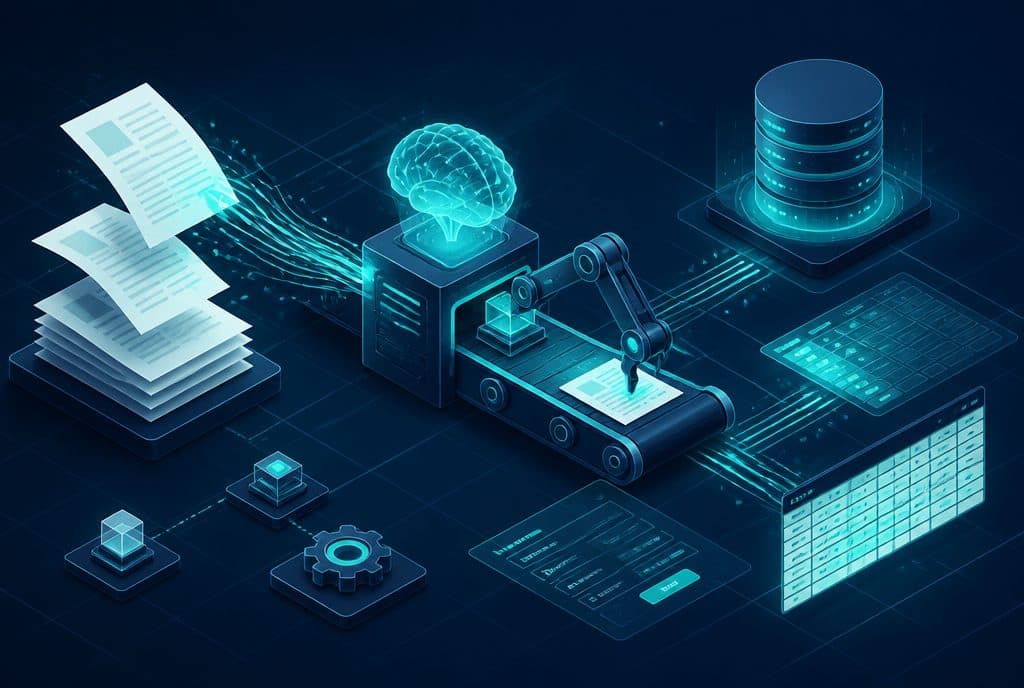


In the business world of 2026, Customer Relationship Management (CRM) systems are more central than ever. With the rapid growth of the CRM market, which is expected to reach $129 billion this year according to recent data, businesses are looking for ways to streamline processes and improve interaction with their customers. Smart automation, combined with technologies like AI and IoT, makes it possible to turn raw data into actionable insights, reduce manual labor, and increase customer satisfaction. But what does this mean in practice? Let's examine how these trends are changing the landscape.
Imagine a business that manages thousands of interactions a day: emails, calls, purchases, and more. Without automation, these processes can be cumbersome and time-consuming. a growing share of new applications are being built with low-code or no-code tools, allowing businesses like yours to implement changes quickly. The trends in 2026 focus on seamless integration between these tools, to transform the CRM from a data storage system into an active platform that drives growth.
The big challenge is dealing with the growing volume of data. Organizations that integrate AI into their customer experience (CX) strategy see improvements in efficiency – but only if they focus on high-quality data. Let's dive deeper into the key trends shaping CRM automation this year.
The Growing Role of AI in CRM Automation
In 2026, AI is not just a supporting tool – it is a core engine in smart CRM automation. Technologies like machine learning and generative systems enable real-time data analysis, predicting customer behavior, and automating routine processes. A growing share of customer service organizations are integrating generative AI into tasks like creating personalized content and tailoring chatbots. This means shorter response times and improved accuracy of recommendations.
A practical example: in CRM systems like Salesforce or Microsoft Dynamics, AI analyzes purchase history to offer tailored promotions. The AI in CRM market is in a rapid growth trend, driven by an increasing need for personalization. For you, as business managers, this means less manual work in sorting leads – the AI can automatically score them based on conversion probability and significantly improve sales.
But AI does not stop there. A prominent trend is agentic AI – autonomous systems that perform complex tasks without human intervention. Focused use of AI improves satisfaction metrics, but caution is recommended in regulated industries to prevent errors. To implement this, start by building workflows that integrate AI with your existing CRM, for example using business automation tools for quick implementation.
Integrating IoT into CRM Systems for Real-Time Interactions
The IoT, Internet of Things, is changing CRM automation by providing real-time data from connected devices. This integration is growing rapidly, allowing businesses to respond instantly to customer needs. Imagine a connected car sending data to an insurance company's CRM, enabling automatic maintenance alerts – this is not science fiction, but reality.
In retail, IoT integrates with AI to monitor smart inventory and improve personalization. Sensors in stores, for example, detect customer behavior and update the CRM to offer tailored promotions, thereby significantly increasing conversions. Combining IoT with CRM creates "pockets of trust" through proactive service, but requires high-quality data management to avoid privacy issues.
The benefit to your business: automation that connects IoT data to your CRM can significantly shorten response times. Use tools like Zapier or open platforms to build the integrations, and you will see an improvement in long-term customer relationships.
Smart Automation: No-Code Tools and Automated Workflows
Smart automation in 2026 focuses on low-code/no-code tools, which allow building complex workflows without deep programming knowledge. A growing share of new applications are built this way, a significant increase compared to the past. This is particularly relevant to CRM, where automation significantly reduces manual data entry.
Platforms like N8N, which is open-source and flexible, allow building workflows that connect the CRM with other tools. An automated workflow can, for example, send personalized emails based on events in the CRM and save hours of work per week. Generative artificial intelligence is increasingly integrated into automation to add intelligence, such as generating automated reports.
In field case studies, companies like Freshworks integrate this automation to increase sales efficiency. For your business, this can mean the ability to adapt processes quickly, such as automated lead management that increases profitability.
Challenges in Implementing These Trends
Alongside the benefits, 2026 also brings challenges such as data quality and ethics. Most organizations encounter data issues when implementing AI, and this affects the CRM. Experts warn of "AI glitches" that can lead to inconsistent trust.
To overcome this, focus on secure integration and ethical tools. This way, you can leverage the trends without unnecessary risks.
Want a modern and automated CRM? Go to our smart customer management page — we implement CRM with full automation.
Summary
In conclusion, the trends in 2026 – AI, IoT, and smart automation – are turning the CRM into a dynamic system that drives growth. With the rapid growth of the AI in CRM market and the expanding integration of IoT, businesses that adopt this will see improvements in efficiency and satisfaction.
The key is a natural integration of these technologies. With automation platforms like N8N, for example, you can build a workflow that connects IoT data from devices to the CRM, analyzes it automatically, and sends tailored alerts – thereby saving a lot of time in handling customer requests. This frees up the business to focus on strategy instead of routine.