

Imagine you are running a retail business in the middle of a busy day. A customer reaches out to the chat on your website with a simple question about product availability, and the system answers immediately. But what happens when the question is more complex – a request to change an existing order, a real-time inventory check, and processing a return? A standard chatbot might get stuck, redirect the customer to human support, or simply display an error message. This is where AI agents come into play, which not only understand the context but also perform automated actions like updating the system, sending a confirmation to the customer, and integrating with CRM tools.
In 2026, as the use of artificial intelligence in business surges and a growing share of organizations report using AI, the difference between standard chatbots and AI agents becomes critical. The Conversational AI market is expected to reach $61.69 billion by 2032, and the AI Agents market alone is projected to reach $47.1 billion by 2030. This article will detail the differences, trace the evolutionary journey from chatbots to agents, and explain why transitioning to smart agents can fundamentally change the way your business operates.
The Historical Journey: From Simple Chatbots to AI Agents
To understand the differences, it is worth knowing the evolutionary path. The first chatbots, which appeared in the 1960s with programs like ELIZA, relied on simple rules – identifying keywords and giving a fixed response, without any real understanding of the context.
In 2023-2024, chatbots advanced thanks to the integration of machine learning and natural language processing (NLP). Generative models like GPT-4o made them more sophisticated – analyzing sentiment, understanding intent, and responding dynamically – but they were still limited to reactive actions only.
In 2026, AI agents represent the peak of this evolution. They utilize methods like ReAct (Reasoning and Acting) to make data-driven decisions, plan sequences of actions, and adapt in real time. Many organizations are already using AI agents, and most plan to expand their use.
What Are Standard Chatbots and Their Limitations
Standard chatbots are programmed to respond to questions based on pre-defined scripts. They rely on simple logical rules and are mainly used in customer service to answer frequently asked questions like "What are the opening hours?" or "How do I make a return?".
The limitations are prominent: they are unable to handle complex conversations or changing contexts, resulting in high abandonment rates – many users abandon chatbots due to irrelevant answers. They require high maintenance, and any change in service requires a manual update of the scripts. In businesses that use automation, chatbots can integrate into simple processes like sending notifications, but they are not suitable for dynamic tasks.
What Are AI Agents and How Do They Work
AI agents are the next generation of smart tools, combining Large Language Models (LLMs) with the ability to act autonomously. They don't just respond – they act: they analyze context, make decisions, and perform tasks like updating databases, sending emails, and interfacing with external systems.
The AI Agents market is valued at $7.38 billion and is expected to grow at an annual rate of 44.8%. Agents integrate into complex automations, such as workflows that connect a smart CRM to marketing tools. They are also used in human resources – many managers worldwide use AI agents to analyze resumes, conduct initial interviews, and send job offers.
The Fundamental Differences Between the Two
The main difference lies in the level of autonomy and intelligence. Chatbots are reactive and operate according to fixed rules, whereas AI agents are proactive – learning from interactions and adapting.
Technologically, chatbots rely on simple rules or basic AI, while AI agents combine LLM models and autonomous systems. A growing share of organizations plan to adopt AI agents. Another difference is integration: agents connect to external systems via APIs, enabling full automation.
AI agents remember past interactions and improve over time – a capability that chatbots completely lack.
Benefits of AI Agents for Businesses in 2026
AI agents offer significant advantages in efficiency and savings. Companies using them see a significant increase in team efficiency, and they enable 24/7 service without a large staff.
List of key benefits:
- Time savings: A significant reduction in manual work
- Accuracy: Agents learn from errors and improve performance
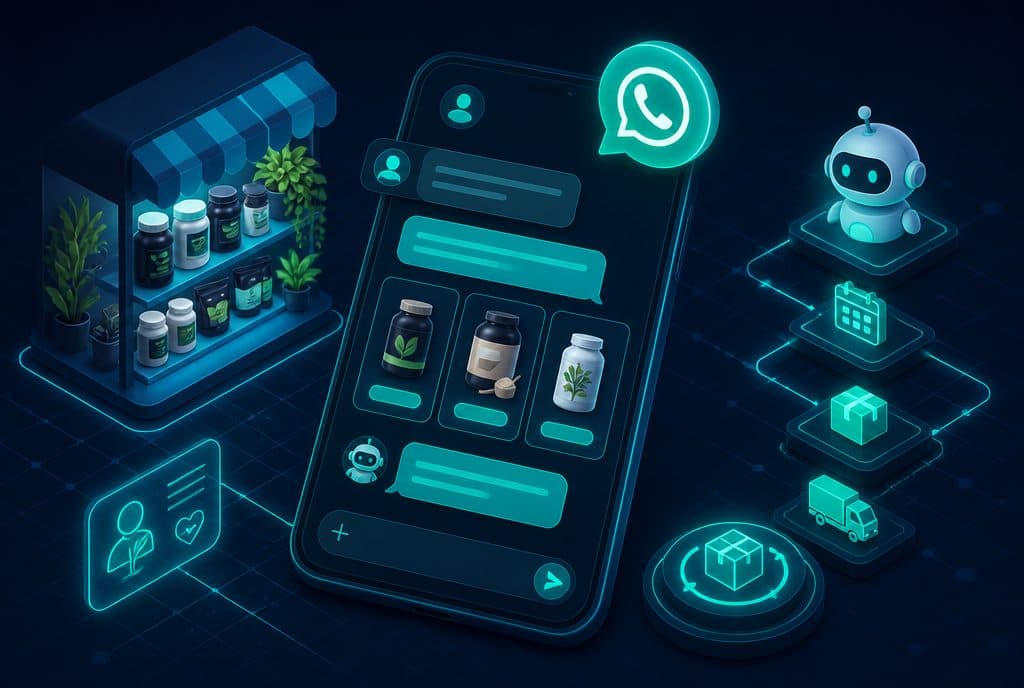
- Flexibility: Integration with tools like WhatsApp Business or CRM
- Scalability: Handling thousands of inquiries simultaneously
Many organizations see an improvement in customer satisfaction as a result of using agents, and sales teams using AI see revenue growth.
Practical Examples and Case Studies
ING Bank implemented an internal AI agent for employee service, which significantly shortened inquiry handling times. A global camping company recorded a major reduction in wait times.
Additional examples:
- In medical clinics: Agents schedule appointments and remind patients
- In online stores: Agents recommend products and increase sales
- In HR: Resume analysis and initial candidate screening
Want an AI agent and not just a chatbot? Go to our AI Agents for Business page and discover the difference.
How much does it cost?
| Component | Price (one-time setup, ex-VAT) |
|---|---|
| WhatsApp AI sales agent | ILS 9,000 |
| AI customer-service agent | ILS 9,400 |
| WhatsApp Business API setup | ILS 700 |
| Server and automation platform | ILS 500 |
| Agent control room | ILS 1,500 |
A complete starting point — a WhatsApp AI agent including the business number, server and agent control room — is from ILS 10,200; an agent with a management system (CRM) from ILS 18,200, a multi-agent system from ILS 25,350. There is no monthly fee; third-party costs (server, messages, AI) of about ILS 100–500 a month are paid directly to the providers. The full component price list: pricing page.
Summary
The difference between AI agents and chatbots is not just technical – it impacts efficiency, satisfaction, and profitability. With a growing share of organizations already using generative artificial intelligence, and as the trend strengthens, AI agents are the right choice for businesses that want to remain competitive in 2026.
With automation platforms like N8N, you can build a workflow that connects an AI agent to a CRM system and WhatsApp Business to perform automated order updates. If you are considering an upgrade, talk to us and we will help you build the perfect solution.