

In today's business world, AI agents—those autonomous tools that perform complex tasks without constant human intervention—are becoming an integral part of workflows. If you manage a business in Israel, you have likely already heard of agents handling customer service, analyzing data, or even managing supply chains. The global AI agents market is expected to grow from $5.1 billion in 2024 to $47.1 billion by 2030, at a compound annual growth rate (CAGR) of 44.8%. This figure, based on recent studies from 2024 and 2025, reflects not only technological advancement but also a growing need for solutions that streamline processes and help businesses cope with challenges such as labor shortages and rising energy costs.
This growth is no accident. In 2026, an increasing share of organizations worldwide report using AI, in a continuous upward trend. For small and medium-sized businesses, AI agents offer an opportunity to boost competitiveness, particularly in areas like marketing automation or CRM management. Imagine an agent that automatically identifies sales opportunities and triggers processes accordingly—this is not a distant future, but a reality already being successfully implemented.
In this article, we will examine the factors driving this growth, practical applications, challenges, and current trends. The goal is to provide you with insights to help you understand how to integrate these technologies into your business, relying on up-to-date data from 2024 and 2025.
Key Growth Drivers in the AI Agents Market
One of the main drivers for the rapid growth of the AI agents market is the advancement in AI models, particularly those based on advanced machine learning and multi-agent systems. In 2026, models like GPT-5 and its peers allow agents to perform more complex tasks, such as real-time data analysis or autonomous decision-making. Companies like IBM emphasize, for example, that agents can connect different tools—such as CRM system APIs—and create highly efficient processes.
Another factor is the growing need for business automation. Many companies integrating AI agents report a fast return on investment (ROI) and a significant boost in productivity. In Israeli businesses, which face high labor costs, agents shorten the execution time of routine tasks. In the high-tech sector, for instance, AI agents run automated code tests, saving precious hours of work.
Finally, new regulations and standards are also playing their part. In 2026, the European Union is implementing AI legislation that encourages transparency, which in turn increases the adoption of reliable agents. This creates a more competitive market, where companies like Microsoft and Google are investing in developing eco-friendly agents, with an emphasis on low energy consumption.
Key Applications of AI Agents in Business
AI agents for businesses are transforming various industries, especially business process automation. In customer service, agents like those from Salesforce handle autonomous conversations with customers—including identifying and resolving issues without human intervention. More and more companies are integrating such agents, thereby significantly shortening response times.
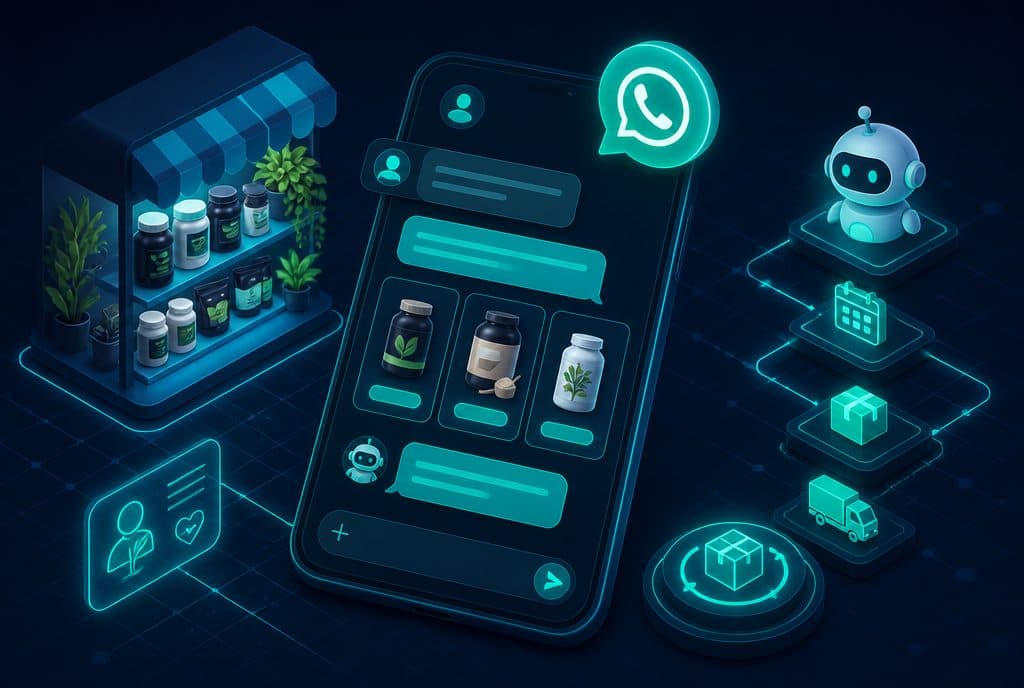
In marketing processes, AI agents analyze customer data to build personalized campaigns. A real-world example: a global retail company used an AI agent to automate inventory management, saving a substantial portion of its costs. In Israeli businesses, agents integrate with tools like WhatsApp Business to send automated messages based on user behavior.
In financial analysis as well, agents generate more accurate forecasts. Multimodal agents, which combine text, images, and data, significantly improve accuracy. This is highly relevant for businesses managing a smart CRM, where an agent can automate record updates and identify sales opportunities.
Challenges and Opportunities in the AI Agent Landscape
Alongside the growth, there are also significant challenges. The most prominent among them is the issue of security and privacy. Many organizations express concern over data leaks in AI agents. In response, companies like IBM are developing agents with built-in encryption mechanisms, creating opportunities for integration with secure automation systems.
Another challenge is implementation in small organizations that lack technical expertise. Only a fraction of small businesses use advanced agents, mainly due to initial costs. However, this is precisely where an opportunity opens up for open-source platforms and professional technological consulting, which allow for flexible building without dependency on large vendors.
Additional opportunities lie in integration with existing technologies. AI agents can, for example, connect to automation systems and create smarter workflows, such as real-time supply chain management.
Current Technological Trends in AI Agents
In 2026, the prominent trend is the shift toward fully autonomous agents that execute a sequence of tasks without supervision. Tools like Auto-GPT or LangChain make it possible to build such agents in combination with external APIs.
Another trend is Green AI, with an emphasis on low energy consumption. It is expected that an increasing share of agents will be adapted to environmental standards. This is highly relevant to automation, where agents can optimize processes to reduce waste.
Finally, we see the rise of voice and video agents, like EngageSync, which automate calls. These are changing customer interaction, especially in digital businesses.
Want to be part of the revolution? Discover our AI agents service for businesses — professional implementation for Israeli businesses.
Summary
The AI agents market is showing dramatic growth, driven by technological advancements and increasing business needs. Data from 2024 and 2025 show that investing in these agents can lead to higher productivity and significant savings. For businesses in Israel, operating in a highly competitive market, now is the time to consider integrating such technologies to stay relevant.
Ultimately, success depends on smart implementation. If you are looking for ways to streamline processes, examine how AI agents can fit your specific needs. With automation platforms like N8N, for example, you can build a workflow that connects an AI agent to a CRM system like HubSpot and performs automated data analysis—such as identifying hot leads and sending personalized messages on WhatsApp Business—thereby saving hours of work per week and significantly improving conversion rates. This is a simple way to start, while maintaining complete flexibility.