
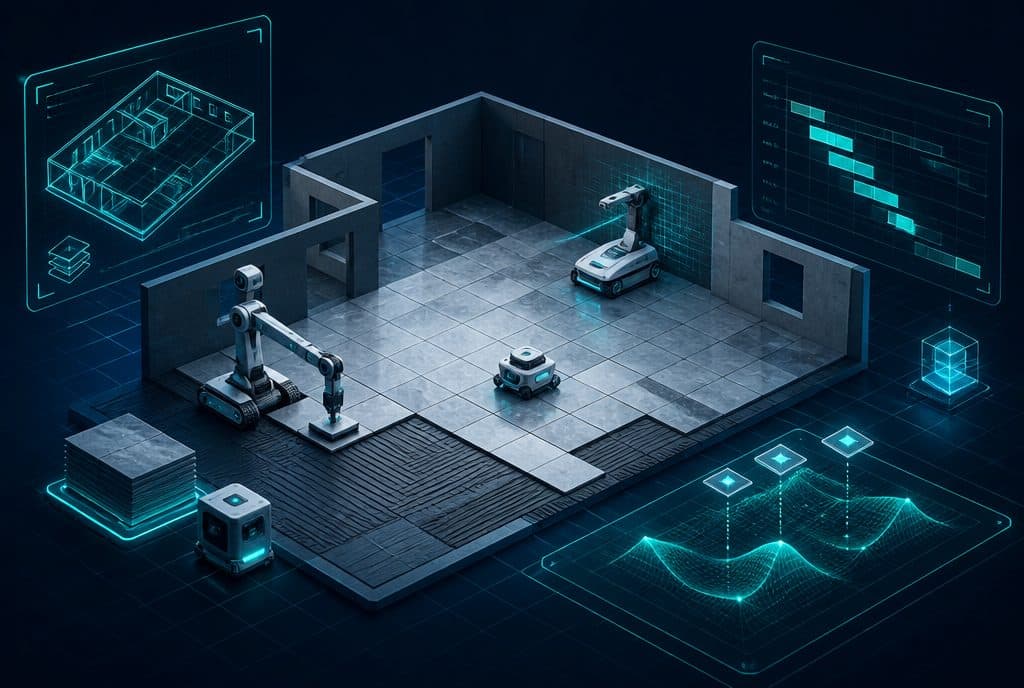
A WhatsApp bot for a flooring installer works like this: a customer writes "I want to replace the flooring in my living room," the bot responds within seconds, asks about the size of the area, the requested material type, and the location of the project, requests a quick photo, and returns an initial price estimate — even before the installer has stepped down from the scaffolding. The inquiry is registered in the CRM and receives an automatic follow-up if the customer hasn't confirmed a site visit. This is how parquet and cladding installers work to stop losing jobs from people who sent a single message and never got a response.
In Israel, most inquiries for flooring, parquet, and cladding work arrive via WhatsApp — often in the evening, after the customer has finished their workday. The installer on-site cannot answer, and by the next morning, the customer has already received an offer from someone else. Automation bridges exactly this gap.
How does automation help a flooring installer?
A smart WhatsApp bot receives the initial inquiry, asks screening questions (material type, area size, location), requests a photo of the space, returns an initial price estimate, and schedules a measurement visit — all automatically, 24/7. The lead is automatically registered in the CRM and receives a follow-up if they don't reply. The installer arrives at the site visit already armed with basic information about the job — instead of wasting 20 minutes on the phone asking questions the bot has already covered.
Why parquet and flooring installers lose jobs — and how automation solves it
Flooring and parquet installation is physical work that requires on-site presence. The dilemma of every independent installer: while you are working, you cannot answer the phone. While you are answering, you are not working.
Inquiries come in waves — after an ad campaign, after someone recommended you, or after a competitor failed to answer. An installer who receives 5-8 inquiries a day and has no one to handle them in real-time will lose some of them, not because they aren't professional — but simply because they didn't respond in time.
Additionally, the process of securing a new job involves repetitive steps: asking about the project, requesting photos, explaining the available types, giving an initial price range, and scheduling a measurement visit. Every single one of these steps can be automated.
What the bot can actually do
| Process Step | Manual | With WhatsApp Bot |
|---|---|---|
| Initial Response | Within hours / a day | Within seconds, 24/7 |
| Screening Questions (location, material, size) | Phone call | Automatic messages |
| Receiving Photos from Customer | Sending a manual message | The bot requests and receives |
| Initial Price Estimate | Calculate and write manually | Automatic template based on parameters |
| Scheduling Measurement Visit | Phone or messages | Automatic calendar link |
| Registration in CRM | Manual typing | Automatic with all details |
| Follow-up for Unresponsive Leads | Remembering to write | Automatic reminder after X days |
| Sending Catalog / Portfolio Photos | Manually to each customer | Automatic based on requested material type |
Real-Life Scenarios
Friday Night Inquiry
A customer writes at 23:00: "Hi, we are looking for parquet for a new apartment, 80 sqm, Tel Aviv." The bot responds within 30 seconds, asks if they want solid or engineered parquet, what their preferred style is, and requests a quick photo of the space. By 23:15, the bot has all the basic information. In the morning, the installer wakes up to a lead ready for a visit — the customer received an unexpectedly professional response and didn't message a competitor.
Multi-Project Inquiry
A renovation contractor sends an inquiry: "I have 3 apartments in a building in Petah Tikva, 60x60 tiling for all apartments, about 200 sqm total." The bot recognizes a professional inquiry, asks about the timeline and what stage the project is in, marks the lead as "high priority" in the CRM, and automatically routes them to schedule a call with the installer — not a site visit, but an initial consultation.
The Cold Lead
A customer reached out a week ago, received an initial estimate, and went quiet. The bot automatically sends a follow-up message: "Hi, I wanted to check if you have any further questions regarding the parquet we discussed. We can schedule a measurement visit with no obligation." — a natural, non-robotic message sent at a pre-determined time.
The screening questions the bot asks — and why each matters
Good screening questions save unproductive measurement visits. The bot needs to know:
- Location of the project — to know if the project is within the installer's geographical range
- Material type — solid parquet, engineered, vinyl, ceramic tiling, stone — each has a different price point
- Area size — an initial estimate before the precise measurement
- Condition of existing flooring — does it need demolition? Is there existing flooring that requires raising?
- Timeline — urgent? Part of a comprehensive renovation project?
When the installer arrives for the visit, they already have all these answers. The visit itself focuses on measuring and closing the deal — not on questions that could have been asked on WhatsApp.
Receiving photos — visual project management
The flooring and cladding industry is highly visual. A customer asking for "rustic style tiles" might mean something completely different than what you think. The bot can:
- Request a photo of the existing flooring (condition, height, entry elements to preserve)
- Send catalog examples based on the style the customer described
- Request a photo of the space to assess obstacles (pillars, stairs, corners)
- Save all photos in the CRM as part of the project file
When the installer arrives for the visit, they have already seen the space — and arrive with a more targeted proposal.
How to get started
Map out scenarios — write down the common inquiries that come in: what people ask, what you answer, what makes a visit successful, and what makes a customer drop off. This is the foundation to build the bot on.
Define screening questions — choose 3-5 questions that, once answered, allow the installer to arrive at the visit with real information. Not too many, not too few.
Build templates — initial price estimate (a range, not a precise price), visit confirmation message, post-visit follow-up, pre-work reminder.
Connect to CRM — every incoming lead is automatically registered with all collected information, including photos.
Run and optimize — two to three weeks of running will reveal if a question is missing, a message is poorly phrased, or if customers get stuck at a certain stage.
Want to see how it works in practice? WhatsApp Bot for Businesses — we will build a demo scenario specific to the flooring industry. See also our Automated Lead Management service to handle inquiries from all channels.
Important points before you start
Israeli Privacy Protection Law — when the bot collects customer data (name, phone, address, photos), you must ensure there is clear consent and that the information is stored securely. Build this correctly from day one, don't add it as an afterthought.
A bot doesn't close the deal — the bot screens, warms up, and schedules. The visit and the closing are done by a human. It is important not to try to build a bot that attempts to close the deal on its own — that doesn't work in a field that requires physical inspection and trust.
Older customers — some flooring customers prefer the phone. The bot should always offer "call me" as an option — and route the request to a human representative without doing anything else.
Related Links
- WhatsApp Bot for Businesses — The Complete Guide
- Automated Lead Management
- Automation for the Construction and Renovation Industry
How much does it cost?
| Component | Price (one-time setup, ex-VAT) |
|---|---|
| WhatsApp AI sales agent | ILS 9,000 |
| Automatic quoting engine | ILS 6,500 |
| Calendar link and meeting booking | ILS 2,000 |
| Automatic follow-up sequence | ILS 2,500 |
| WhatsApp Business API setup | ILS 700 |
A complete starting point — a WhatsApp AI agent including the business number, server and agent control room — is from ILS 10,200; an agent with a management system (CRM) from ILS 18,200, a multi-agent system from ILS 25,350. There is no monthly fee; third-party costs (server, messages, AI) of about ILS 100–500 a month are paid directly to the providers. The full component price list: pricing page.
Summary
A parquet, flooring, or cladding installer who adds a WhatsApp bot to their inquiry process does two things simultaneously: stops losing leads that didn't get a timely response, and arrives at every measurement visit with information that previously had to be gathered over the phone. The result is more visits that lead to a deal — not just more visits overall. The best place to start is not the technology, but writing down the most common inquiries you receive and deciding what the bot will answer and what remains for a human.
Talk to us on WhatsApp and let's build your first business scenario together — with no obligation.